Turkey Bacon and Asparagus Fried Rice

Posted on

I know what you’re thinking, but listen, I’m not here for any turkey bacon slander. It’s salty, crispy, and savory: what’s not to love? Stir-fried with asparagus, they make an unlikely but deeply delicious pairing in this quick and easy fried rice. Don’t knock it until you’ve tried it.

Ingredients:
  • 1/2 pound chopped turkey bacon
  • 1 tablespoon minced ginger
  • 1 tablespoon minced garlic
  • 1 small onion, finely diced
  • 3 eggs
  • 2 tablespoons avocado oil
  • 1 1/2 cups asparagus, cut into 1-inch pieces
  • 4 cups cold leftover steamed rice
  • 2 tablespoons soy sauce
  • 1/4 cup chopped green onions
  • 1/2 teaspoon pepper
  1. In a wok or large skillet, heat 1 tablespoon of the oil and cook the turkey bacon over medium-high heat, flipping the turkey bacon every few minutes to evenly brown. After a few minutes, once the turkey bacon is cooked through and crispy, remove from the skillet but do not wipe the skillet clean.
  2. Sweat the ginger, garlic, and onion in the skillet until they become translucent and aromatic, about 1 minute.
  3. Crack the eggs into a medium bowl, and stir them to break the yolks. Pour the eggs into the skilled and quickly stir to cook. While the eggs are still a little runny, push them to the side of the skillet. Add the remaining avocado oil to the center of the skillet and add the asparagus, stir-frying it in the oil for about 1 minute, then push it next to the eggs.
  4. Turn the heat to high and add the rice to the skillet, breaking up clumps with a wooden spoon. Once the rice becomes loose, mix and fold the eggs and asparagus into the rice. Drizzle the soy sauce into the skillet, and continue to stir-fry. Add the reserved turkey bacon and green onions and season with black pepper and serve.

Chicken and Mushroom Wontons in Chili Oil

Posted on

Steamed, boiled, or fried, I’m a sucker for any and all dumplings. I keep a few different kinds in my homemade rotation, and these boiled wontons are my new favorites, thanks to a generous drizzle of chili crisp, soy sauce, and vinegar at the end.

These make enough for large crowd, but don’t be surprised if you end up wanting to eat them all yourself.

Ingredients:
  • 1 package wonton wrappers
  • 1 1/2 pounds ground chicken or turkey
  • 2 cups garlic chives, chopped
  • 10 shiitake mushrooms, chopped
  • 1 1/2-inch piece ginger, minced
  • 1 tablespoon dried shiitake mushroom powder, made from 1 or 2 dried shiitake mushrooms ground in a spice grinder
  • 1 tablespoon shaoxing wine
  • 1 tablespoon sesame oil
  • 1 teaspoon sugar
  • 1/2 teaspoon pepper
  • Chili crisp, soy sauce, Chinese black vinegar, chopped green onions, chopped cilantro, and sesame seeds, for serving
  1. In a large bowl, mix together chicken, garlic chives, shiitake mushrooms, ginger, dried mushroom powder, shaoxing wine, sesame oil, sugar, and pepper. Set aside.
  2. Bring a large pot of salted water to a boil.
  3. Place a small spoonful of filling (about 1 teaspoon) in the center of one of the wonton wrappers. Fold the bottom part up so that the dumpling forms a half circle and press all the way around to seal. Flip the dumpling over, grasp the two corners, and connect them by pinching one on top of the other. Repeat with remaining wontons and filling.
  4. Working in batches to prevent overcrowding, drop the wontons in the boiling water and cook for 3-4 minutes, or until the dumpling floats to the top and is cooked through. Adjust the heat to maintain a gentle boil.
  5. Use a slotted spoon to transfer the wontons straight from the cooking water to into a serving platter.
  6. Serve immediately with a few generous spoonfuls of chili crisp, soy sauce, black vinegar, green onions, cilantro, and sesame seeds to taste.

Spicy Beef and Kimchi with Noodles

Posted on

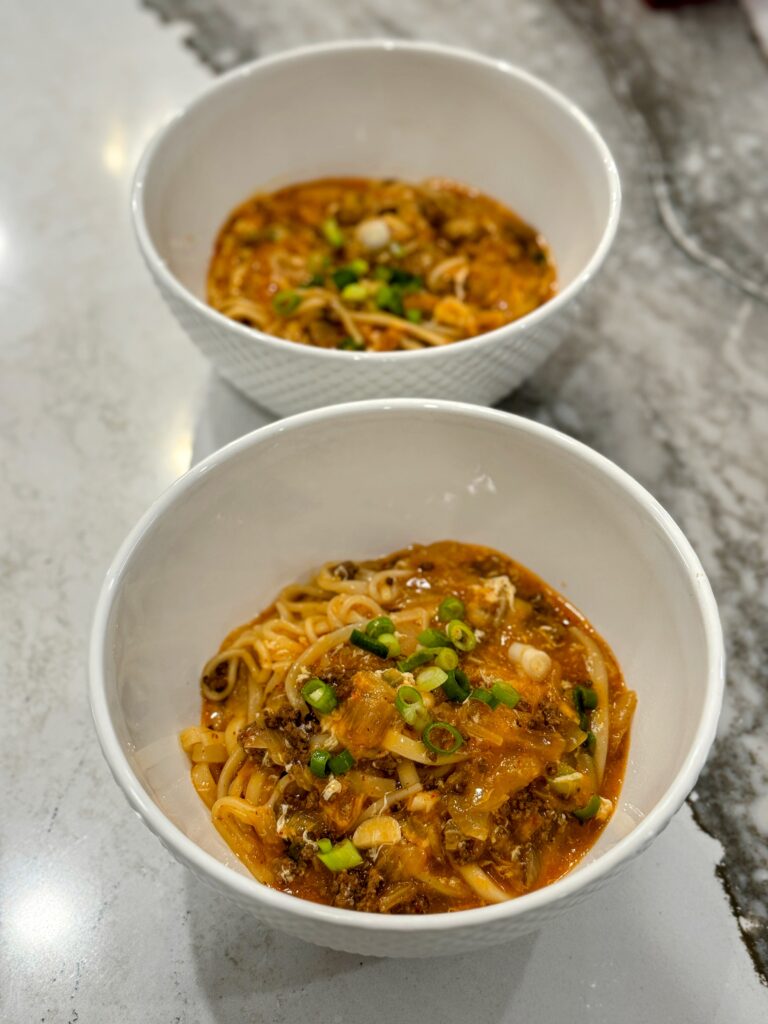
We’re on what feels like the hundredth straight day of rain here in the Bay Area, but at least it’s noodle soup season. Anthony Bourdain infamously said “Anytime I’m eating spicy noodles in a bowl, I’m happy,” and I’m not sure I’ve ever disagreed with him.

This hearty soup is packed with kimchi and aromatics, and the end result is a brothy bowl of warming, chewy noodles. Try to seek out fresh noodles for this recipe, as it makes a big difference.
Ingredients:
  • 1 pound fresh noodles, preferably Korean-style wheat noodles
  • 2 teaspoons avocado oil
  • 8 ounces ground beef
  • 1 teaspoon salt
  • 1 small onion, chopped
  • 5 garlic cloves, chopped
  • 2 1/2 cups drained ripe kimchi, chopped into bite-size pieces
  • 1 tablespoon gochujang
  • 1 tablespoon fish sauce
  • 1 tablespoon soy sauce
  • 1/4 teaspoon sesame oil
  • 2 green onions, sliced
  1. Heat avocado oil in a Dutch oven or other heavy pot over medium heat. Add ground beef and sprinkle with 1/2 teaspoon salt. Spread meat out and cook, undisturbed, until a light crust forms underneath, about 2 minutes. Using a wooden spoon break up meat and continue to cook, stirring and breaking meat up, until brown all of the way through, about 2 minutes more. Add onion and garlic and cook, stirring, until fragrant, about 1 minute. Mix in kimchi along with any juices, then add the gochujang. Pour in 6-7 cups cold water (depending on how brothy you want your noodles) and stir well. Increase heat to medium-high and bring to a boil. Reduce heat to medium-low, cover pot partially with a lid, and simmer, decreasing heat to low if needed, until kimchi is softened, 15–20 minutes. (If soup has reduced too much, add up to another 1 cup water and return to a simmer over medium-low heat.)
  2. Add fish sauce, soy sauce, and remaining 1/2 teaspoon salt. Taste and season with more salt if needed.
  3. Unravel and gently add noodles into the simmering soup, and cook according to package instructions, stirring occasionally, until cooked through (about 5 minutes). Remove from heat; drizzle in sesame oil and stir in 3/4 of the green onions.
  4. Ladle soup into bowls and top with remaining green onions.
California Crab Rice Bowls

Posted on

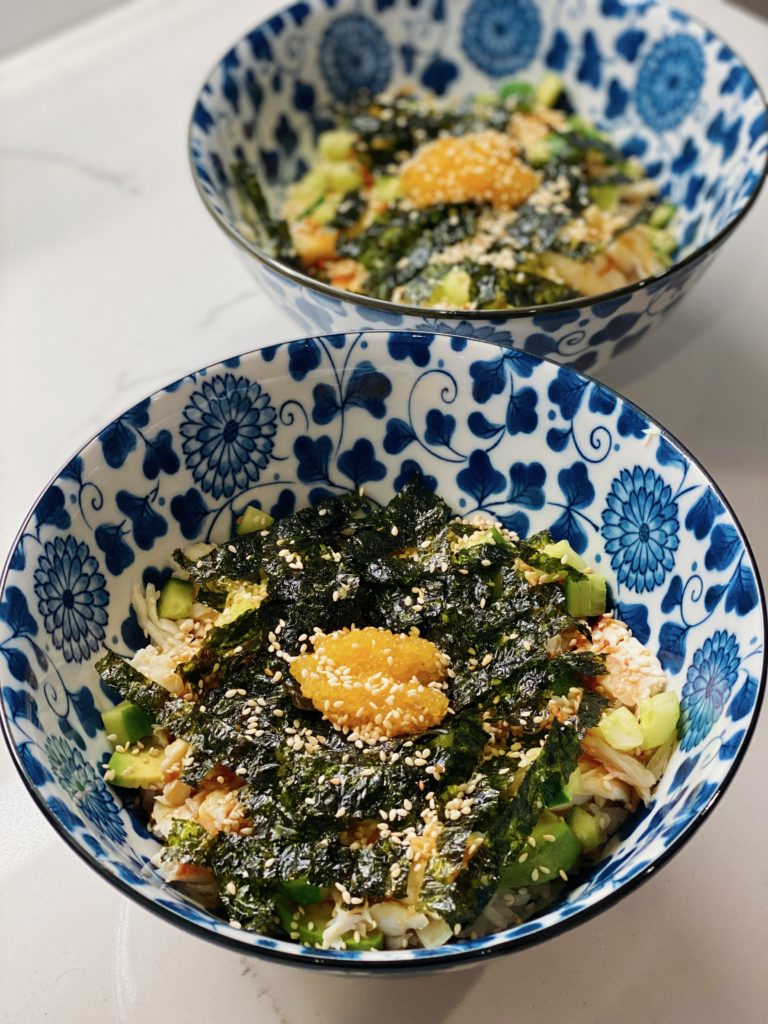
If you’ve known me for more than five minutes, you know I absolutely lose it for Dungeness crab. I will prepare and eat it in all its permutations, and one of my favorites is this rice bowl, which is basically an elevated California roll in bowl format. It’s healthy and delicious, so eat to your heart’s content.

Ingredients:
  • 2 cups cold water, divided
  • 1 (5 by 3-inch) piece kombu
  • 1/4 cup loosely packed katsuobushi (dried bonito flakes)
  • 1/4 cup chopped peeled ginger plus 1 teaspoon grated peeled ginger, divided
  • 2 cups uncooked sushi rice, rinsed
  • 1/2 cup sake
  • 2 1/4 teaspoons salt
  • 2/3 cup brown sugar
  • 1/2 cup soy sauce
  • 1 garlic clove, grated
  • 2 cups Dungeness crab meat
  • 1 avocado, thinly sliced
  • 1 Persian or 1/2 English cucumber, seeded and diced
  • Smelt roe or tobiko, thinly sliced nori, and toasted sesame seeds, for serving
  1. Place 1 1/2 cups cold water and kombu in a small saucepan; heat over high until steaming. Remove from heat; sprinkle katsuobushi over broth, and steep 3 minutes. Strain dashi into a bowl; discard solids. (Alternatively, make 1 cup dashi using instant dashi granules.)
  2. Process remaining 1/2 cup water and chopped ginger in a blender until smooth, about 1 minute. Pour ginger water through a fine wire-mesh strainer; discard solids.
  3. Prepare a rice cooker: combine rinsed rice, 1 cup dashi, ginger water, sake, and salt, and cover. Cook rice according to rice cooker instructions and set aside, keeping rice warm.
  4. Meanwhile, bring brown sugar, soy sauce, garlic, and grated ginger to a boil in a small saucepan over medium-low. Boil until sauce thickens to a syrup consistency, about 5 minutes. Let cool, and reserve.
  5. Divide rice among four serving bowls, and top with crab and avocado. Top evenly with cucumber, roe, nori, and sesame seeds, and serve immediately with sweet soy glaze.

Kimchi Mac and Cheese

Posted on

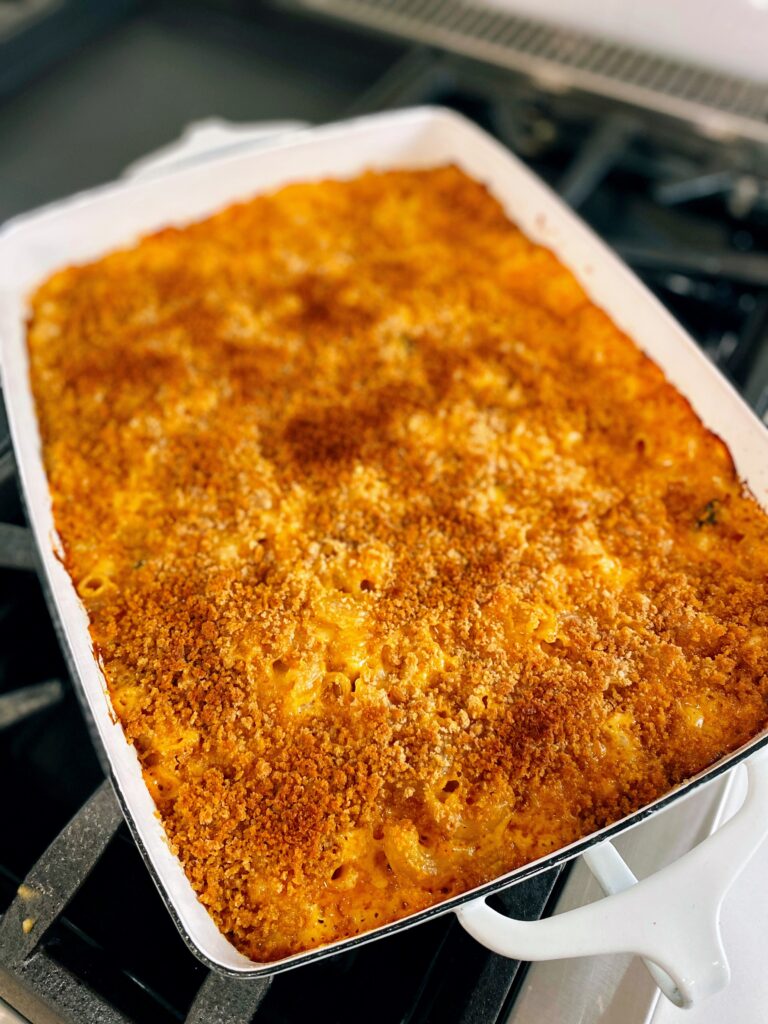
I love kimchi. I eat it straight out of the jar. To me, kimchi is torshi-adjacent — after all, my family has been buying kimchi since before it entered the American lexicon in the 1990s. We eat it alongside all manner of khoresh and rice. It works!

Kimchi is versatile. And if it works so well with Iranian food, then why not with American food too? Behold, your new favorite mac and cheese recipe. Tangy, fermented kimchi is the perfect foil to cheddar cheese. I can’t get enough.

Ingredients:
  • 1 pound elbow macaroni or similar
  • 1 cup panko
  • 1 tablespoon olive oil
  • 4 tablespoons (1/2 stick) butter
  • 2 tablespoons flour
  • 2 cups milk, warmed
  • 1 teaspoon Dijon mustard
  • 1 1/2 teaspoons gochujang
  • 1/4 teaspoon ground nutmeg
  • 1 1/2 teaspoons salt
  • 2 cups grated Gruyere cheese
  • 3 1/2 to 4 cups grated aged extra-sharp cheddar cheese
  • 1 cup kimchi, roughly chopped
  1. Preheat the oven to 375F degrees.
  2. Bring a pot of salted water to a boil. Add macaroni and boil for 4 to 5 minutes. Drain, rinse with cold water, and set aside.
  3. Put the panko in a small bowl and drizzle with olive oil, mixing until the panko is evenly coated. Set aside.
  4. In a large pot, melt the butter over medium-low heat. Add the flour and whisk for 1 minute. Drizzle in the warm milk, continuing to whisk to get rid of any clumps. Once the mixture is smooth, whisk in the mustard, gochujang, nutmeg, and salt. Stir mixture with a wooden spoon until the sauce coats the back of a spoon, for a few minutes.
  5. Remove from the heat and add both cheeses, macaroni, and kimchi and mix until the pasta is coated with the sauce. Pour the pasta into a wide, shallow, oven-proof baking dish, top with the panko mixture and transfer the dish to the oven.
  6. Bake for 35 to 40 minutes, until the panko topping is golden brown and the cheese sauce is bubbling at the edges.