Eggplant with Black Garlic-Tahini Sauce

Posted on

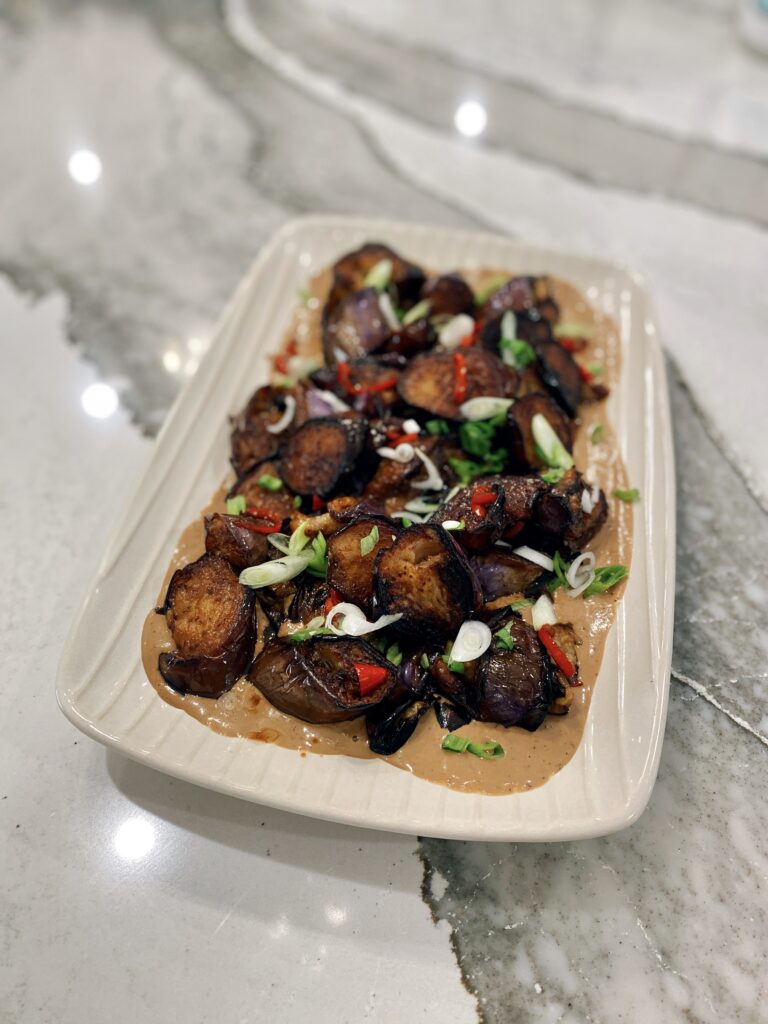
Summer may be over but I’m still happily working through the last of the warm weather produce. This buttery eggplant with a tangy, deeply garlicky, and creamy sauce is one my favorite eggplant dishes that I made this year.
Ingredients:
  • 1/4 cup water
  • 1/3 cup tahini
  • 4 peeled black garlic cloves 
  • 1 tablespoon mirin
  • 3 tablespoons soy sauce, divided
  • 3 1/2 tablespoons plus 2 teaspoons rice vinegar, divided
  • 1 teaspoon salt, divided
  • 1 red Fresno pepper chile, thinly sliced
  • 6 tablespoons avocado oil, divided
  • 1 1/2 pounds Japanese eggplant (about 3 eggplant), roll-cut into 1-inch pieces 
  • Thinly sliced green onions, for garnish
  1. Process 1/4 cup water, tahini, black garlic, mirin, 1 tablespoon soy sauce, 2 teaspoons vinegar, and 1/4 teaspoon salt in a blender until smooth, 30 to 45 seconds. Set tahini dressing aside.
  2. Stir together chile, remaining 3 1/2 tablespoons vinegar, and remaining 3/4 teaspoon salt in a small bowl; set aside.
  3. Heat 3 tablespoons oil in a cast-iron skillet over high until a wisp of smoke rises from skillet. Add half of the eggplant to skillet; immediately stir to coat with oil. Cook, stirring often, until just tender and browned in spots, about 6 minutes. (Skillet will appear dry.) Transfer to a plate. Repeat process with remaining 3 tablespoons oil and remaining eggplant.
  4. Reduce heat to medium. Add cooked eggplant, chile mixture, and remaining 2 tablespoons soy sauce to skillet; cook, stirring constantly, until eggplant absorbs chile mixture, about 1 minute. Remove from heat. Spread 1/2 cup tahini dressing on a platter. Top with eggplant mixture, and garnish with green onions.

Bulgogi Japchae

Posted on

What’s better than bulgogi or japchae? Bulgogi and japchae at the same time, of course. I’ve published a similar japchae recipe here before, but this one is different in that the seasonings are more like bulgogi and there’s the addition of spinach. Try both versions out and see which one your prefer.

Ingredients:

For the japchae:

  • Scant 1/4 cup sugar
  • 1/3 cup soy sauce
  • 2 tablespoons sesame oil
  • 1 bunch spinach
  • 8 ounces Korean sweet potato noodles
  • 1 tablespoon avocado oil
  • 1 carrot, cut into 2-inch matchsticks
  • 1/2 to 1 red bell pepper, sliced
  • 3 green onions (green parts only), chopped into 3-inch pieces
  • 1/2 yellow onion, sliced
  • 4 to 6 shiitake mushrooms, sliced (about 1/2 cup)
  • 3 garlic cloves, minced

For the bulgogi:

  • 1/4 cup soy sauce
  • 2 tablespoons sesame oil
  • 1 tablespoon brown sugar
  • 2 tablespoons honey
  • 3 garlic cloves, minced
  • 1 pound ribeye or sirloin steak, very thinly sliced
  • 1/2 yellow onion, cut into 1-inch pieces
  • 1 tablespoon toasted sesame seeds
  • 3 tablespoons avocado oil
  1. Make the bulgogi: in a large bowl, mix the soy sauce, sesame oil, brown sugar, honey, and garlic. Add the beef, onion, and sesame seeds and stir until all the beef is coated. Cover the bowl and marinate, refrigerated, 1 to 5 hours.
  2. Heat a large skillet over medium-high heat. When hot, add 2 tablespoons of the oil, then add half of the meat and onion mixture and cook, stirring occassionally, until the meat is cooked through and the onion has softened, about 3 minutes. Transfer the meat to a bowl and repeat with remaining tablespoon oil and meat and onion mixture. Set aside.
  3. Make the japchae: in a small bowl, whisk together the soy sauce, sugar, and sesame oil to blend. Set aside.
  4. Fill a medium bowl with an ice bath. Fill a large pot halfway with water and bring to a boil. Add the spinach to the boiling water, let cook for 15 seconds, then transfer the spinach to the ice water. (Keep the boiling water in the pot.) Let the spinach cool, then drain. Squeeze the excess water out of the spinach, roughly chop the spinach, and set aside.
  5. Add the sweet potato noodles to the boiling water and cook until soft, about 5 minutes or according to package instructions. Drain and set aside.
  6. Heat a large cast-iron or nonstick skillet over medium-high heat. Add the avocado oil, then the carrot, bell pepper, green onion, yellow onion, mushrooms, and garlic, and stir to mix. Stir-fry until they begin to soften, about 3 minutes. Add the spinach and noodles and stir for about a minute, then add the soy sauce mixture and toss with tongs to coat all the ingredients. Add the bulgogi and mix again until the meat is distributed. Serve warm or at room temperature. (Japchae can be refrigerated for up to 3 days and reheated.)

Ponzu-Salmon Avocado Toast

Posted on

We’re continuing this summer’s basic millennial avocado toast theme with ponzu-salmon avocado toast. Adapted from Bon Appetit, this simple meal is as if sushi met avocado toast and became dinner. It’s easy, it’s delicious, it’s genius.

Ingredients:
  • 1/2 cup mayonnaise
  • 2 teaspoons chili-garlic sauce
  • 2 tablespoons soy sauce
  • 1 tablespoon lime juice
  • 1 tablespoon Meyer lemon juice, plus more
  • 1 Armenian or 3 Persian cucumbers, chopped
  • 1 avocado, chopped
  • 1 tablespoon finely chopped pickled ginger
  • Salt
  • 4 ounces cold-smoked salmon, torn into bite-size pieces
  • 4 slices sourdough bread, toasted
  • Toasted sesame seeds and toasted nori seaweed snacks, for serving
  1. Mix mayonnaise and chili-garlic sauce in a small bowl; set aside.
  2. Mix soy sauce, lime juice, and 1 tablespoon lemon juice in another small bowl; set ponzu sauce aside.
  3. Place cucumbers, avocado, and pickled ginger in a medium bowl; season with salt. Squeeze a little lemon juice and toss gently to combine.
  4. Dip each piece of reserved salmon in ponzu sauce and add to bowl with cucumber mixture; toss gently until just distributed.
  5. Spread some spicy mayonnaise over each piece of toast. Top with salmon mixture and drizzle a small amount of remaining ponzu over. Sprinkle toast with sesame seeds, then crumble seaweed snacks on top.

Mochi Waffles with Brown Butter Bananas

Posted on

I’m a sucker for anything made with mochiko flour. Hawaiian butter mochi, mochi ice cream, yaki mochi — I love it. This mochi waffle recipe, adapted from Bon Appetit, is a little chewy, a little sweet, and the perfect vehicle to soak up the delicious syrup from the brown butter bananas.

Ingredients:
  • 1 1/4 cups mochiko flour
  • 1 cup all-purpose flour
  • 1 tablespoon baking powder
  • 1 teaspoon salt
  • 2 eggs, separated
  • 1 1/2 cups whole milk
  • 1/3 cup sugar
  • 1 tablespoon vanilla extract
  • 8 tablespoons (1 stick) unsalted butter, divided
  • Nonstick vegetable oil spray
  • 2 bananas, halved lengthwise, sliced crosswise into 2-inch pieces
  • 1 cup maple syrup
  1. Whisk mochiko, all-purpose flour, baking powder, and salt into a medium bowl. Whisk egg yolks, milk, sugar, and vanilla in a large bowl until smooth. Melt 4 tablespoons butter in a medium skillet over medium heat, then gradually add to egg yolk mixture, whisking constantly; reserve skillet. Add dry ingredients to bowl and whisk until smooth. Lightly whisk egg whites in a small bowl until foamy, then whisk into batter.
  2. Heat a waffle iron on high; lightly coat with nonstick spray. Pour 1/2 cup batter (or enough to cover surface) onto iron and cook until waffles are golden brown and cooked through, about 4 minutes. Repeat with remaining batter, coating iron with more nonstick spray as needed.
  3. Meanwhile, melt remaining 4 tablespoons butter in reserved skillet over medium-high heat. Cook bananas, cut side down, undisturbed, until bananas are browned and butter is amber, about 3 minutes. Stir in maple syrup and remove from heat.
  4. Serve waffles topped with bananas and sauce.

Korean Chicken Stew with Sweet Potato Noodles

Posted on

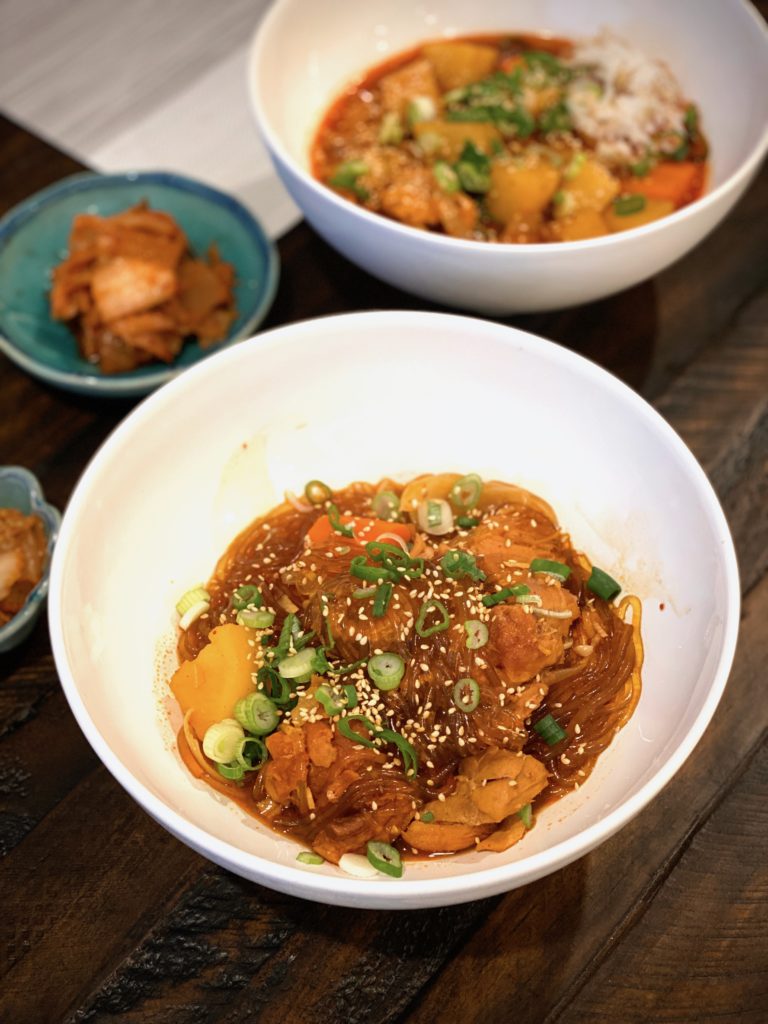
This spicy stew is a riff on dakjjim, a one-pot Korean braised chicken dish that’s cooked with danmyeon, or sweet potato noodles. I love these noodles’ chewy texture and they’re perfect for soaking up the sweet and savory braising liquid. Make this on a rainy day and serve with rice and kimchi for the ultimate comfort meal.

Ingredients:

  • 1 (3.5 ounce) package of sweet potato nooldes (dangmyeon), also called glass noodles
  • 1/4 cup gochujang
  • 1/2 cup soy sauce
  • 1 1/2 to 2 teaspoons gochugaru
  • 2 tablespoons oyster sauce
  • 2 tablespoons honey
  • 4 garlic cloves, minced
  • 1 tablespoon minced peeled ginger
  • 1 tablespoon sesame oil
  • 1 tablespoon avocado oil
  • 1 1/2 pounds boneless, skinless chicken thighs, quartered
  • 4 cups low-sodium chicken broth or bone broth
  • 1 palm-size piece kombu seaweed
  • 1 large russet potato (1 pound) peeled and cut into 1-inch chunks
  • 1 carrot, cut into 1-inch chunks
  • 1/2 onion, cut into thin wedges
  • Chopped green onions, for garnish
  • Toasted sesame seeds, for garnish
  • White rice, for serving
  • Kimchi, for serving
  1. Place the noodles in a large bowl, add warm water to cover, and set aside to soak until you need them.
  2. In a small bowl, stir together the gochujang, soy sauce, gochugaru, oyster sauce, honey, garlic, ginger, and sesame oil until blended.
  3. Heat a Dutch oven over medium-high heat. When hot, add the avocado oil, then the chicken, and cook the chicken until it is evenly cooked on the outside, 8 to 10 minutes, turning when it releases easily from the pan. Add the soy sauce mixture, chicken broth, kombu, and 2 cups water. Bring to a boil, then reduce the heat and simmer for 30 minutes, stirring occasionally. Remove the kombu.
  4. Add the potato, carrot, and onion to the pot. Increase the heat to medium, cover, and simmer until the carrots are tender, another 15 minutes or so.
  5. Drain and add the noodles to the pot and let them cook until translucent and soft, another minute or so. Serve the stew garnished with green onions and toasted sesame seeds, with a side of kimchi. (To make this dish ahead of time, cook through step 4, then when reheating soak and add the noodles to the soup as you reheat it the next day.)