Halvah-Stuffed Challah

Posted on

Growing up, one of my favorite after-school snacks was halvah rolled up with lavash flatbread: simple, sweet, and satisfying. Called halvardeh in Persian, Middle Eastern halvah is ubiquitous these days in well-stocked American grocery stores. But when I was a kid, halvah was precious: we’d make semi-monthly drives from Santa Rosa to San Jose to stock up on Iranian favorites, including halvah, sour cherry jam, lavashak (sour fruit roll ups), and spices and herbs for days.

This halvah-stuffed challah is a grown-up version of my childhood snack and make no mistake about it: this is a weekend project. Adapted from a Food and Wine recipe, this takes the better part of an afternoon to make, and the results are well worth it. This recipe makes two loaves so make like me and freeze one for eating later, when the craving strikes.
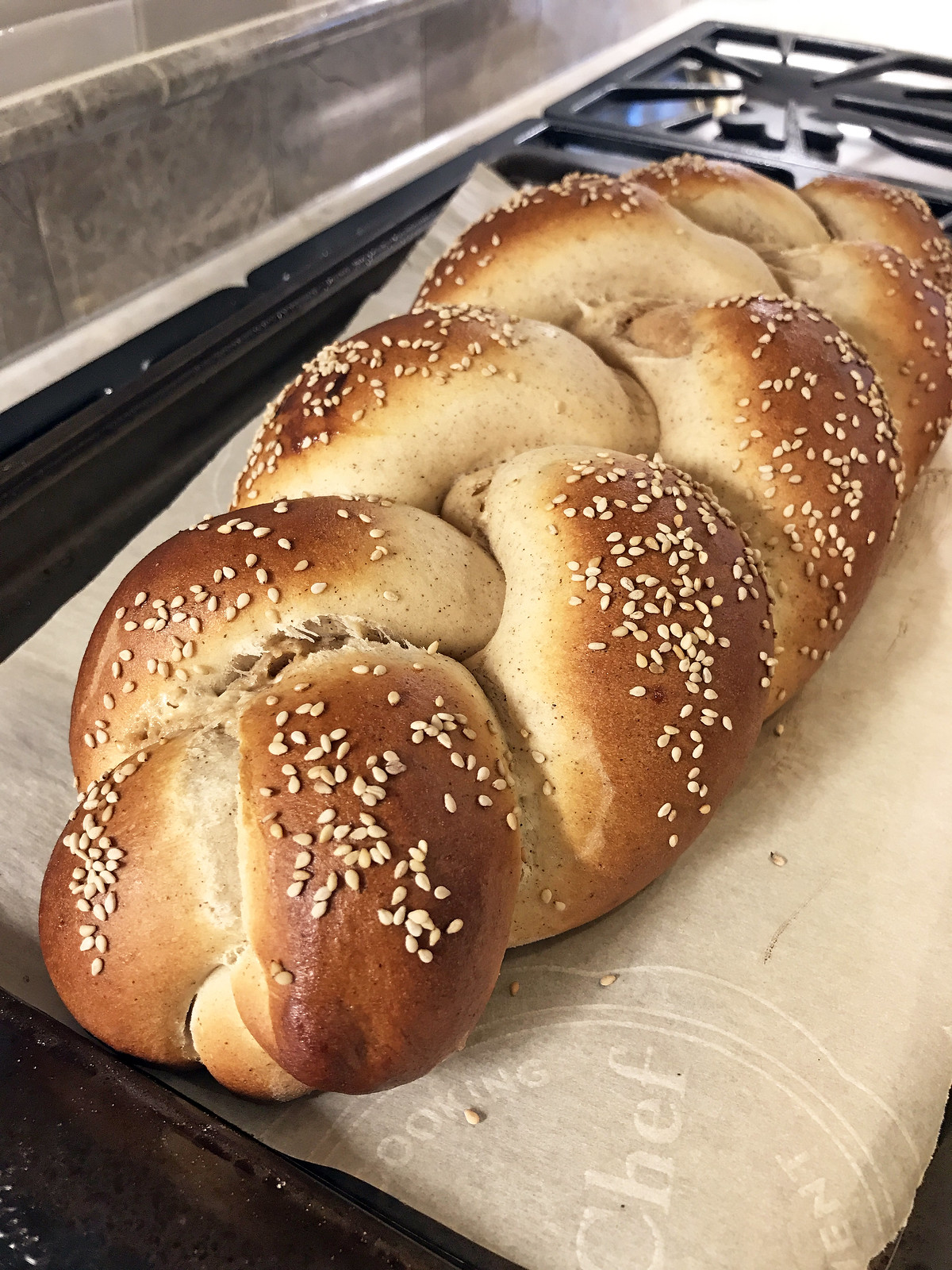
Halvah-stuffed challah

Ingredients:

1 1/2 cups warm water
1 1/2 tablespoons active dry yeast
1/3 cup plus 1 teaspoon sugar
5 eggs
1/2 cup canola oil
2 1/2 teaspoons vanilla extract
8 1/4 cups all-purpose flour
2 1/2 teaspoons ground cinnamon
1/8 teaspoon ground cardamom
1 cup tahini
1/3 cup plus 1 tablespoon honey
Salt
1 1/2 cups chopped halvah
Sesame seeds and more sugar, for sprinkling

1. Make the dough: In a small bowl, whisk the water with the yeast and 1 teaspoon of the sugar. Let stand for 10 minutes, until foamy.

2. In a medium bowl, whisk 4 of the eggs with the oil and 1 teaspoon of the vanilla. In the bowl of a stand mixer fitted with the dough hook, combine the flour, pinch of salt, 2 teaspoons cinnamon, 1/4 teaspoon cardamom and the remaining 1/3 cup of sugar. Mix to blend. Add the egg and yeast mixtures and knead until the dough comes together, scraping down the side and bottom of the bowl, about 3 minutes. Scrape the dough out onto a work surface and knead until smooth and slightly sticky, 8 to 10 minutes. Transfer the dough to an oiled large bowl and cover with wax paper and a towel on top.

3. Make the filling and topping: In a medium bowl, stir the tahini with 1/3 cup of the honey, the remaining 1 1/2 teaspoons vanilla, the remaining 1/2 teaspoon cinnamon, a pinch of salt, and 2 tablespoons of water until smooth. In a small bowl, beat the remaining egg with the remaining 1 tablespoon of honey and 1 tablespoon of water.

4. Preheat the oven to 375F degrees and line 2 baking sheets with parchment paper. Divide the dough into 2 equal pieces. Transfer 1 piece to a lightly floured work surface and keep the other piece covered with a damp kitchen towel. Divide the dough on the work surface into 3 equal pieces. Using a rolling pin, roll out 1 piece into a 
14-by-6-inch rectangle. Spread 1/4 cup of the tahini mixture on top, leaving a 1/2-inch border. Sprinkle 1/4 cup of the halvah over the tahini in an even layer. With a long side facing you, tightly roll up the dough into a log, pressing the seam and ends together to seal in the filling. Repeat with the other 2 pieces of dough, 1/2 cup of the tahini mixture and 1/2 cup of the halvah. Arrange the 3 logs on one of the prepared sheets and braid them together. Brush with the egg wash and sprinkle with sesame seeds and sugar. Repeat with the second piece of dough and the remaining filling, egg wash and toppings. Bake the challahs for about 25-30 minutes on the middle and bottom racks of the oven, shifting and rotating halfway through, until deep golden. Transfer to racks to cool.

Bean Thread Noodles with Oyster Mushrooms and Cucumber

Posted on

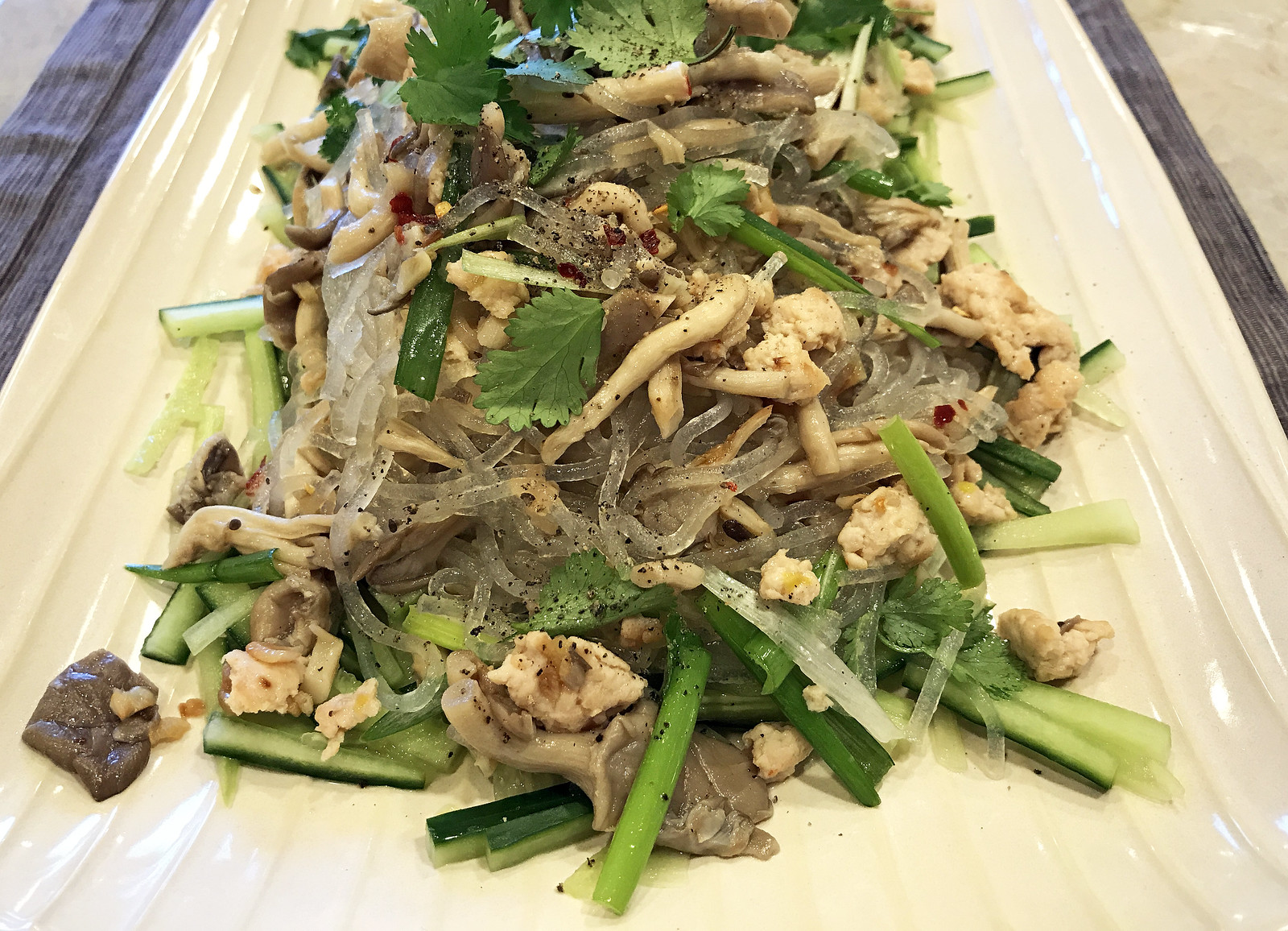
I could eat noodles for breakfast, lunch, and dinner every day and I wouldn’t get bored. But I’m trying to reduce the amount of grains in my diet lately, and this citrusy Southeast Asian-inspired salad is just the answer. It’s light, summery, and best of all, delicious.

Made from mung beans, bean thread noodles are gluten free, grain free, and have a slippery, wonderful mouthfeel similar to Korean sweet potato noodles. Use these in stir-fries, soups, salads — really, anything.

Bean thread nooles with oyster mushrooms and cucumber

Ingredients:

1 pound oyster mushrooms, cleaned
2 tablespoons vegetable oil
3 cloves garlic, minced
1/2 pound ground chicken
1/2 teaspoon salt
3 bundles (about 3 ounces) bean thread noodles, soaked in warm water for 20 minutes and drained
1 green onion, cut lengthwise into thin slices and then cut crosswise into 2-inch lengths
1/2 cup cilantro leaves
1/2 cucumber, thinly sliced
Ground black pepper
4 tablespoons lime juice
4 tablespoons fish sauce
1/4 teaspoon dried red chili flakes
1 teaspoon sugar

1. Heat 1 tablespoon oil in a wok over high heat and add the oyster mushrooms, stir-frying until cooked through and slightly golden, about 5 minutes. Remove from heat, let cool slightly, cut into bite-size pieces, and set aside in a large bowl.

2. Wipe out cooled wok and return to stove. Heat remaining tablespoon oil in the wok over high heat and add the garlic and stir-fry until golden, about 30 seconds. Add the chicken and stir-fry, then add the salt and a small pinch of sugar and continue stir-frying until cooked through and slightly golden. Remove from heat and add chicken to the bowl with mushrooms.

3. Bring a pot of water to a boil, cut the soaked bean thread noodles into 5-inch lengths, and add to boiling water for 1 minute, until just cooked through. Drain into a colander and rinse with cold water. Drain again. Place the noodles in the bowl with the mushrooms and chicken.

4. In a small bowl, mix together the lime juice, fish sauce, chili flakes, and 1 teaspoon sugar. Pour dressing over salad and toss gently.

5. Add the green onions, cilantro, and cucumber to the salad and toss again. Arrange noodle salad on a platter and sprinkle lightly with ground pepper.

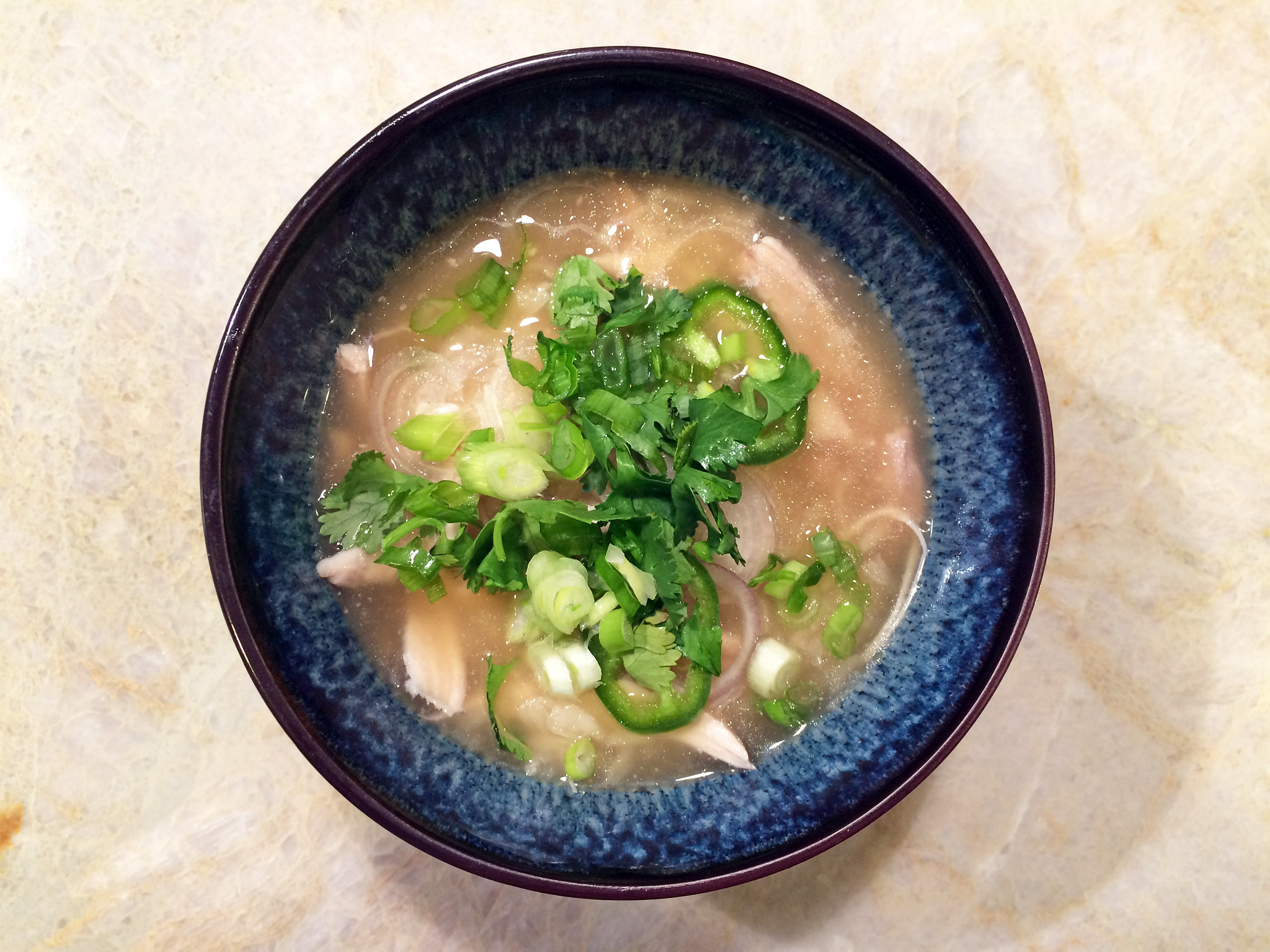
Chicken Soup with Sticky Rice

Posted on

‘Tis the season for rainy days, for heavy coats, for wanting nothing more than to curl up with a bowl of warm soup and binge-watch Game of Thrones. Winter is coming, y’all.

My favorite thing about this time of year is cold-weather cooking; namely, soups! Especially this one: an easy-to-make but complex-tasting chicken soup redolent with Vietnamese flavors of fish sauce, cilantro, and chiles. Make sure you add enough chicken broth: as the soup cools and settles, the sticky rice will thicken the soup.

Vietnamese sticky rice and chicken soup

Ingredients:

3 skinless, boneless chicken thighs
1 5-inch piece dried kombu
1 3-inch piece ginger, peeled, crushed
4 star anise pods
1 2-inch cinnamon stick
3 cloves
6 cups chicken stock or low-sodium chicken broth
1 cup glutinous (sticky) rice
2 tablespoons fish sauce
1 teaspoon brown sugar
2 green onions, thinly sliced
1 jalapeno, thinly sliced
1/2 cup cilantro, chopped
1/2 cup thinly sliced white onion

1. Bring chicken, kombu, ginger, star anise, cinnamon, cloves, stock, and 2 cups water to a simmer in a large pot over moderate heat. Reduce heat to a low simmer and cook until chicken is tender. Transfer chicken to a plate.

2. Strain broth through a fine-mesh sieve into another pot; discard solids. Return broth to large pot and add rice, fish sauce, and sugar. Bring to a simmer and cook until rice is very tender, about minutes. Shred chicken and return to pot; season soup with more fish sauce if needed.

3. Divide soup among bowls and garnish with green onions, jalapeno, cilantro, and white onion.

Green Onion Pancakes

Posted on

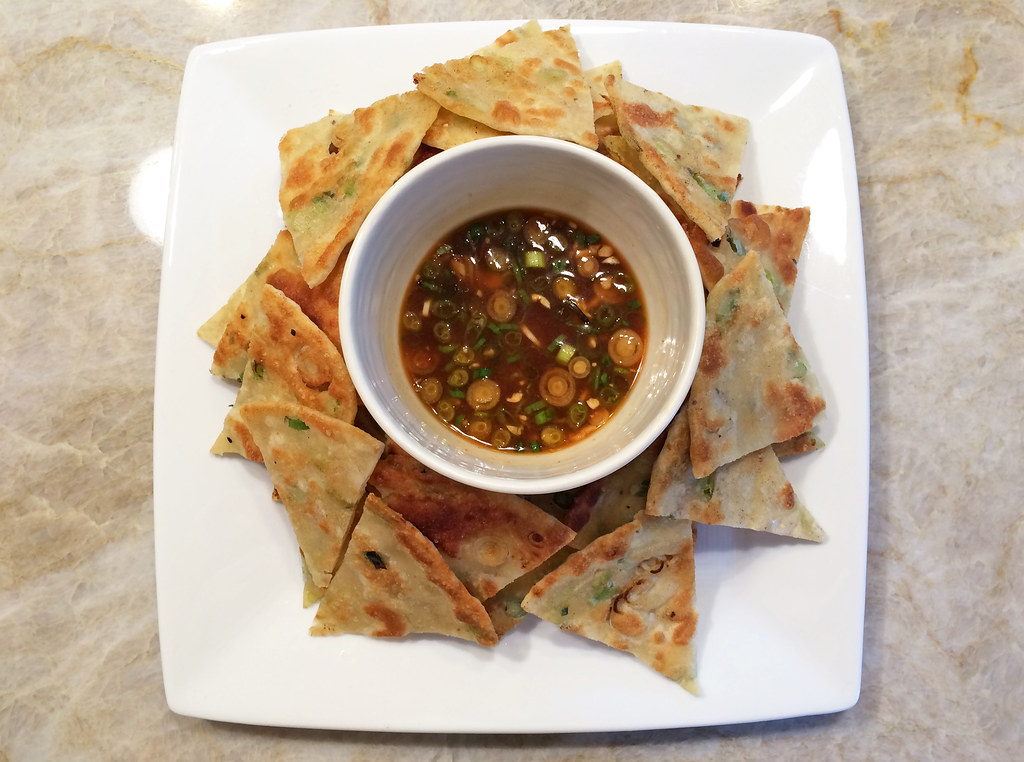
This might be the first bread I learned to make. I was practically a baby Yogurtsoda, obsessed with PBS’ roster of cooking shows in the 1990s. Martin Yan’s Yan Can Cook was one of my favorites and these chewy green onion pancakes looked like an irresistible snack, so I learned how to cook them.

Rolling out the dough for this unleavened bread takes a bit of getting used to but once you get the hang of it, the rest is easy. The accompanying dipping sauce isn’t authentic, but it adds a deliciously savory layer of flavor to the final dish.

Green onion pancakes

Ingredients:

3 1/2 cups flour
1 1/4 cups warm water
1/4 cup cooking oil plus additional for pan-frying
2 teaspoons sesame oil
1 cup plus 2 teaspoons chopped green onions
1 1/2 teaspoons salt
1/2 teaspoon pepper
1/2 cup chicken broth
2 tablespoons soy sauce
1/2 teaspoon minced garlic
1 teaspoon chili garlic sauce

1. Place flour in a bowl. Add water, stirring with a fork, until dough holds together. On a lightly floured board, knead dough until smooth and satiny, about 5 minutes. Cover and let rest for 30 minutes.

2. Combine chicken broth, soy sauce, 2 teaspoons green onions, garlic, and chili garlic sauce in a bowl and set aside.

3. On a lightly floured board, roll dough into a cylinder, then cut into 12 portions. To make each pancake, roll a portion of dough to make an 8-inch circle about 1/8-inch thick; keep remaining dough covered to prevent drying. Brush with cooking oil. Sprinkle sesame oil, green onions, salt, and pepper on top. Roll dough into a cylinder and coil dough into a round patty; tuck end of dough underneath. Roll again to make an 8-inch circle about 1/8-inch thick.

4. Place a 10-inch frying pan over medium heat. Add 2 tablespoons oil, swirling to coat sides. Add a pancake and cook until golden brown on each side, about 4 minutes total. Remove and drain on paper towels. Add more oil as needed and repeat with remaining pancakes.

5. Cut pancakes into wedges and serve with dipping sauce on the side.

Bibimbap

Posted on

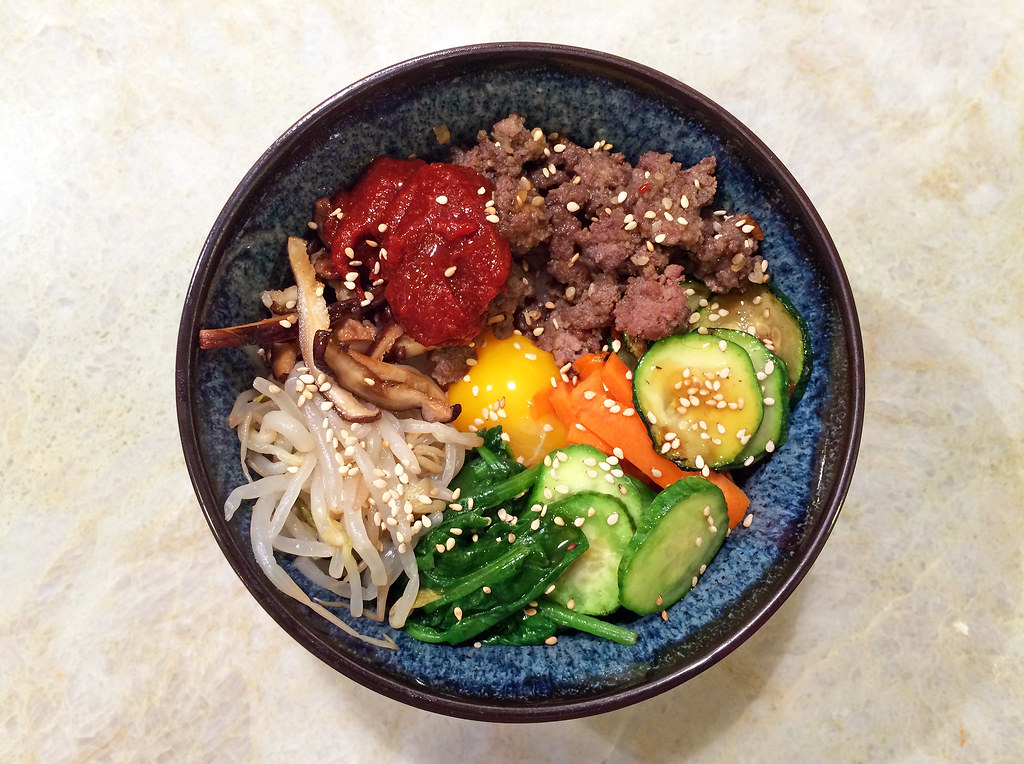
Bibimbap! Fun to say, funner to eat. This colorful Korean rice bowl is endlessly adaptable. Keep the toppings vegetarian or add extra meat if you please. Go heavy on the seafood. Add your egg yolk raw. Or top it with a fried egg instead. The world is your oyster. (Ooh, how about oysters on bibimbap though? Can you do that?)

Bibimbap

Ingredients:

8 ounces ground beef or flank steak, cut into matchsticks
1/4 cup plus 1 tablespoon soy sauce
2 green onions, thinly sliced
1 tablespoon honey
1 tablespoon plus 1 teaspoon minced garlic
1 teaspoon sugar
2 teaspoons gochugaru
5 teaspoons sesame oil, plus more for serving
4 teaspoons sesame seeds
2 cups soybean sprouts
8 ounces spinach
2 carrots, peeled and cut into matchsticks
1 zucchini, thinly sliced
3 teaspoons vegetable oil
2 Persian cucumbers, thinly sliced
8 shiitake mushrooms, thinly sliced
6 cups freshly cooked rice
4 egg yolks
1/4 cup gochujang
salt

1. Make the spicy soy seasoning: combine 1/4 cup soy sauce, green onions, 1 teaspoon garlic, sugar, gochugaru, 2 teaspoons sesame seeds, and 2 teaspoons sesame oil in a bowl. Heat 1 teaspoon vegetable oil in a skillet over medium-high heat and add the beef, stirring to break up into small pieces and until cooked through and slightly browned, about 5 minutes. Set aside.

2. Combine the meat, remaining tablespoon soy sauce, honey, remaining tablespoon garlic, 2 teaspoons sesame oil, and 1 teaspoon sesame seeds in a large bowl. Set aside.

3. Clean the soybean sprouts and pick out any brownish roots. Put the sprouts in a saucepan, add 1/2 cup water, cover, and cook over high heat for 5 minutes. Drain and mix with a pinch of salt and 1/4 teaspoon sesame oil. Set aside.

4. Blanch the spinach in boiling water for 30 seconds. Drain and rinse under cold water. Drain again and squeeze out excess water. Coarsely chop the spinach and mix with a pinch of salt and 1/4 teaspoon sesame oil. Set aside.

5. Heat 1/2 teaspoon vegetable oil in a skillet over high heat. Add the carrots and cook until slightly wilted, about 1 minute. Remove from the skillet and set aside.

6. Combine the zucchini and and pinch of salt in a bowl and let stand for a few minutes, then pat dry. Add the zucchini and saute until slightly wilted, about 1 minute. Stir in 1/4 teaspoon sesame oil, remove from the skillet, and set aside.

7. Combine the cucumber and and pinch of salt in a bowl and let stand for a few minutes, then pat dry. Add the cucumber and saute until slightly wilted, about 1 minute. Remove from the skillet, and set aside.

8. Heat 1 teaspoon vegetable oil in a skillet over medium-high heat and add the mushrooms, stirring occasionally until softened, about 3 minutes. Remove and set aside.

9. To serve, divide the hot rice between 4 to 6 bowls and arrange the vegetables and beef on the rice. Top with egg yolks while the rice is still hot. Sprinkle the bibimbap with sesame seeds, drizzle with sesame oil to taste, and serve with gochujang and soy seasoning sauce on the side.