Okonomiyaki

Posted on

The first time I tried okonomiyaki, I had just moved in with my new roommates for college, two of whom were from Japan: Sanae from Tokyo and Sanae from Osaka. Throughout the year, I was fortunate to learn to cook all kinds of regional dishes with them, many of which can be hard to find in restaurants.

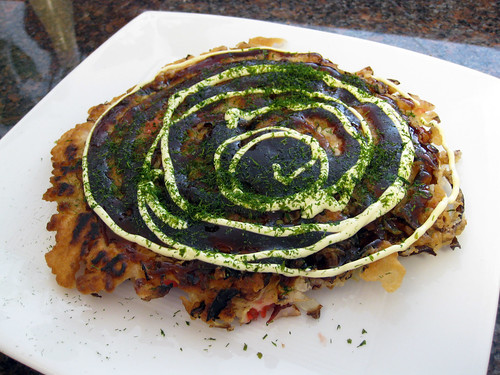
Okonomiyaki was the first homestyle Japanese dish that they taught me, and to this day, it remains one of my favorites. Loosely translated as “as you like it,” okonomiyaki is a savory pancake consisting of varying filling ingredients but the flour, egg, cabbage, and dashi base remain consistent.
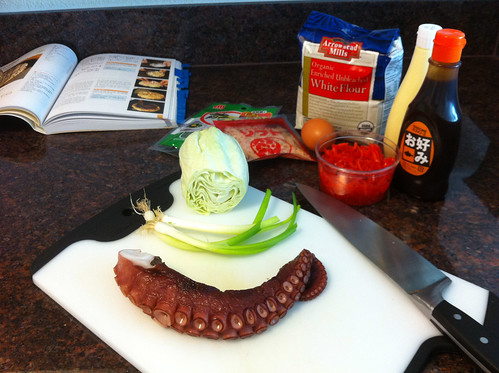
Okonomiyaki, part one

My version of okonomiyaki is pretty standard, albeit without the mountain yam that can be so hard to track down. When I was in Japan two years ago, I tried a delicious rendition in Kyoto that had a fried noodle base, as well as another version with melted cheese and dried anchovies, so the possibilities are endless. The ingredient list might be daunting, but it’s worth the search – and oh, don’t forget the giant octopus tentacle.
Okonomiyaki, part two

Ingredients:

1/2 cup all-purpose flour
2/3 cup dashi stock
1 egg
1 cup cabbage, shredded
2 green onions, thinly sliced
benishoga red pickled ginger, chopped (not to be confused with gari pickled ginger, which is commonly served alongside sushi)
3 inches cooked octopus, finely chopped
1 handful dried bonito flakes
1/2 teaspoon dried nori flakes
okonomi sauce (available in Japanese and well-stocked Asian grocers)
Japanese-style mayonnaise (I recommend Kewpie brand)
vegetable oil

1. Place the flour and dashi stock in a bowl, and mix well. Add the cabbage, onion, benishoga ginger, octopus, and egg to the bowl, and mix well.

2. Heat a nonstick frying pan over medium-high heat and add one tablespoon vegetable oil. Pour 1/3 cup of the batter mixture into the pan, and sprinkle a few dried bonito flakes on top. Cook for about 3 minutes.

3. Carefully flip the pancake over, and cook for about 4 minutes. Reverse again, and cook for another 4 minutes. Transfer the pancake to a serving plate.

4. Spread okonomi sauce and mayonnaise on top of the pancake, and sprinkle with dried nori and bonito flakes.

5. Repeat steps 2 to 4 until batter is finished.
Crab and Tobiko Summer Rolls

Posted on

It’s only February, but I’ve had summer on my mind, and all the fresh dishes that go with it. The aptly-named summer rolls are one of my favorite things to eat in the warmer weather and with spring only a few weeks away, I’m making these early this year.

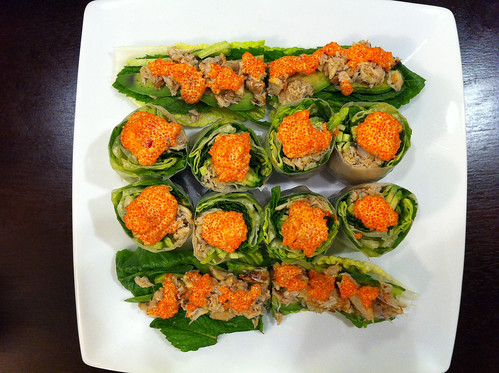
These seafood summer rolls pack a bunch with a chili-garlic spiked aioli and the crunchy, vinagared vegetables balance out the mayonnaise perfectly. If you take the time to prep your mise en place ahead of time here, putting these rolls together is a snap.

Crab and tobiko spring rolls

Ingredients:
1 (3-inch-long) piece daikon radish, peeled and julienned
1 carrot, peeled and julienned
3 tablespoons lime juice
1/4 teaspoon sesame oil
1 Persian cucumber, halved and julienned
1 1/2 tablespoons rice vinegar
1/4 cup mayonnaise
1 teaspoon chili-garlic sauce
1 ounce tobiko roe
3 teaspoons soy sauce
10 round rice-paper wrappers
1 pound crabmeat, picked over and coarsely flaked
1 green onion, thinly sliced diagonally

1. Combine one tablespoon of lime juice and soy sauce in a small bowl and set aside. In a separate bowl, toss carrot, daikon, and cucumber with vinegar, sesame oil, 2 tablespoons of the lime juice, and salt to taste.

2. In another bowl, mix chili-garlic sauce with mayonnaise and half of the tobiko and set aside.

3. Stir together the remaining lime juice and soy sauce in a small bowl.

4. Soak 1 rice paper wrappers in a baking dish of warm water until pliable, about 5 seconds. Put 1 soaked wrapper on a dry cutting board. Put one tablespoon of crabmeat across lower third of wrapper (nearest you), leaving a 2-inch border at bottom. Spread with 1/2 tablespoon mayonnaise-tobiko mixture and top with a few pieces of the carrot mixture and sliced scallion. Fold bottom of wrapper over filling and roll up tightly. Repeat with remaining filling ingredients and rice paper wrappers.

5. Cut each roll into 2 pieces. Arrange on a platter, standing them up, and top each with a dollop of tobiko. Drizzle lime-soy sauce around rolls.

Sunomono Salad

Posted on

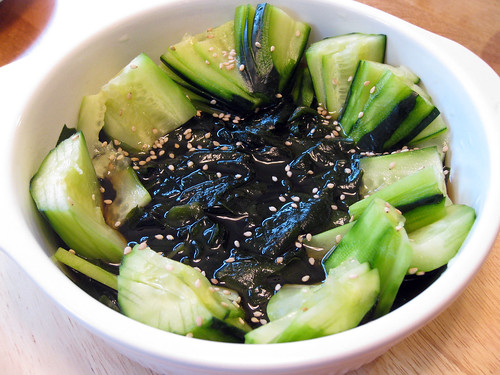
“Sunomono” translates loosely as “vinegared things” in Japanese, and over the years I’ve tried a number of recipes to recreate restaurant-style cucumber sunomono at home. After several renditions, I’ve finally come up with my favorite version, which includes the addition of radish sprouts (not pictured but adds a really nice layer of texture and subtle flavor).

I’ve been making this salad a lot lately as the weather is finally warming up in the Bay Area, and we’re enjoying our “summer” as fall approaches.

Sunomono Salad

Ingredients:

2 ounces dried wakame seaweed, soaked in cold water for 5 minutes
2 Japanese or Persian cucumbers, thinly sliced
1 bunch radish sprouts, cut in half
4 tablespoons rice vinegar
4 tablespoons dashi broth
3 tablespoons soy sauce
1 tablespoon mirin

1. Lightly squeeze excess water from the wakame and roughly cut into bite-size pieces.

2. Mix the rice vinegar, dashi, soy sauce, and mirin in a small saucepan and bring to a simmer to evaporate the alcohol and sharpness of the vinegar. Immediately remove from heat and cool to room temperature.

3. Arrange the wakame in a serving bowl and garnish with the cucumber and daikon sprouts. Pour dressing over and serve.

Greek Salad

Posted on

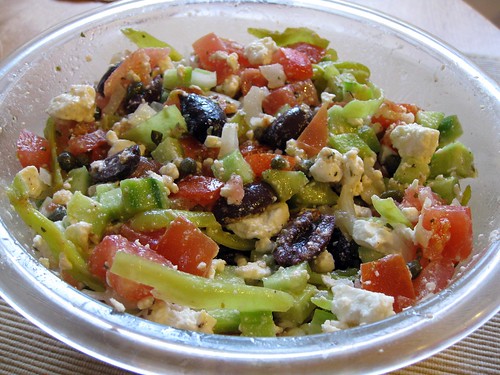
Greek salad is so basic that I almost decided not to write about it. There are enough variations on this classic salad though that it warrants a post, and this one is my version.

I like my salads acidic, so I’ve upped the lemon content, and thrown in a few extra pepperoncinis and capers for good measure. Although I question the Greek authenticity of this salad, it’s become one of my favorites.

Greek Salad

Ingredients:

2 tablespoons extra-virgin olive oil
3 tablespoons lemon juice (preferably from Meyer lemons)
1 teaspoon dried oregano
salt and pepper
2 tomatoes, cut into 1/2-inch dice
1/2 red onion, chopped
1 cucumber, peeled, halved and cut into 1/2-inch dice
12 Kalamata olives, pitted and halved
6 pepperoncini, thinly sliced
2 tablespoons drained capers
1 cup crumbled feta cheese

1. In a large serving bowl, whisk the olive oil with the oregano and lemon juice; season with salt and pepper.

2. Add the tomatoes, red onion, cucumber, olives, pepperoncini, capers and feta and toss.

Classic Hot Wings

Posted on

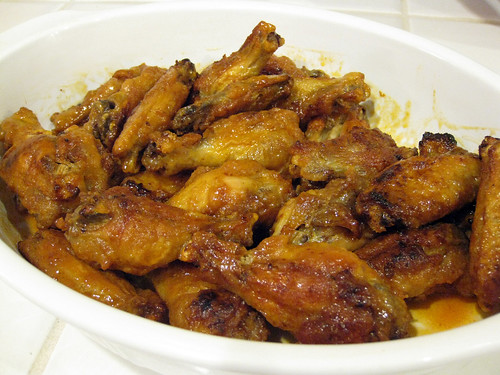
I know, I know. Hot wings are overdone. They’re on every party menu and come in a million variations. But these are baked! And taste like they’re fried! I guess you could call these healthy hot wings, except that they’re doused in their fair share of butter. Still, they’re tried and true, and I’ve been getting requests to make them for nearly every casual gathering lately.

Hot Wings

Ingredients:

2 tablespoons all-purpose flour
1 teaspoon salt
2 pounds chicken wings
3 tablespoons red hot sauce, preferably Frank’s Red Hot
2 tablespoons unsalted butter, melted

1. Preheat the oven to 500°. Line a large baking sheet with foil and spray with vegetable oil. In a bowl, mix the flour with the salt. Add the chicken and toss to coat. Spread the chicken on the baking sheet in a single layer.

2. Roast the chicken for 45 minutes, turning once at the halfway point, until browned and crispy. In a bowl, whisk the hot sauce with the butter. Add the chicken wings and toss. Serve warm.