Sichuan Dry-Fried Green Beans

Posted on

I used to hate green beans. Growing up, I inexplicably dreaded the loobia polo that most kids loved: an Iranian rice pilaf of green beans, browned lamb, tomatoes, and spices. It wasn’t until recently when I tried Sichuan-style dry-fried green beans that I’ve come around to loving the legume. It was the spicy, garlicy flavor that made me change my green bean-hating ways, and now, I can’t get enough.

Long beans are traditionally used in this recipe, but green beans work as well. Feel free to omit the ground chicken as well for a vegetarian version. Last but not least, make sure your beans are completely dry before frying them — this will ensure a blistered texture.

Sichuan dry-fried long beans

Ingredients:

2 tablespoons soy sauce
1 tablespoon cornstarch
1/2 pound ground chicken
1/4 cup chicken stock
1 tablespoon sugar
2 teaspoons minced garlic
2 teaspoons chili garlic sauce or chili bean sauce
1/4 teaspoon sesame oil
1 cup vegetable oil
3/4 pound green beans or long beans, ends trimmed and cut into 3-inch lengths

1. Marinate the chicken: stir 1 tablespoon of the soy sauce and cornstarch together in a medium bowl until the cornstarch is dissolved. Mix the chicken in the marinade until incorporated. Let stand for 10 minutes.

2. Prepare the sauce: stir the chicken stock, soy sauce, sugar, garlic, chili garlic sauce, and sesame oil together in a small bowl until the sugar is dissolved.

3 Pour the oil into a 2-quart saucepan and heat over medium-high heat. Carefully slip the green beans into the oil and cook, stirring continuously, until they are wrinkled, about 5 minutes. With a slotted spoon, transfer the beans to paper towels to drain. Reserve the oil.

4. Heat a wok over high heat until hot. Pour in 2 teaspoons of the reserved oil and swirl to coat the sides. Slide the chicken into the wok and stir-fry until the meat is crumbly and changes color, about 2 minutes. Add the green beans and sauce and stir until heated through, 1 to 2 minutes. Scoop the contents of the wok onto a serving plate and serve warm.

Pommes Sautees au Lard

Posted on

To be fair, there was no lard used in the making of this dish. I used turkey bacon instead. Please don’t judge me; the end product was still a garlicy plate of fried potato goodness.

Adapted from Anthony Bourdain’s Les Halles Cookbook, this wintery dish is a snap to create and makes a great side. The original recipe uses slab bacon but if you’re cutting down on the fat, use a mixture of turkey bacon and butter, as I did.

Pommes sautees au lard

Ingredients:

4 slices turkey bacon, chopped into a 1/4-inch dice
2 tablespoons butter
2 Yukon Gold potatoes, peeled, cut in half, then chopped into 1/4-inch thick slices
1 garlic clove, minced
4 sprigs of flat parsley, chopped
salt and pepper

1. Heat a saute pan over medium heat and add the butter until melted. Add the bacon and cook until the fat is rendered and the meat is crispy, about 5 minutes, stirring occasionally.

2. Add the potatoes and cook for 15 minutes, stirring and tossing frequently. Add the garlic and cook for 2 minutes, then season with parsley, salt, and pepper. Serve warm.

Okonomiyaki

Posted on

The first time I tried okonomiyaki, I had just moved in with my new roommates for college, two of whom were from Japan: Sanae from Tokyo and Sanae from Osaka. Throughout the year, I was fortunate to learn to cook all kinds of regional dishes with them, many of which can be hard to find in restaurants.

Okonomiyaki was the first homestyle Japanese dish that they taught me, and to this day, it remains one of my favorites. Loosely translated as “as you like it,” okonomiyaki is a savory pancake consisting of varying filling ingredients but the flour, egg, cabbage, and dashi base remain consistent.

Okonomiyaki, part one

My version of okonomiyaki is pretty standard, albeit without the mountain yam that can be so hard to track down. When I was in Japan two years ago, I tried a delicious rendition in Kyoto that had a fried noodle base, as well as another version with melted cheese and dried anchovies, so the possibilities are endless. The ingredient list might be daunting, but it’s worth the search – and oh, don’t forget the giant octopus tentacle.

Okonomiyaki, part two

Ingredients:

1/2 cup all-purpose flour
2/3 cup dashi stock
1 egg
1 cup cabbage, shredded
2 green onions, thinly sliced
benishoga red pickled ginger, chopped (not to be confused with gari pickled ginger, which is commonly served alongside sushi)
3 inches cooked octopus, finely chopped
1 handful dried bonito flakes
1/2 teaspoon dried nori flakes
okonomi sauce (available in Japanese and well-stocked Asian grocers)
Japanese-style mayonnaise (I recommend Kewpie brand)
vegetable oil

1. Place the flour and dashi stock in a bowl, and mix well. Add the cabbage, onion, benishoga ginger, octopus, and egg to the bowl, and mix well.

2. Heat a nonstick frying pan over medium-high heat and add one tablespoon vegetable oil. Pour 1/3 cup of the batter mixture into the pan, and sprinkle a few dried bonito flakes on top. Cook for about 3 minutes.

3. Carefully flip the pancake over, and cook for about 4 minutes. Reverse again, and cook for another 4 minutes. Transfer the pancake to a serving plate.

4. Spread okonomi sauce and mayonnaise on top of the pancake, and sprinkle with dried nori and bonito flakes.

5. Repeat steps 2 to 4 until batter is finished.

Coconut Tapioca Pudding

Posted on

The first time I cooked with tapioca pearls a few years ago, I ended up with a giant mess. I was trying to recreate boba tea, and I overcooked the small, translucent spheres and the whole thing dissolved into a gelatinous blob that adhered itself to the pot. After that experience, I stayed away from tapioca pearls – until now.

When I came across this recipe for a cool, tropical tapioca pudding first published in Sunset Magazine, and by the Bay Area’s very own Tim Luym, no less, I knew I had to give tapioca a second chance. Luym is the former executive chef of Poleng Lounge, a fun, street-food centered Filipino restaurant that’s no longer around, but I’d met Luym at an Anthony Bourdain book release a few years ago and his super friendly vibe and his amazing use of Southeast Asian flavors made an impression on me.

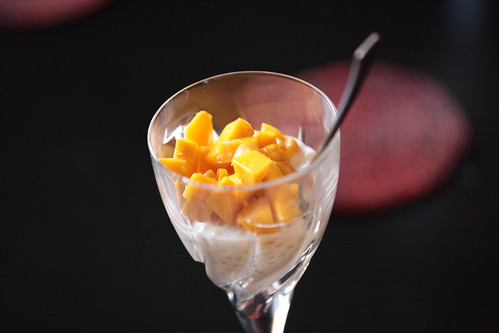
But I digress. Back to the tapioca. Thankfully, this dish turned out to be really easy to make. Just keep an eye on the tapioca pearls as they boil and take care not to overcook them. Use small, white pearls, not the larger, dark ones that you typically see in boba tea. I topped this pudding with toasted coconut, mango, and grass jelly, but lychees, kiwi, or pineapple will work just as well.
Mother's Day sushi brunch

Ingredients:

1/3 cup small pearl tapioca
1 can (14 oz.) coconut milk
1 cup milk
1/4 cup sugar
1/2 teaspoon vanilla extract
1/4 cup toasted coconut flakes
1 mango, chopped
1/3 can grass jelly, drained and chopped

Preparation

1. In a saucepan, cook tapioca in 2 quarts boiling water until only slightly chewy to the bite, 5 to 8 minutes. Pour through a fine strainer.

2. Meanwhile, in another saucepan over medium heat, warm the coconut milk, milk, sugar, and vanilla, until steaming, 6 to 8 minutes.

3. Stir drained tapioca into vanilla mixture. Cook, stirring often, until tapioca pearls are clear and just tender, 3 to 6 minutes.

4. Let pudding cool, then chill, stirring occasionally, at least 1 1/4 hours. Stir in more milk if pudding seems too thick.

5. Spoon pudding into glasses or small bowls. Top with toasted coconut and fresh fruit.
Spicy Pickled Okra

Posted on

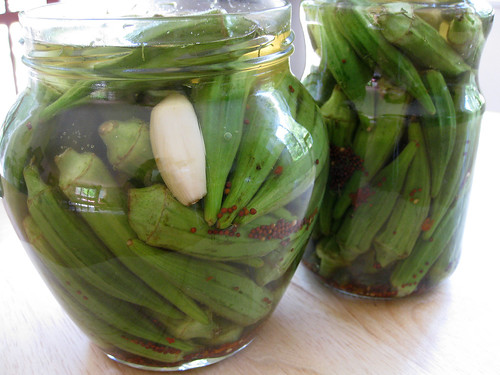
It’s dead in the middle of winter and there are no fresh okra at the market these days. Or so I thought. They’re around, albeit pricier than usual, and who knows where they came from, but I found them at the store last week and this recipe immediately came to mind. If you know me, you know I love pickles and I love okra too, so this condiment-slash-side dish is just perfect.

These are probably better pickled during the summer months, when okra are actually in season, but making these garlicy spears now is fine if you’re craving a taste of summer. Just make sure to use fresh, not frozen okra. They’re excellent alongside sandwiches or as a cocktail garnish. Oh, and straight out of the jar works too.

Spicy Pickled Okra

Ingredients:

1 1/2 pounds okra
4 garlic cloves
2 cups cider vinegar
1 3/4 cups water
3 tablespoons sugar
1 1/2 tablespoons kosher salt
1 1/2 tablespoons mustard seeds
1 teaspoon crushed red pepper

1. Divide okra and garlic evenly among 2 (2-pint) jars.

2. Combine vinegar and remaining ingredients in a saucepan; bring to a boil. Cook 1 minute or until sugar dissolves. Remove from heat; let stand 5 minutes. Carefully pour vinegar mixture into jars, leaving about 1/4 inch at top. Seal jars; refrigerate at least 3 days and up to 1 month before serving.