Kimchi Mac and Cheese

Posted on

I love kimchi. I eat it straight out of the jar. To me, kimchi is torshi-adjacent — after all, my family has been buying kimchi since before it entered the American lexicon in the 1990s. We eat it alongside all manner of khoresh and rice. It works!

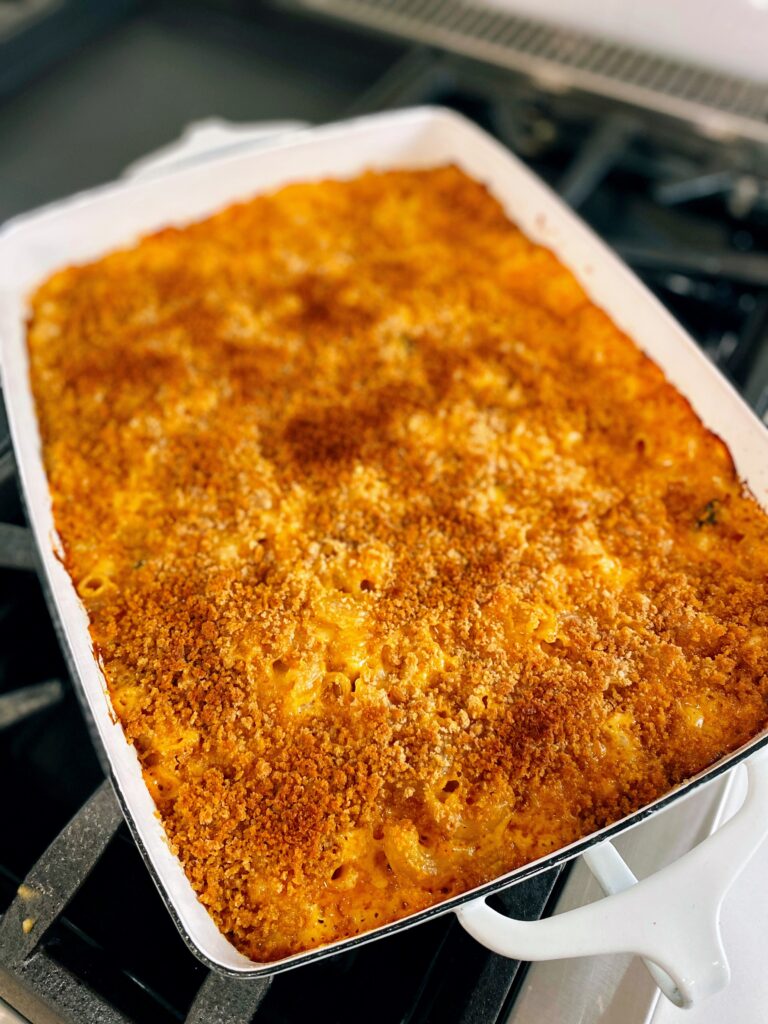
Kimchi is versatile. And if it works so well with Iranian food, then why not with American food too? Behold, your new favorite mac and cheese recipe. Tangy, fermented kimchi is the perfect foil to cheddar cheese. I can’t get enough.
Ingredients:
  • 1 pound elbow macaroni or similar
  • 1 cup panko
  • 1 tablespoon olive oil
  • 4 tablespoons (1/2 stick) butter
  • 2 tablespoons flour
  • 2 cups milk, warmed
  • 1 teaspoon Dijon mustard
  • 1 1/2 teaspoons gochujang
  • 1/4 teaspoon ground nutmeg
  • 1 1/2 teaspoons salt
  • 2 cups grated Gruyere cheese
  • 3 1/2 to 4 cups grated aged extra-sharp cheddar cheese
  • 1 cup kimchi, roughly chopped
  1. Preheat the oven to 375F degrees.
  2. Bring a pot of salted water to a boil. Add macaroni and boil for 4 to 5 minutes. Drain, rinse with cold water, and set aside.
  3. Put the panko in a small bowl and drizzle with olive oil, mixing until the panko is evenly coated. Set aside.
  4. In a large pot, melt the butter over medium-low heat. Add the flour and whisk for 1 minute. Drizzle in the warm milk, continuing to whisk to get rid of any clumps. Once the mixture is smooth, whisk in the mustard, gochujang, nutmeg, and salt. Stir mixture with a wooden spoon until the sauce coats the back of a spoon, for a few minutes.
  5. Remove from the heat and add both cheeses, macaroni, and kimchi and mix until the pasta is coated with the sauce. Pour the pasta into a wide, shallow, oven-proof baking dish, top with the panko mixture and transfer the dish to the oven.
  6. Bake for 35 to 40 minutes, until the panko topping is golden brown and the cheese sauce is bubbling at the edges.
Bhindi Masala (Okra Masala)

Posted on

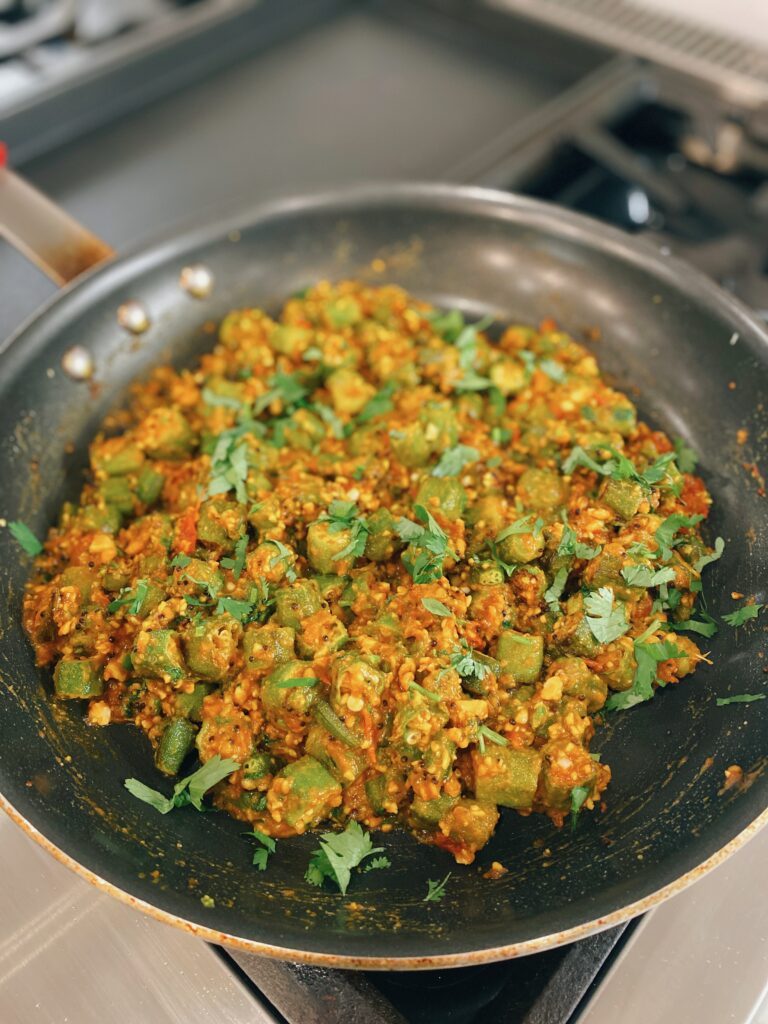
Behold, my favorite Indian dish of all time. If you’ve been around for a while, you know that this is a no-slander zone when it comes to okra. Adapted from Food & Wine, this version of bhindi masala is a little bit different in that it includes finely chopped peanuts for an extra dose of heft and flavor.

Serve with rice or flatbread, or if you’re like me and can’t help yourself, eat straight from the pot with a spoon.

Ingredients:

For the bhindi masala:

  • 1 pound okra
  • 1/4 cup avocado oil, divided
  • 1/4 teaspoon ground fenugreek seeds 
  • 1/2 cup unsalted roasted peanuts, finely chopped
  • 2 tablespoons chopped cilantro, plus more for garnish
  • 1 1/2 teaspoons salt
  • 1 teaspoon sugar
  • 1 teaspoon ground cumin
  • 1 teaspoon finely chopped garlic
  • 1 teaspoon finely chopped serrano chile
  • 1/2 teaspoon chickpea flour or all-purpose flour
  • 1/2 teaspoon ground coriander
  • 1/2 teaspoon ground turmeric

For tomato tarka:

  • 4 small tomatoes, chopped (about 3 cups)
  • 1 tablespoon avocado oil
  • 1 teaspoon black mustard seeds 
  • 1 teaspoon granulated sugar
  • 1 teaspoon Kashmiri chile powder 
  • 1/2 teaspoon ground coriander
  • 1/2 teaspoon ground turmeric
  • 1/2 teaspoon salt
  1. Make the bhindi masala: cut okra crosswise into 1-inch pieces, and arrange a single layer on a baking sheet. Let stand, uncovered, at room temperature until cut sides feel dry, 1 to 2 hours.
  2. Make the tomato tarka: pulse tomatoes in a food processor until mostly smooth, 8 to 10 pulses. Heat oil in a medium skillet over medium-low for 2 minutes. Add mustard seeds; cook, stirring often, until seeds begin to pop, 2 to 3 minutes. Stir in sugar, chile powder, coriander, turmeric, and salt; stir in tomatoes. Bring to a simmer over medium, stirring occasionally. Reduce heat to medium-low; simmer, stirring occasionally, until mixture thickens and a spoon leaves a trail when pulled through sauce, about 20 minutes. Cover and remove from heat. Set aside.
  3. Make the bhindi masala: heat 2 tablespoons oil in a large skillet over medium. Add fenugreek; cook, stirring constantly, until fragrant and sizzling, about 10 seconds. Add okra; cook, stirring occasionally, until tender and charred in spots, about 10 minutes. Reduce heat to low. Stir in peanuts, cilantro, salt, sugar, cumin, garlic, serrano chile, chickpea flour, coriander, turmeric, and remaining 2 tablespoons oil. Cook, stirring often, until fragrant and peanuts are lightly toasted, about 2 minutes. Season with salt to taste. Remove from heat.
  4. Mix tomato tarka into the bhindi masala over medium-low, stirring often, until warm, about 2 minutes. Serve on a platter and garnish with additional cilantro.

Bulgogi Japchae

Posted on

What’s better than bulgogi or japchae? Bulgogi and japchae at the same time, of course. I’ve published a similar japchae recipe here before, but this one is different in that the seasonings are more like bulgogi and there’s the addition of spinach. Try both versions out and see which one your prefer.

Ingredients:

For the japchae:

  • Scant 1/4 cup sugar
  • 1/3 cup soy sauce
  • 2 tablespoons sesame oil
  • 1 bunch spinach
  • 8 ounces Korean sweet potato noodles
  • 1 tablespoon avocado oil
  • 1 carrot, cut into 2-inch matchsticks
  • 1/2 to 1 red bell pepper, sliced
  • 3 green onions (green parts only), chopped into 3-inch pieces
  • 1/2 yellow onion, sliced
  • 4 to 6 shiitake mushrooms, sliced (about 1/2 cup)
  • 3 garlic cloves, minced

For the bulgogi:

  • 1/4 cup soy sauce
  • 2 tablespoons sesame oil
  • 1 tablespoon brown sugar
  • 2 tablespoons honey
  • 3 garlic cloves, minced
  • 1 pound ribeye or sirloin steak, very thinly sliced
  • 1/2 yellow onion, cut into 1-inch pieces
  • 1 tablespoon toasted sesame seeds
  • 3 tablespoons avocado oil
  1. Make the bulgogi: in a large bowl, mix the soy sauce, sesame oil, brown sugar, honey, and garlic. Add the beef, onion, and sesame seeds and stir until all the beef is coated. Cover the bowl and marinate, refrigerated, 1 to 5 hours.
  2. Heat a large skillet over medium-high heat. When hot, add 2 tablespoons of the oil, then add half of the meat and onion mixture and cook, stirring occassionally, until the meat is cooked through and the onion has softened, about 3 minutes. Transfer the meat to a bowl and repeat with remaining tablespoon oil and meat and onion mixture. Set aside.
  3. Make the japchae: in a small bowl, whisk together the soy sauce, sugar, and sesame oil to blend. Set aside.
  4. Fill a medium bowl with an ice bath. Fill a large pot halfway with water and bring to a boil. Add the spinach to the boiling water, let cook for 15 seconds, then transfer the spinach to the ice water. (Keep the boiling water in the pot.) Let the spinach cool, then drain. Squeeze the excess water out of the spinach, roughly chop the spinach, and set aside.
  5. Add the sweet potato noodles to the boiling water and cook until soft, about 5 minutes or according to package instructions. Drain and set aside.
  6. Heat a large cast-iron or nonstick skillet over medium-high heat. Add the avocado oil, then the carrot, bell pepper, green onion, yellow onion, mushrooms, and garlic, and stir to mix. Stir-fry until they begin to soften, about 3 minutes. Add the spinach and noodles and stir for about a minute, then add the soy sauce mixture and toss with tongs to coat all the ingredients. Add the bulgogi and mix again until the meat is distributed. Serve warm or at room temperature. (Japchae can be refrigerated for up to 3 days and reheated.)

Thai-Style “Sausage” Lettuce Wraps

Posted on

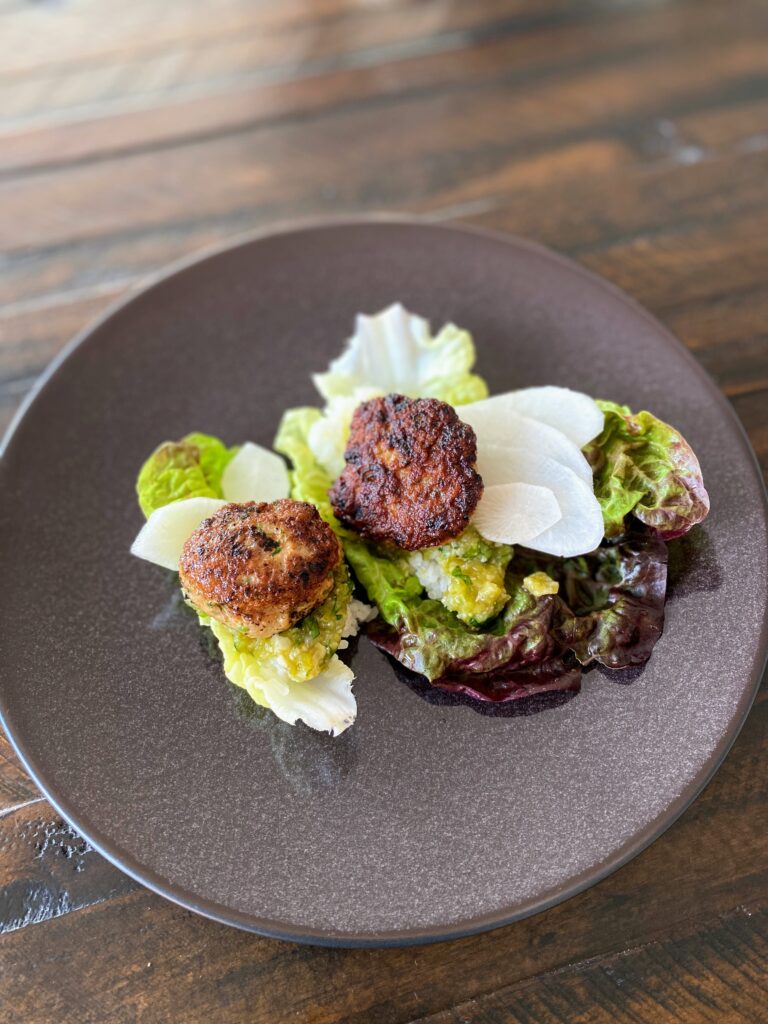
This dish is very (emphasis on very) loosely based on the herby, spicy sausages that are ubiquitous in northern Thailand. These were everywhere when I visited Chiang Mai years ago: in the markets, at our hotel, and street vendors. And they were delicious.

This lighter, humbler version is adapted for a weeknight meal at home but it nevertheless satiates my craving for northern Thai food. Sometimes a piece of lettuce, some rice, and a bit of meat is all you need.

Ingredients:

For the chili dip:

  • 2 shallots, unpeeled
  • 1 head of garlic, unpeeled
  • 4 Anaheim chiles
  • 1 serrano or Thai chile
  • 2 tablespoons lime juice
  • 1 tablespoon chopped cilantro
  • 1 tablespoon fish sauce
  • 1 teaspoon sugar
  • Salt, to taste

For the “sausages”:

  • 1 pound ground chicken
  • 1 shallot, finely chopped
  • 2 makrut lime leaves, finely chopped
  • 2 teaspoons red curry paste
  • 2 tablespoons fish sauce
  • 2 tablespoons coconut milk
  • 1 teaspoon sugar
  • 2 tablespoons finely chopped cilantro
  • Salt, to taste
  • 1/4 cup avocado oil
  • Butter lettuce or similar, thinly sliced daikon, and cooked sticky or jasmine rice, for serving
  1. Make the chili dip: heat the broiler. Broil shallots, garlic, and Anaheim and serrano chiles on a rimmed baking sheet, turning halfway through, until charred in most spots, 5-8 minutes.
  2. Peel shallots, garlic, and chile, then coarsely chop. Transfer to a food processor and pulse to a coarse paste. Mix in lime juice, cilantro, fish sauce, and sugar; season with salt.
  3. Make the “sausage”: Combine chicken, shallot, lime leaves, curry paste, fish sauce, coconut milk, sugar, and cilantro in a medium bowl; season with salt. Using your hands, mix well until chicken is sticking to itself and mixture is smooth, about 3 minutes. Using wet hands, form about 2 tablespoon-sized scoops of chicken mixture into 1-inch thick patties.
  4. Heat oil in a large skillet over medium-high heat. Working in batches, cook patties until golden brown, about 2 minutes per side. Transfer to paper towels to drain.
  5. Serve patties with chile dip, lettuce, daikon, and rice.

Marinated Portobello Mushroom and Pesto Sandwich

Posted on

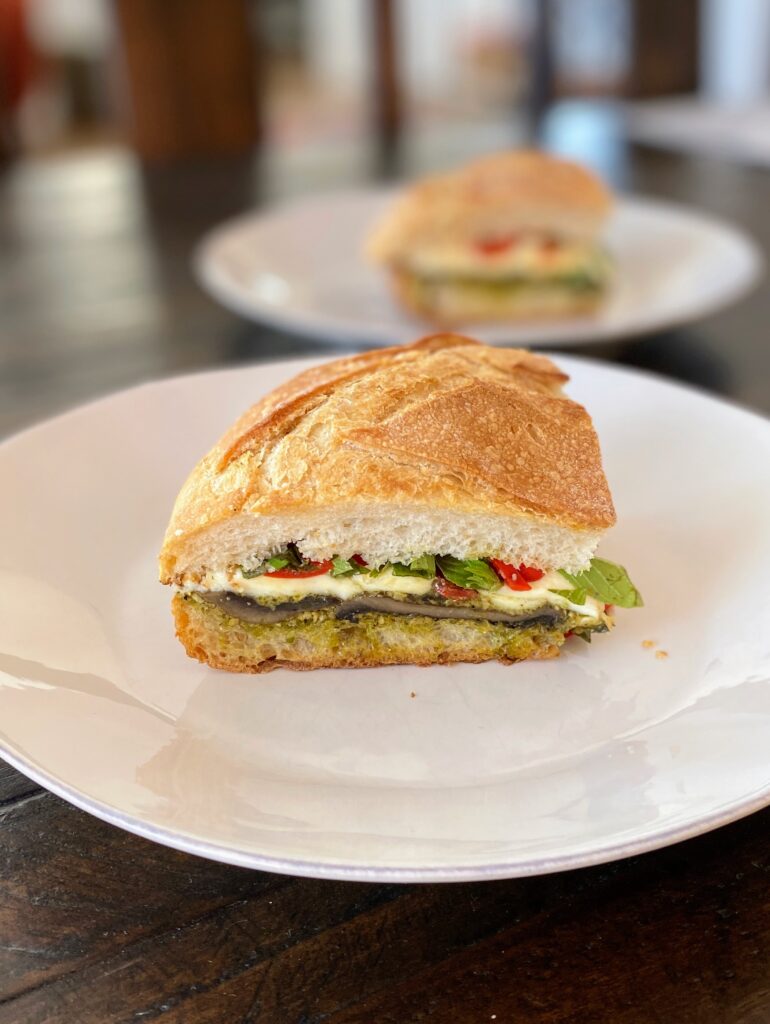
I’m not a huge sandwich person, and I rarely seek them out, but I haven’t been able to stop thinking about this flavor bomb of a sandwich I made recently. Garlicy pesto, meaty mushrooms, tangy sourdough, vinegary peppers, creamy mozzarella — this sandwich has it all.

Maybe I’m a sandwich person after all.

Ingredients:
  • 2 to 3 tablespoons prepared pesto
  • 1 pound portobello mushrooms
  • 2 tablespoons plus 2 teaspoons avocado oil
  • Salt
  • 1 12-inch wide sourdough baguette or boule, halved lengthwise, toasted
  • 1 garlic clove, halved crosswise
  • 4 ounces fresh mozzarella, thinly sliced
  • 1/4 cup sliced pickled cherry peppers
  • 1/4 cup basil leaves
  1. Place pesto in a large bowl. Remove stems and gills from portobello mushrooms. Heat 1 tablespoon oil in a medium heavy skillet over medium-high. Arrange half of mushrooms in a single layer in skilled and cook until they start to sizzle, then wrap the bottom of a second heavy skillet that is small enough to nestle into the first with foil and use it to press down on mushrooms evenly. Cook, pressing down, until mushrooms shrink and are deeply browned underneath, about 3 minutes. Remove top skillet; season mushrooms with salt. Turn mushrooms over, add 1 teaspoon oil to pan, and re-cover with foil-lined skillet. Cook, pressing, until second sides of mushrooms are well-browned, about 3 minutes. Transfer mushrooms to bowl with pesto. Repeat process with remaining mushrooms and 1 tablespoon plus 1 teaspoon oil. Toss mushrooms in pesto to coat.
  2. Rub cut sides of baguette with garlic. Arrange mushrooms on bottom half of bread, then layer mozzarella on top. Top with cherry peppers and basil. Close and cut in quarters to make 4 sandwiches.