Kashk-e Bademjaan (Iranian Eggplant Dip)

Posted on

Note: This entry also appeared at my friend Sherisa de Groot’s blog, L’élephant Rose. L’élephant Rose is a collection of jewelry designed by Sherisa, based in Amsterdam. It’s also the name of her blog about design, music, green living, food, and fashion.

It’s eggplant season! Eggplant is ubiquitous in Iranian cuisine, and luckily for me, it’s in season in the Bay Area right now. I’ve been buying pounds and pounds of it to cook kashk-e bademjaan. A favorite at Persian gatherings, this dip is garlicy, minty, and slightly piquant, thanks to kashk, a thick condiment similar to whey that’s used in Persian cooking. Served with naan or a similar flatbread, kashk-e bademjaan is the perfect way to make use of the eggplant bounty.

This recipe is adapted from two sources: my mom’s guidance over the phone as I hurriedly cooked this the first time for a dinner party, and Najmieh Batmanglij’s definitive English-language cookbook on Iranian cuisine: Food of Life. (Sidenote: Batmanglij’s son, Rostam, is a member of Vampire Weekend and Discovery. Guess what I listen to when I’m cooking from Najmieh’s cookbook?)
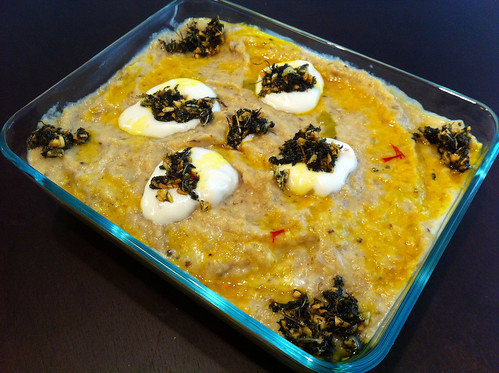
Kashk-e bademjaan

Ingredients:

2 medium eggplants
1 onion, chopped
3 cloves garlic, chopped
1/4 cup olive oil
1/2 cup liquid whey (kashk)
1/2 teaspoon salt
1/2 teaspoon pepper

For the garnish:
3 cloves garlic, minced
2 tablespoons olive oil
2 tablespoons dried mint
2 tablespoons liquid whey (kashk)
1/4 teaspoon ground saffron, dissolved in 1 tablespoon hot water

1. Peel eggplants and cut into 4 slices lengthwise. Place in a colander and sprinkle with 2 teaspoons salt to remove bitterness and excess moisture. Let stand for 30 minutes, then pat dry.

2. Brown the eggplants in a non-stick skillet with 1/4 cup of oil. Add onions and garlic and brown for an additional two minutes, adding another tablespoon of oil if needed. Add 1 cup of water, cover, and cook over medium heat for 20 minutes. Remove from heat and mash in a food processor. Add 1/2 cup of whey, salt, and pepper, and mix well.

3. Just before serving, saute minced garlic in remaining 2 tablespoons oil at low heat, until golden. Remove skillet from heat, add dried mint, and mix well.

4. Place the eggplant in a serving bowl and garnish with 2 tablespoons whey, the garlic and mint mixture, and a few drops of saffron water. Serve with flatbread and fresh herbs.
Sunomono Salad

Posted on

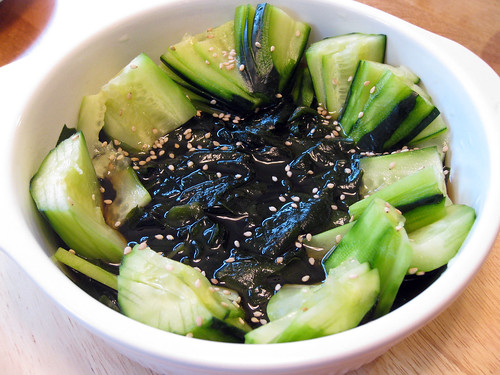
“Sunomono” translates loosely as “vinegared things” in Japanese, and over the years I’ve tried a number of recipes to recreate restaurant-style cucumber sunomono at home. After several renditions, I’ve finally come up with my favorite version, which includes the addition of radish sprouts (not pictured but adds a really nice layer of texture and subtle flavor).

I’ve been making this salad a lot lately as the weather is finally warming up in the Bay Area, and we’re enjoying our “summer” as fall approaches.

Sunomono Salad

Ingredients:

2 ounces dried wakame seaweed, soaked in cold water for 5 minutes
2 Japanese or Persian cucumbers, thinly sliced
1 bunch radish sprouts, cut in half
4 tablespoons rice vinegar
4 tablespoons dashi broth
3 tablespoons soy sauce
1 tablespoon mirin

1. Lightly squeeze excess water from the wakame and roughly cut into bite-size pieces.

2. Mix the rice vinegar, dashi, soy sauce, and mirin in a small saucepan and bring to a simmer to evaporate the alcohol and sharpness of the vinegar. Immediately remove from heat and cool to room temperature.

3. Arrange the wakame in a serving bowl and garnish with the cucumber and daikon sprouts. Pour dressing over and serve.

Greek Salad

Posted on

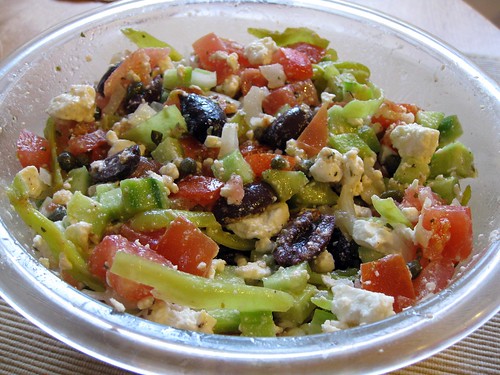
Greek salad is so basic that I almost decided not to write about it. There are enough variations on this classic salad though that it warrants a post, and this one is my version.

I like my salads acidic, so I’ve upped the lemon content, and thrown in a few extra pepperoncinis and capers for good measure. Although I question the Greek authenticity of this salad, it’s become one of my favorites.

Greek Salad

Ingredients:

2 tablespoons extra-virgin olive oil
3 tablespoons lemon juice (preferably from Meyer lemons)
1 teaspoon dried oregano
salt and pepper
2 tomatoes, cut into 1/2-inch dice
1/2 red onion, chopped
1 cucumber, peeled, halved and cut into 1/2-inch dice
12 Kalamata olives, pitted and halved
6 pepperoncini, thinly sliced
2 tablespoons drained capers
1 cup crumbled feta cheese

1. In a large serving bowl, whisk the olive oil with the oregano and lemon juice; season with salt and pepper.

2. Add the tomatoes, red onion, cucumber, olives, pepperoncini, capers and feta and toss.

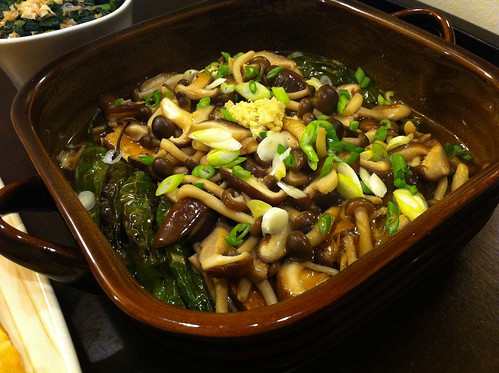
Deep-Fried Tofu with Mushroom Sauce

Posted on

I’ve been on a tofu kick lately, and I can’t think of a better way to cook it than with mushrooms. Both are rich in protein and lend this dish a rich, meaty flavor despite having no meat at all.

This Japanese rendition, adapted from Izakaya: The Japanese Pub Cookbook, is wonderful on its own or with steamed rice.

Deep-fried tofu with mushroom sauce

1 block firm tofu, about 1 pound
4 tablespoons grated daikon radish
2 teaspoons grated ginger
1 green onion, sliced
2 mild peppers, such as Anaheim, pierced and deep-fried (optional)
1 cup dashi stock
3 tablespoons mirin
1 tablespoon soy sauce
1/2 cup mixed mushrooms such as shiitake, enoki or shimeji
1 teaspoon cornstarch, dissolved in 1 teaspoon water

1. Wrap the tofu in two layers of paper towels and place in a flat-bottomed dish with sides. Place a light weight such as another flat dish on top, and leave about 30 minutes to drain excess moisture. Wipe any moisture from the surface of the tofu and slice horizontally. Slice each half into eight rectangular pieces. Set aside.

2. In a large frying pan, heat the oil to medium-high and carefully slip the tofu pieces into the oil. Deep-fry until golden brown, 3-4 minutes.

3. In a medium saucepan, combine the dashi, soy sauce, mirin, and mushrooms and bring to a boil. Lower the heat and pour in the cornstarch slurry to thicken the sauce. Remove from heat as soon as it comes to a boil.

4. Place the fried tofu pieces in a serving dish, ladle the sauce over, and top with the grated daikon and ginger. Garnish with the fried peppers and green onion.

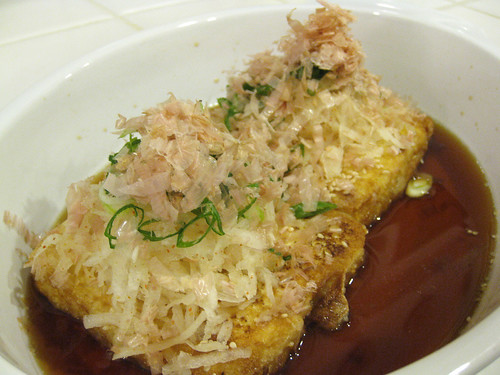
Agedashi Tofu

Posted on

Most of the time when I dine out for sushi, I order an appetizer of agedashi tofu to start things off. It’s a simple Japanese dish of deep-fried silken tofu, and I love the textural contrast of the crispy outside and the piping hot, creamy tofu on the inside. The whole thing is served in dashi broth and topped with shredded daikon radish and green onions. Despite being deep-fried, the tofu absorbs very little oil, so I don’t feel bad about eating it.

I recently learned to make this dish at home when I was gifted Izakaya: The Japanese Pub Cookbook by a friend. I have a few Japanese cookbooks, but this has quickly become my favorite. I’ve already cooked this rendition of agedashi tofu several times.

Agedashi Tofu

Ingredients:

1 block silken tofu, about one pound
Potato starch for coating the tofu
Vegetable oil for deep-frying
3/4 cup dashi stock
3 tablespoons soy sauce
3 tablespoons mirin
1/2 cup lightly-packed dried bonito flakes (katsuo-bushi)
1 green onion, thinly sliced
1-inch daikon radish, peeled and shredded
1/8 teaspoon Japanese-style ground red chili pepper (ichimi togarashi)

1. Mix the shredded daikon with the chili pepper and set aside.

2. Bring mirin, soy sauce, and dashi to a gentle boil and turn off heat. Add bonito flakes and leave for 10 seconds, then strain through a mesh strainer. Set sauce aside.

3. In a heavy saucepan, heat 2 inches oil to medium-high heat.

4. Slice tofu horizontally into 2 pieces. If desired, slice each of these 2 pieces in half as well. Blot tofu dry and coat with potato starch. Fry the tofu until the surface is golden and crispy, about 5 minutes. Carefully transfer the tofu with a slotted spoon onto a paper-lined plate to drain excess oil.

5. Place tofu in a serving bowl and pour in the sauce. Garnish with the green onions and shredded daikon radish.