Rose season is upon us, friends. Rose all day, rose-yay, etcetera, etcetera. I’ve got to be honest, though. I like summer’s official beverage as much as the next person, but I don’t like all rose. A lot of it is too sweet for my taste, too white wine-y, too, well, too rose-all-day-ish, if you know what I mean.
But not this rose. This rose is (a) in sangria form, which is always a good thing, (b) includes rum and Campari, and (c) has too-pretty-to-eat-except-they’re-melting ice cubes that impart a subtly berry flavor to the whole thing.
So yeah. Rose season is upon us. Bring it on, I say.
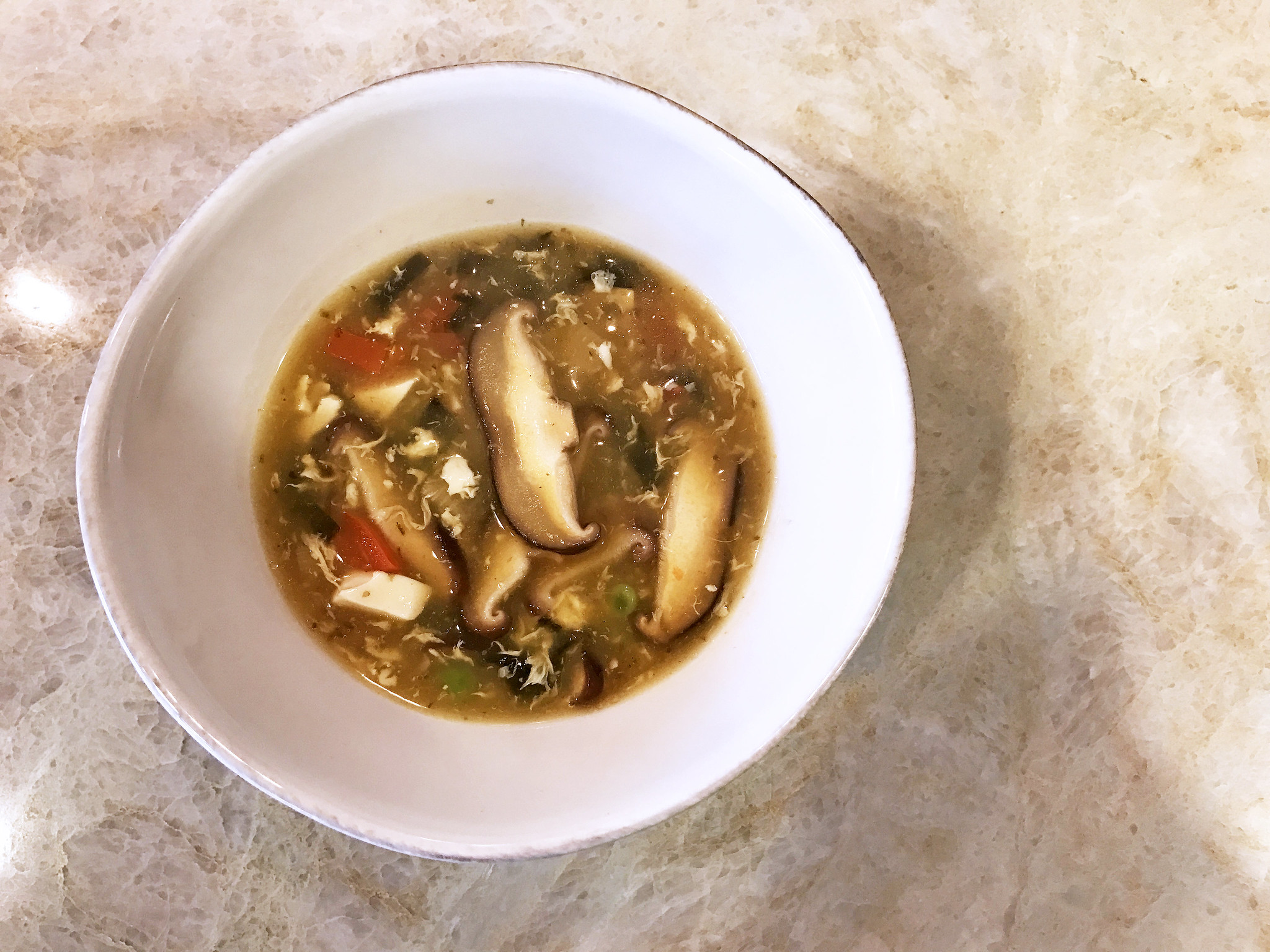
This isn’t a traditional egg flower soup recipe by any means. But I love egg flower soup in any permutation and have been making this easy version for years — decades, even! Lemongrass, tomato and nori seaweed are unexpected ingredients here, but trust me, it works. Sometimes, the sum is greater than the parts.
Ingredients:
4 cups chicken stock
2 stalks lemongrass, bottom 8 inches, lightly crushed
3 fresh shiitake mushrooms, caps thinly sliced
1 ounce enoki mushrooms, trimmed and separated
1/3 cup frozen peas, thawed
1/2 cup thinly sliced bamboo shoots
1 sheet nori, shredded
1/2 teaspoon salt
1/4 teaspoon pepper
1/2 package soft tofu, cut into 2-inch-long x 1-inch long strips
1/2 cup chopped tomatoes
2 tablespoons cornstarch, dissolved in 3 tablespoons water
1 egg, beaten
1 teaspoon sesame oil
1. Bring the chicken stock and lemongrass to a boil in a large saucepan. Reduce the heat to a simmer and cook for 10 minutes.
2. Stir in the mushrooms, peas, bamboo shoots, salt, and pepper and bring to a boil. Add the tofu, tomatoes, and nori, stirring gently so the tofu does not break apart. Pour in the dissolved cornstarch and cook, stirring gently, until the soup returns to a boil and is slightly thickened.
3. Slowly pour in the beaten egg, stirring slowly but constantly to create “egg flowers.” Drizzle in the sesame oil and serve.
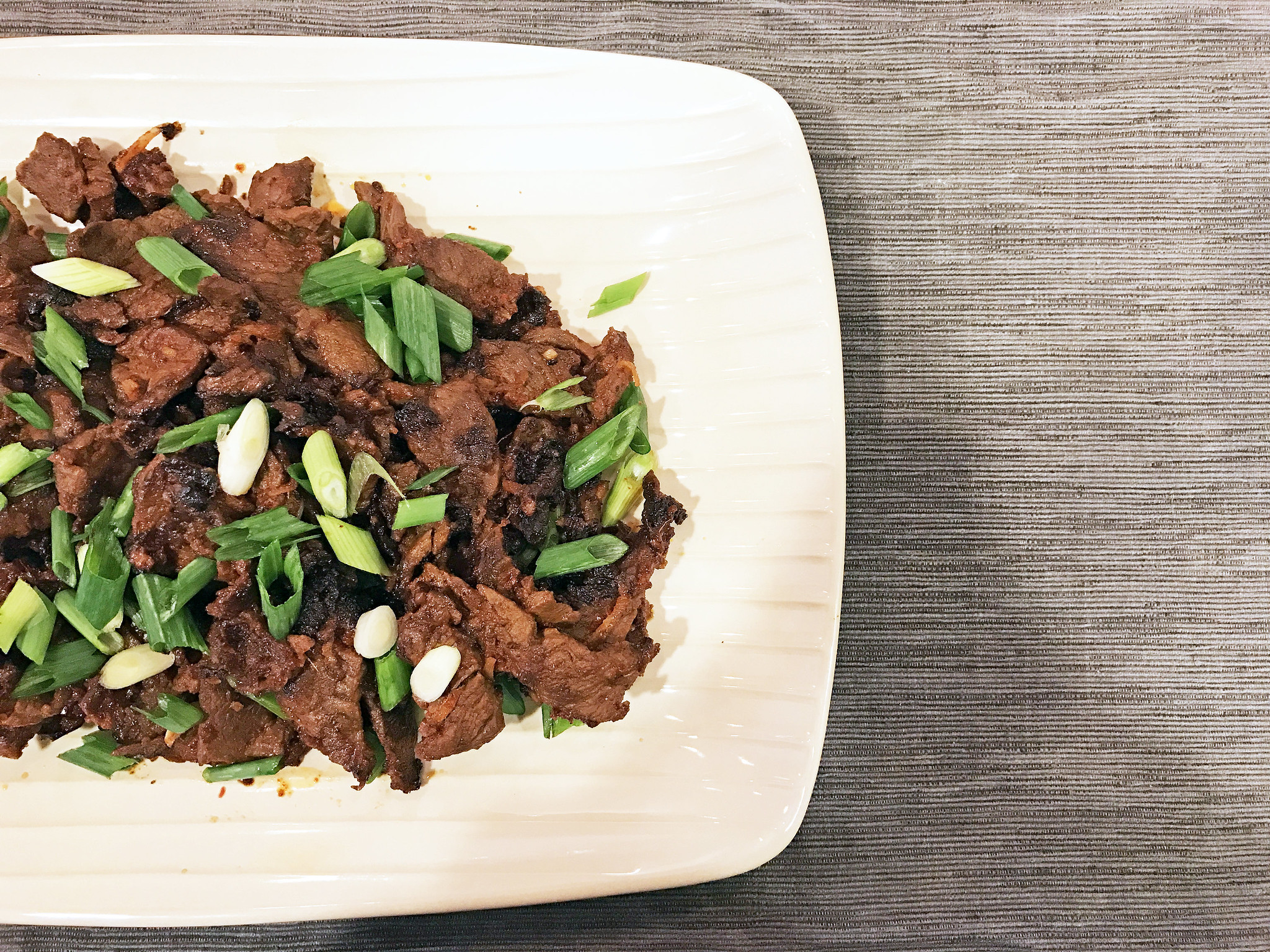
The weather may be warming up (at least in California) but grilling season is still a couple of months away. In the meantime, I’ve been satiating my cravings with this spicy beef bulgogi: it’s easy to make on the stovetop but the flavor still imparts a pleasant smoke and char.
This marinade is endlessly adaptable and the final dish is fun to enjoy as a group. I served this alongside lettuce leaves, sticky rice, and homemade ssamjang, or Korean barbecue sauce. I include the recipe for my version below.
Ingredients:
For the bulgogi:
1/3 pear, grated
1 garlic clove, grated
2 tablespoons soy sauce
1 teaspoon gochugaru (Korean red pepper flakes)
1 tablespoon grated peeled ginger
1 tablespoon brown sugar
1 tablespoon sesame oil
1 pound hanger steak, boneless short rib, or sirloin
2 tablespoons olive oil, divided
sliced green onions, for serving
1. Marinade the beef: combine pear, garlic, soy sauce, gochugaru, ginger, sugar, and sesame oil in a large resealable plastic bag or bowl. Slice meat into very thin strips. Add to marinade, seal bag, and squish everything around until the meat is coated. Let sit at room temperature 30 minutes or chill up to 8 hours.
2. Make the ssamjang: In a bowl, add all the ingredients; stir until combined. Set aside.
3. Heat 1 tablespoon olive oil in a large skillet over medium-high until oil is shimmering. Remove half of meat from marinade, letting excess drip back into bag; cook in a single layer without moving until lightly browned, about 2 minutes. Toss meat and continue to cook, tossing occasionally, until cooked through and crisp at edges, about 4 minutes. Transfer to a plate. Repeat with remaining 1 tablespoon olive oil and remaining meat. Serve topped with green onions.
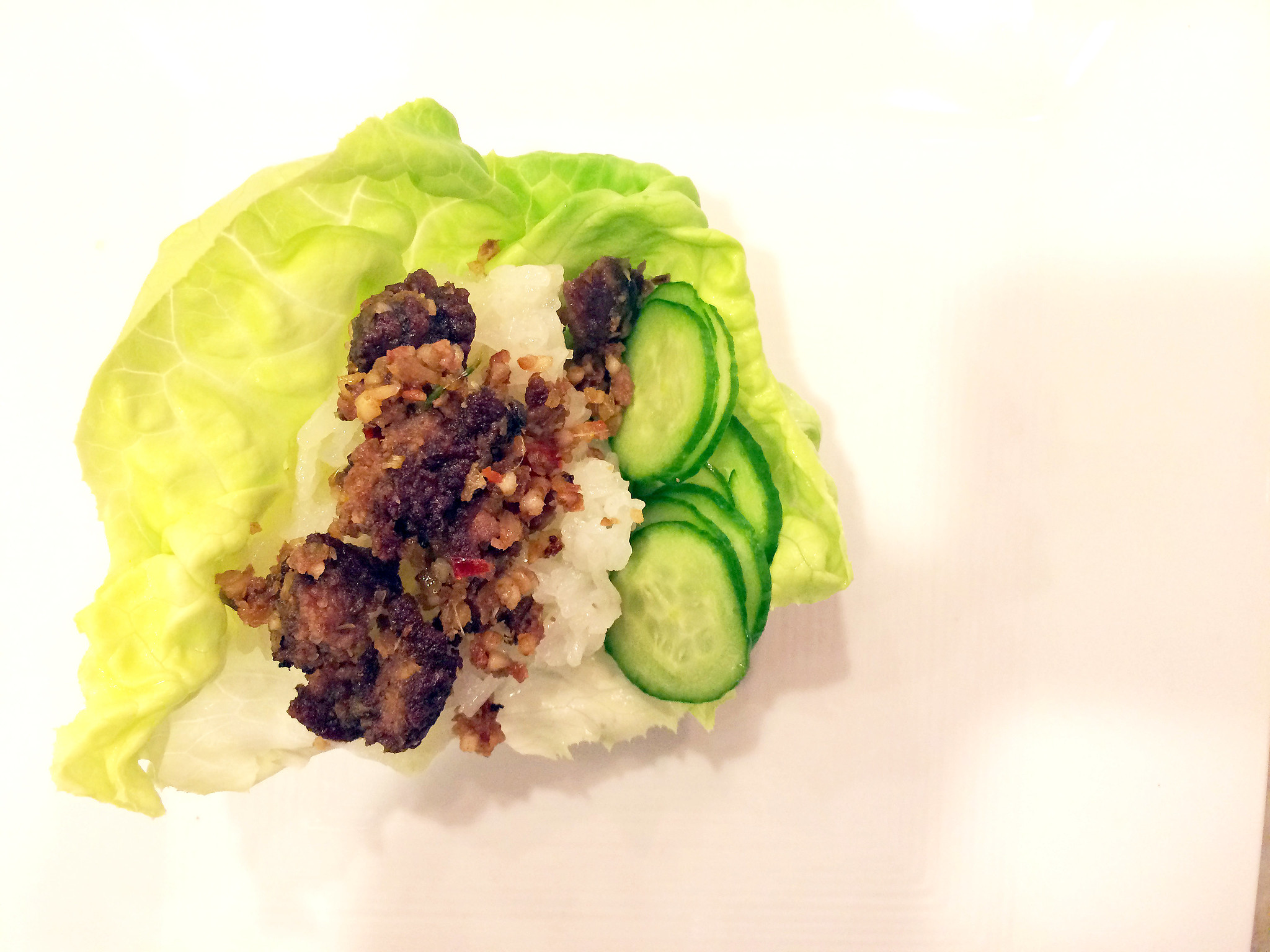
Anything I get to wrap in lettuce to eat makes me happy. (See: bulgogi, spring rolls, etc.) Larb is right up there with the best of them. It’s typically meat seasoned with that perfect balance of hot-sour-salty-sweet and served with sticky rice, herbs, and lettuce to wrap it all up in. Larb is popular in Laos and the Issan region of Thailand and while lamb doesn’t usually factor into traditional larb, I love this unorthodox version.
Ground peanuts substitute for the more traditional toasted rice here. Think of this as a protein-packed flavor bomb wrapped up in guilt-free packaging.
PS: Please ignore the godawful lighting in this photo. Blame my impatient tummy.
Ingredients:
1 stalk lemongrass
4 garlic cloves
1 shallot, coarsely chopped
2 red Thai chiles
2/3 cup salted, roasted peanuts
3 tablespoons fresh lime juice
2 teaspoons fish sauce
1 teaspoon brown sugar
2 teaspoons vegetable oil
1 pound ground lamb
Cooked sticky rice, butter or bibb lettuce leaves, sliced cucumber, lime wedges, and mint sprigs for serving
1. Remove tough outer layers from lemongrass. Thinly slice the bottom 6 inches from the bulb end. Pulse lemongrass and garlic in a food processor until finely chopped. Add shallot and Thai chiles and pulse until finely chopped. Transfer to a large bowl; set aside. Pulse peanuts in food processor until coarsely ground and transfer to another bowl; set aside.
2. Whisk lime juice, fish sauce, and sugar in a small bowl; set lime dressing aside.
3. Heat oil in a large skillet over high. Add lamb to skillet and press into a single flat layer with a spatula. Cook, undisturbed, until underside is browned and crisp around the edges, 5–7 minutes. Use spatula to break into smaller pieces and turn. Cook pieces on the other side until edges are crisp and meat is cooked through, about 5 minutes. Transfer lamb to a bowl with a slotted spoon, then use spoon to break up meat into bite-sized pieces.
4. Pour off all but 2 tablespoons oil from skillet and set skillet over medium heat. Cook lemongrass mixture, stirring often, until fragrant and starting to stick to skillet, about 3 minutes. Add reserved lime dressing and peanuts and return reserved lamb to skillet. Toss until meat is coated. Remove from heat and season with more fish sauce, if desired.
5. Serve larb with rice, lettuce, cucumber, limes, and mint sprigs for making lettuce cups.
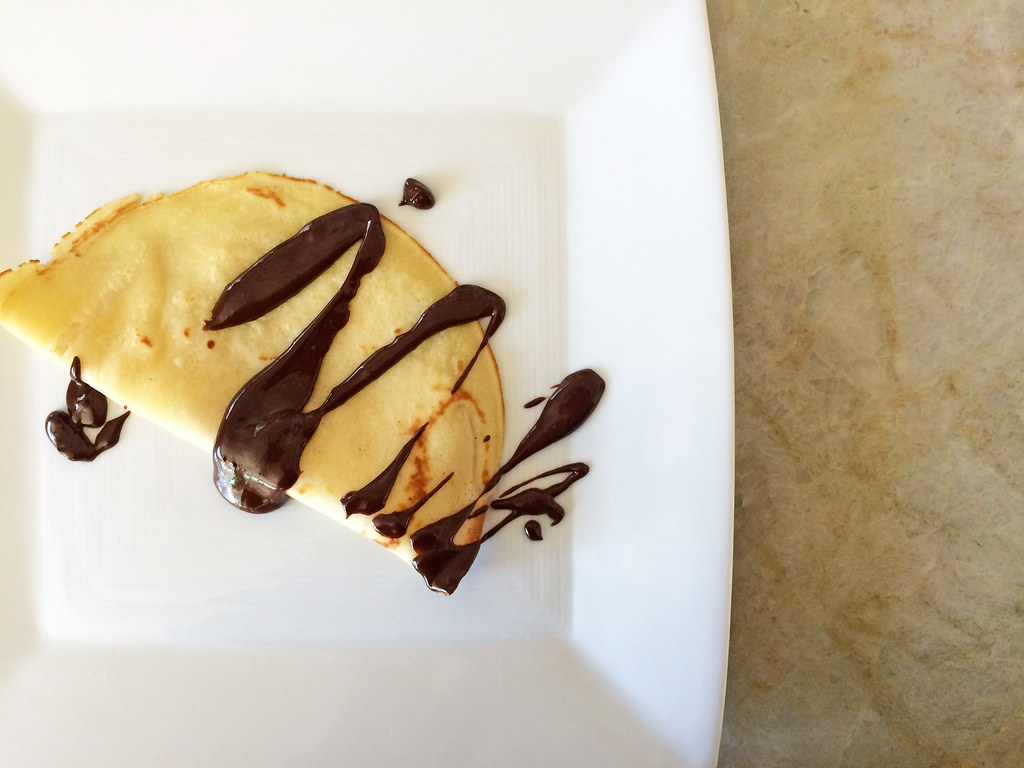
I don’t have much of a sweet tooth, but crepes are one of my weak spots. (And doughnuts, especially the ones that rhyme with Drispy Dreme.)
But back to crepes. They’re easier to make that it appears, as long as your batter is sufficiently thin. If you find yourself producing pancake-like creations on your first couple of tries, add a bit of water to thin the batter and proceed.
These make an indulgent breakfast and are endlessly adaptable. (Nutella! Bananas! Whipped cream!)
Ingredients:
4 ounces dark chocolate, chopped
1 teaspoon salt
3/4 cup heavy cream
2 teaspoons butter, room temperature, plus 3 tablespoons butter, melted
4 eggs, room temperature
2 1/2 cups milk
2/3 cup sugar
1 teaspoon vanilla extract
2 1/3 cups flour
1. Make the dark chocolate sauce: Heat cream in a small saucepan until steaming (do not bring to a boil) and turn off heat. Immediately add chocolate and 1/2 teaspoon salt. Let sit until chocolate is melted, about 5 minutes. Add 2 teaspoons butter and whisk until butter incorporated and mixture is smooth. Set aside and keep warm.
2. Blend eggs, milk, sugar, and vanilla in a blender until frothy. Add flour and remaining 1/2 teaspoon salt and blend just to combine. Cover batter and chill 1 hour.
3. Heat a medium nonstick skillet over medium-high, then brush with butter. Ladle 1/4 cup batter into skillet and swirl to evenly coat bottom. Cook crepe until bubbles form on surface and edges are golden and crisp, about 2 minutes. Slide a spatula underneath crepe to loosen and carefully flip. Cook on the other side until a few brown spots appear, about 1 minute, then transfer to a plate. Repeat with remaining butter and batter.