I was in Long Beach last year for a conference, and whenever I’m anywhere near Los Angeles’ radius, I have to go to Little Tokyo for sushi. I’m a proud Bay Arean, but LA has us beat when it comes to Japanese cuisine.
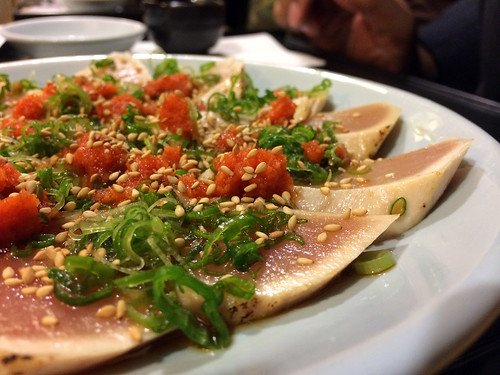
Hama Sushi is a tiny little restaurant along East 2nd Street in Little Tokyo, and it’s my favorite. There are signs telling patrons to not to ask about teriyaki or tempura; this simply isn’t that kind of place. The long wait is well worth the reward and once we were sitting at the sushi bar, I began ordering in earnest. We began with the albacore sashimi, which was delicious, gorgeously presented, and did I mention delicious?
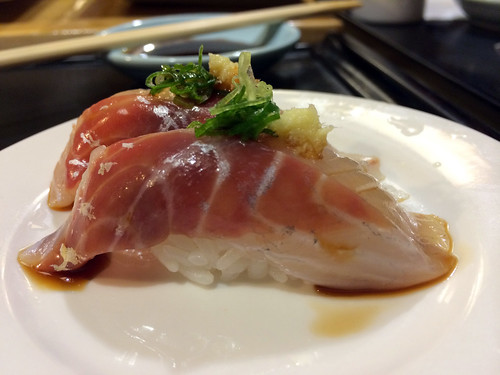
Next came a parade of nigiri and I quickly lost track of what kind of fish we were eating; retaining only that they were all sublimely flavored and incredibly fresh.
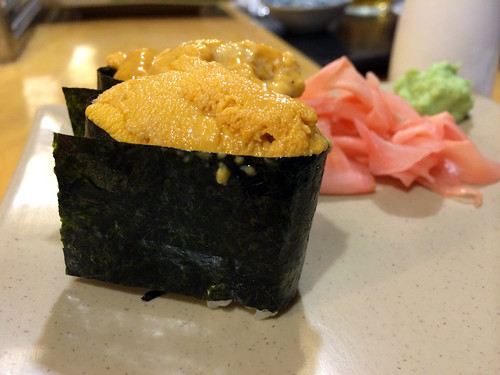
We capped off our feast with some of the best uni I’ve ever tasted in my life. The only other uni that comes close is what I’ve had in Tokyo. This uni was creamy and mind blowingly flavorful. More of this, please.
Hama Sushi may be a no-frills type of joint, but it delivers like no other. Space is limited, and ordering is fast and to-the-point, but Hama Sushi does not mess around.
After Sura Korean Cuisine closed in Oakland a couple of years ago, I was convinced I’d never find another Korean restaurant in the East Bay with the same dedication to quality ingredients.
I was wrong.
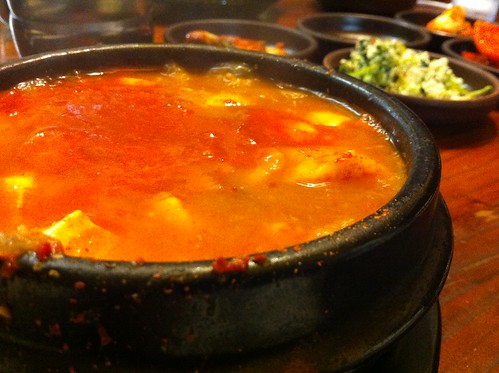
Pyeongchang Tofu House is just a stone’s throw from where Sura used to be, in Oakland’s Temescal district. Specializing in, well, tofu, Pyeongchang Tofu House churns out bowl after steaming bowl of tofu soup, or sundubu jjigae. I often get the kimchi tofu soup with beef, but the mushroom tofu soup and dumpling tofu soup are in regular rotation too. They all come bubbling hot in cauldrons filled with creamy, housemade tofu and fiery broth. A steaming bowl of rice helps cool things down. Pyeongchang Tofu House isn’t limited to just tofu, though. Their dolsot bibimbabp is also top notch.
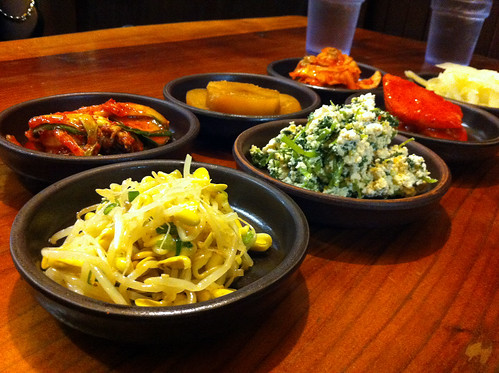
My favorite thing about Pyeongchang Tofu House is actually the banchan. The selection isn’t huge, but it’s always rotating, seasonal, house-made, and impeccably fresh. The kimchi is outstanding, as are the namul and jjim. So healthy, so delicious.
The service at Pyeongchang Tofu House is wonderful, too. The staff is always friendly and happy to explain what makes their spicy kimchi different from the others, or how to best remove the crispy rice at the bottom of a hot stoneware bowl.
Looks like I have a new favorite Korean restaurant in the East Bay after all.
Yin Du Wonton Noodle opened up in Chinatown less than two years ago and early on, I became a regular. A short walk from work, I go there whenever I’m craving a warm, comforting bowl of Chinese soup (which is often).
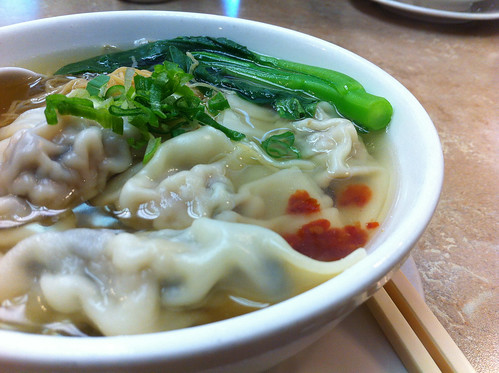
Yin Du’s cash-only menu is somewhat limited, and despite trying a few of their other dishes, I always come back to the number five: dumpling noodle soup. The chewy egg noodles and shrimp and wood ear mushroom-filled sui gao are perfect with a drop of fiery chili sauce. I often order their steamed beef brisket and noodle soup too, which is equally satisfying. The beef brisket sauce is delicious enough to stand on its own. The wonton noodle soup is pretty good too.
Yin Du Wonton Noodle is a casual operation and closes early at seven in the evening and is often packed for lunch. Plan accordingly and the next time you’re craving noodle soup, go for the number five.
I used to hate scrambled eggs. They’re gummy, flavorless, and bland. Or so I thought.
The first time I sampled Cafe Clem’s scrambled eggs, I immediately saw the light. They’re fluffy! They’re creamy! And they’re steamed-scrambled, and while that sounds like an arduous process, the results make for my favorite local brunch in downtown Berkeley.
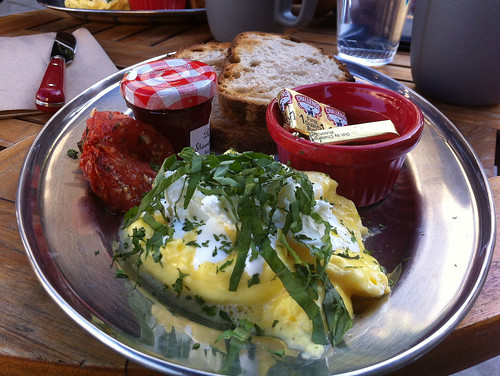
Cafe Clem is a daytime casual French joint with a small menu and a cute outdoor patio to boot. My favorite dish there has become their les oeufs Lucas: steamed-scrambled eggs with creme fraiche, goat cheese, basil, roasted tomatoes, and levain toast. I can’t think of much else I’d rather do on a lazy weekend morning than enjoy that underneath the sun.
Thanks, Cafe Clem. Scrambled eggs are no longer the food nightmare of my youth, but rather, a weekend treat.
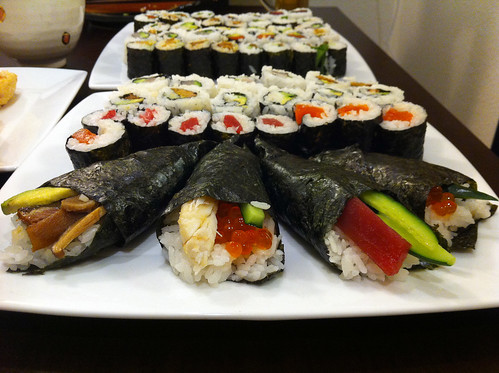
I’ve just returned from a trip to Tokyo and jet lag aside, it was everything my sushi-laden dreams are made of. I’m no early riser, but I even had sushi for breakfast one morning at Tsukiji fish market. The sushi was as good as I remembered it from my last trip a few years ago, and I’ve been craving it at home since I returned.
Thankfully, good sushi is within reach at home. For me, the toughest part is making the vinegared rice. I haven’t mastered it yet but I’ll keep trying until I get it right. It’s a great excuse to eat more sushi.
Ingredients:
1 1/2 cups sushi rice
1 2/3 cups water
1 4-inch piece of kombu seaweed
1/4 cup rice vinegar
2 tablespoons sugar
1/2 teaspoon salt
10 to 15 toasted nori seaweed sheets
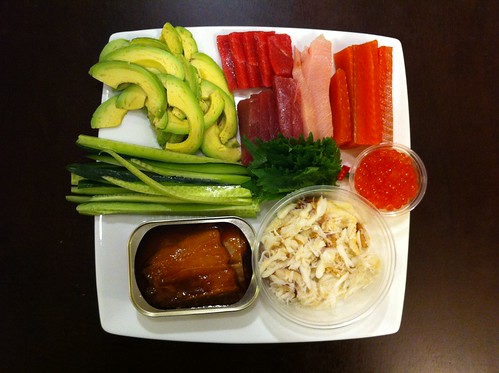
any assortment of the following filling ingredients: sliced sashimi-grade tuna, sliced sashimi-grade salmon, salmon roe, sea urchin, crab, barbecued eel, egg omelet, shiso leaves, takuan pickled daikon radish, sesame seeds, sliced cucumber, sliced avocado, green onions, soy-simmered shiitake mushrooms, umeboshi plums, soy-simmered kampyo gourd strips, cooked spinach
1. Make the vinegared rice: soak the kombu seaweed in the water for about one hour to make the stock. Wash the rice 30 minutes prior to cooking and drain on a sieve. Put the vinegar, sugar, and salt in a small pot and heat slightly until dissolved. This completes the vinegar dressing. Place the rice and stock into a rice cooker and cook according to cooker instructions. Transfer the rice to a large bowl and sprinkle with the vinegar dressing. Using a flat wooden spoon, toss the rice with horizontal cutting strokes while cooling the rice with a hand-fan. When tossing is completed, cover the rice with a clean cloth moistened with water.
2. Place a nori seaweed sheet on a maki-su bamboo mat. Put the vinegared rice lightly on the nori sheet and spread over the sheet, leaving 3/4-inch at the top and bottom uncovered.
3. Place filling ingredients of your choice horizontally on top of the rice.
4. Lift the edges of both the bamboo mat and nori sheet nearest you and bring over to meet the far edge of the sheet.
5. Gently but firmly press the bamboo mat around the roll to shape it. Push both ends of the rolls towards the center firmly a few times using a cloth or plastic wrap.
6. Cut in sixths or eighths crosswise. Clean the knife with water between cuttings. Serve with soy sauce, wasabi, and pickled ginger.