Spain, Day Two

Posted on

I don’t know what it is but the cava in Spain is a million times better than the cava I find here in California. What’s going on? It’s less fizzy (in a good way) and more flavorful.

Barri Gotic

One of my favorite lunches in Barcelona included a lovely bottle of said cava at El Xampanyet in La Ribera neighborhood. El Xampanyet became one of my favorite tapas haunts, not only for the boisterous crowds but for the delicious nibbles. Especially the canned seafood and cured meats.
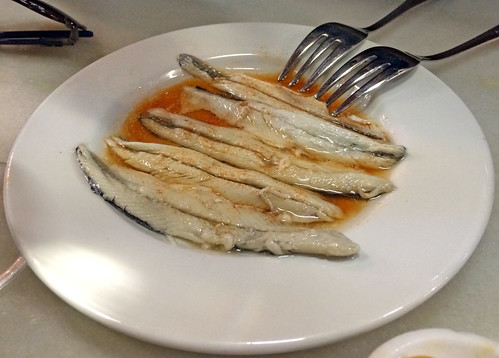
Boquerones

The anchovy boquerones were vinegary, briny, and tasted of the sea. How can something so good come out of a can?
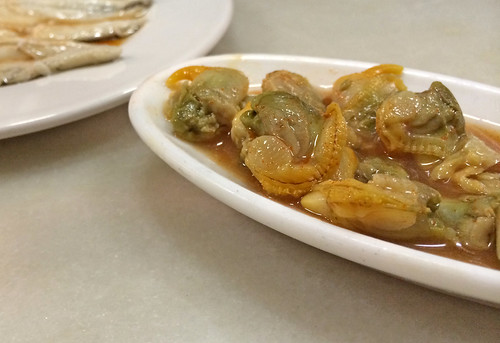
Cockles

The cockles were my favorite tapa at El Xampanyet. They tasted like clams on overdrive, doused in an incredibly savory sauce. I wish I could source these in the states.
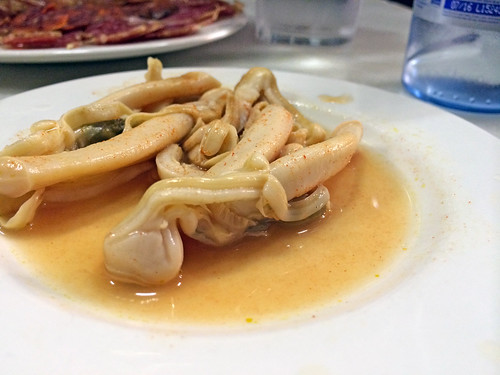
Razor clams

I love razor clams but they can be difficult to find here in California, so I ordered them every chance I had in Spain. These were also canned, and yet they had none of that tinny, flat flavor you taste in canned seafood so often. No chicken of the sea here, no siree.
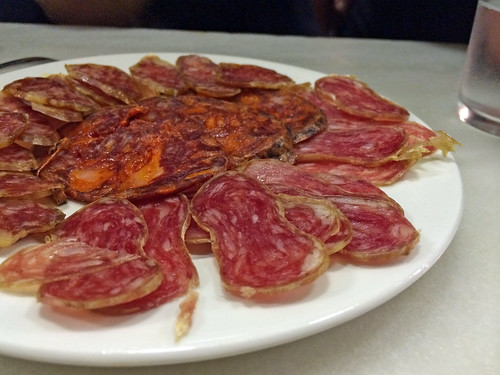
Fuet

But it wasn’t all seafood and cava. We snacked on wonderfully meaty fuet too. Fuet is a Catalan dry, thin cured sausage flavored with black pepper and garlic. We also noshed on an eggy tortilla and melt-in-your-mouth asparagus at El Xampanyet. A sip of cava here, a bite of meat there. Perfect.

Afterwards we headed to the Barcelona Cathedral in the Gothic Quarter. Built between the thirteenth and fifteenth centuries, it’s a sight to be seen, even in a country where grandiose cathedrals are always a stone’s throw away.

Barcelona Cathedral

This is also where we discovered Nishan had been the almost-victim of the pigeon poop scam. Barcelona is supposedly the pickpocket capital of the world, and a couple of blocks before the cathedral, he was “bumped into” by a man who tried to grab our attention to “help” us. We weren’t having it. The aim was for us to drop what we’re carrying to attend to the situation unfolding or for the “helpful” person to get their hands in our pockets. Sure enough, Nishan had a huge stain of faux bird doo doo on his back when we reached the cathedral. Thankfully it was just watered down concealer. We got well acquainted with the cathedral’s bathroom trying to remove the stain.

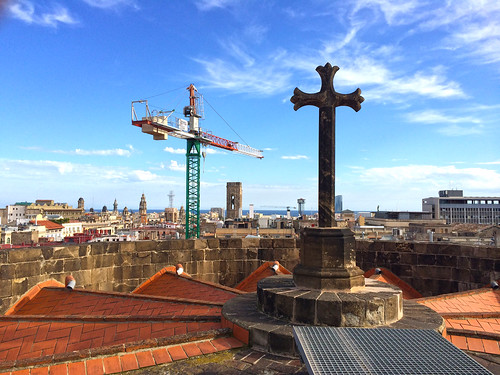
Barcelona Cathedral

Barcelona Cathedral

In addition to a less than stellar bathroom, the Barcelona Cathedral boasts an incredible interior and a rooftop with stunning views.

We were hungry after that adventure, so we stopped at Caelum for an afternoon snack. Caelum is a beautiful teahouse converted from a medieval Jewish bathhouse. The sweets left something to be desired, but the tea, coffee, and ambiance made the stop well worth it.
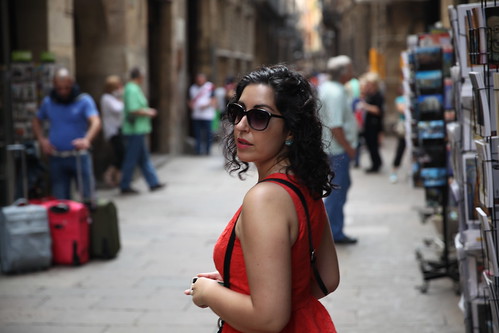
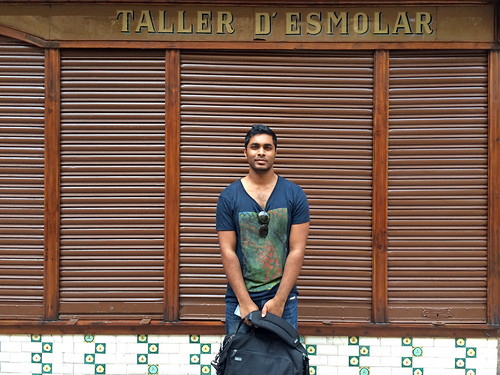
Barri Gotic

Barri Gotic

We capped off the evening with Spain’s national cocktail: the gin and tonic. Mine was made with saffron gin, because you know, Persianity.
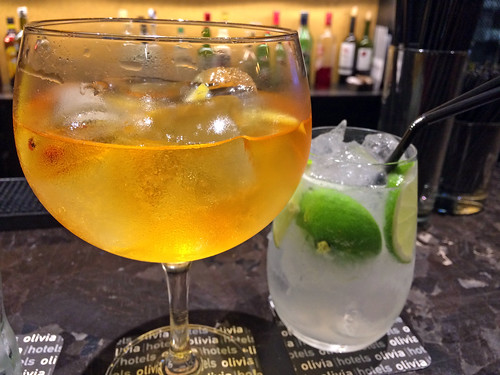
Gin and tonic and caipirinha

Spain, Day One

Posted on

It’s been nearly a year and I’m still not quite sure how we ended up in Spain. Nishan and I were in the throes of planning a wedding and we kept feeling the pull of the Mediterranean. Tapas, cava, and train rides galore. What’s not to love about Spain? Plus, I was excited to practice my rusty Spanish skills. After a quick stop in Toronto, we flew in to Barcelona and went straight to the market. I was determined to get to Mercat de la Boqueria before the early evening closing time and I wasn’t going to let any jet lag get to me.

Mercat de la Boqueria

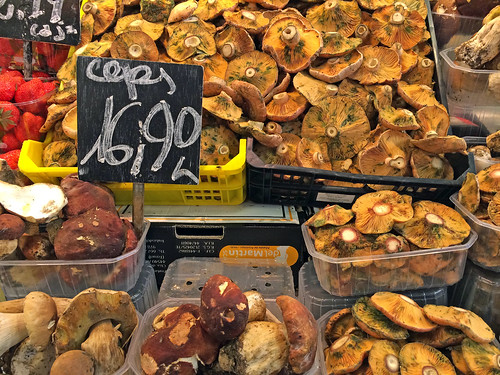
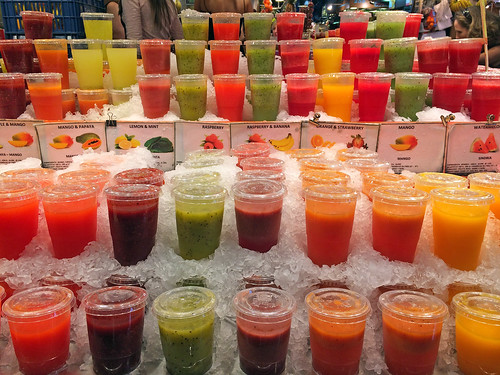
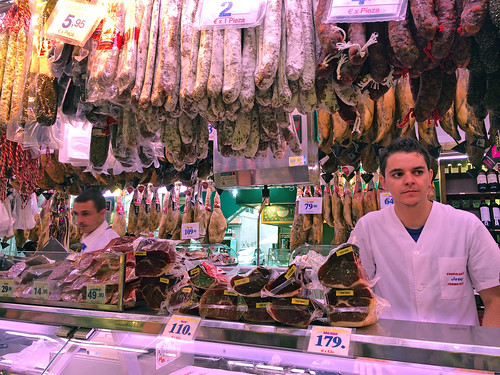
Brimming with cured meats, fresh seafood, and loads of produce, Mercat de Sant Josep de la Boqueria, or La Boqueria for short, is near La Rambla, the city’s main pedestrian street. Avoid La Rambla and go straight to La Boqueria. The market has been around since the early eleventh century and while it’s overrun with tourists these days, it’s still a beautiful sight to see. The fish! The jamon! The fresh pressed juices!

Mercat de la Boqueria

Mercat de la Boqueria

Afterwards we headed to the El Raval district, where we skipped dinner and went straight for dessert at the famed Granja M. Viader.

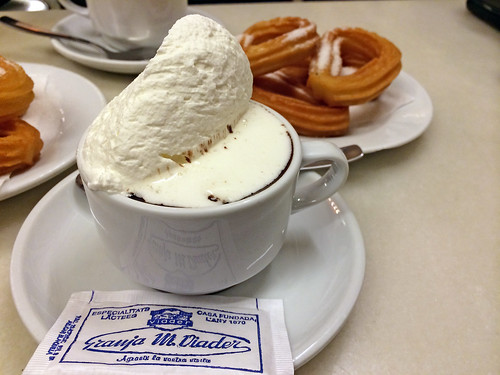
Suis

This chocolateria has held its own since 1870 and their chocolate and churros were by far the best we’d have during our week in Spain. If you go, get the Suis. The thick, ethereal tuft of whipped cream atop piping hot chocolate is a sight and taste to behold.

All that eating made us, uh, hungry, so we decided to go for a late night tapas dinner at the famed Tapas 24 in the Eixample district near our hotel. The line to get a table snaked down the street but our wait was worth it, despite the icy service.

McFoie Burger

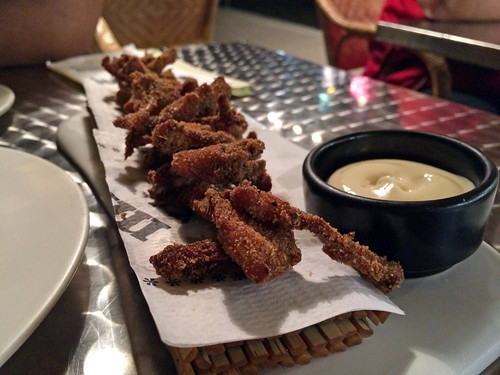
Costelles de concil arrebossades

Highlights included the playful McFoie Burger (yes, that is a ball of foie gras butter) and the costelle de concil arresbossades (rabbit ribs). Sorry, Bugs.

Blistered Shishito Peppers with Miso

Posted on

Sometimes I don’t have time to cook, but the desire to create something delicious wins so I end up turning on the stove and thinking to myself, okay, I have twenty minutes. Let’s do this.

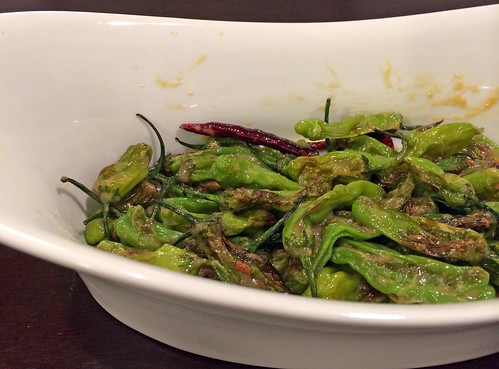
Adapted from a simple Food and Wine recipe, I made these salty, earthy peppers one afternoon when I wanted to bring something to a family picnic but was short on time. Fresh peppers aside, you probably already have most of these ingredients in your pantry. These little bites are perfect with a cold drink or even as a side dish.

Blistered shishito peppers with miso

Ingredients:

1 1/2 tablespoons white miso
1 1/2 tablespoons sake
1 tablespoon canola oil
1 small dried red chile
3/4 pound shishito peppers
1 tablespoon minced peeled fresh ginger

1. In a small bowl, stir the miso and sake until smooth.

2. In a large skillet, heat the oil with the chile until shimmering. Add the shishitos and ginger and cook over high heat, tossing, until tender and blistered in spots, 2 to 3 minutes. Remove from the heat, add the miso sake mixture and toss well. Transfer to a plate and serve.

Khiar Shoor (Pickled Cucumbers)

Posted on

Khiar shoor literally translates from Persian to English as “salty cucumbers,” but it is so much more than that. Shoor are a category of Iranian pickled vegetables, be they cucumbers or cauliflower or carrots or nearly any other vegetable. There’s also torshi, but that’s a whole other classification of pickled vegetables that we’ll save for another post.

Every summer while I was growing up, my mom and all the Iranian aunties would gather in someone’s home and spend the day peeling vegetables and peppers and onions, making the next year’s batch of shoor and torshi. The air would be ripe with the smell of vinegar and garlic and the kids would be enlisted to help. The shoor would be ready to eat a few weeks later; the torshi would need to wait months, sometimes even years.

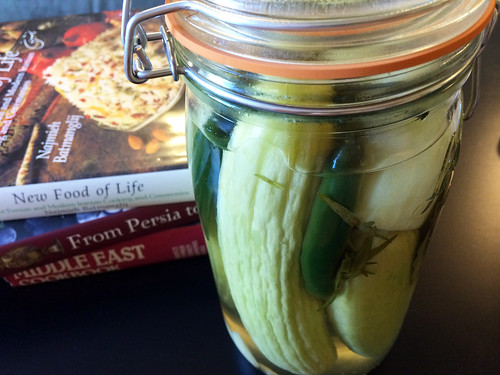
Nowadays you can buy shoor or torshi at any Middle Eastern market but nothing comes close to the homemade version. I made this version when I found myself with too many Armenian cucumbers from my parents’ garden. Once ready, these cucumbers go wonderfully with sandwiches or kotlet.

Pickled Armenian cucumbers

Ingredients:

2 red or green chili peppers
2 pounds Persian or Armenian cucumbers
5 cloves garlic, peeled
7 sprigs tarragon
4 bay leaves
1 tablespoon peppercorns
1/2 teaspoon sugar
1/2 cup white vinegar
kosher salt

1. Wash, clean and drain the vegetables and herbs. Sterilize canning jars, drain and dry thoroughly.

2. Fill each jar almost to the top with cucumbers, garlic, tarragon, and bay leaves.

3. Bring 6 tablespoons salt, 12 cups water, peppercorns, sugar, vinegar, and chili peppers to a boil. Remove from heat and fill each jar within 1/2 inch of the top with this hot liquid. Let cool and seal jars. Store the jars in the refrigerator for at least 10 days before using.

Seafood and Garlic Chive Lo Mein

Posted on

I work near San Francisco’s Chinatown and every day is an uphill (literally and figuratively) battle to resist the delicious noodle dishes beckoning at every corner. My favorite are the bustling Hong Kong-style shops that line Chinatown’s alleyways, serving chewy egg noodles tossed with fresh vegetables and seafood.

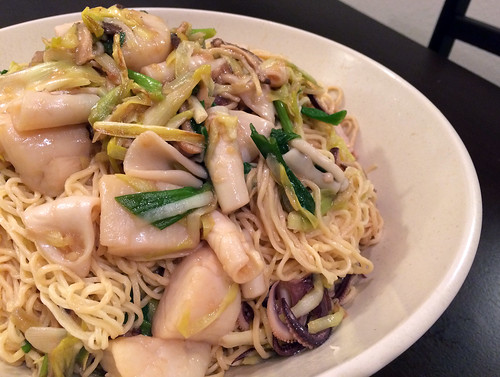
This dish is an homage to those restaurants that I adore so much. It’s worth it to seek out garlic chives as they impart a uniquely herbaceous flavor, although a combination of regular chives and minced garlic can be substituted. I use scallops and squid here, but any shellfish will work just fine.

Seafood and garlic chive lo mein

Ingredients:

1 pound fresh thin Chinese egg noodles
3 teaspoons sesame oil
6 squid (about 4 ounces), cleaned
3/4 pound sea scallops, halved
1 tablespoon cornstarch
1/2 teaspoon salt
2/3 cup chicken broth
1 tablespoon soy sauce
1 tablespoon oyster-flavored sauce
4 dried shiitake mushrooms
1 tablespoon vegetable oil
1 tablespoon minced ginger
1/2 pound yellow garlic chives, cut into 2-inch lengths
4 green onions, cut into 2-inch lengths

1. Bring a large pot of water to a boil. Add noodles and cook according to package directions. Drain, rinse with cold water, and drain again. Add 2 teaspoons sesame oil and toss to coat.

2. Cut off squid tentacles. Cut squid bodies in half lengthwise with a knife and score the inside diagonally in a cross-hatch pattern. Combine squid tentacles and bodies, scallops, cornstarch, and salt in a bowl. Stir to coat; let stand for 10 minutes. Combine chicken broth, soy sauce, oyster-flavored sauce, and remaining teaspoon sesame oil in another bowl to form sauce.

3. Soak dried mushrooms in warm water to cover until softened, about 20 minutes; drain. Discard stems and thinly slice caps.

4 Place a wok over medium-high heat until hot. Add vegetable oil, swirling to coat sides. Add mushrooms, ginger, garlic chives, and green onions; stir-fry for 3 minutes. Add scallops and squid; stir-fry for 3 minutes. Add sauce, stirring, until it boils and thickens. Toss in noodles, mix well, remove from heat, and serve.