Dungeness Crab Cakes

Posted on

Crab cakes may be a Maryland tradition but I can’t think of a better way to enjoy them than with San Francisco Dungeness crabmeat. I’ve been making this recipe for more than ten years now – they make a perfect appetizer and are just as good in a sandwich.

I usually serve these without any sort of sauce, since the crab cakes themselves are flavored with Parmesan cheese, garlic and herbs. I know cheese usually doesn’t pair well with seafood, but there’s an exception to every rule, right?
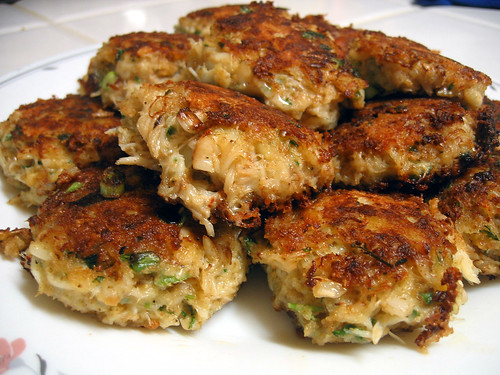
Crab cakes

Ingredients:

3/4 pound cooked crabmeat (shelled from one Dungeness crab)
1/2 cup grated Parmesan cheese
2 tablespoons minced parsley
1/2 teaspoon dried oregano
2 cloves garlic, minced
1/3 cup dry bread crumbs
2 green onions, thinly sliced
1 egg, beaten
1/4 half and half or heavy whipping cream
2 tablespoons olive oil

1. Break crabmeat into flakes. Place in a bowl, add cheese, parsley, oregano, garlic, crumbs, onions, egg, and cream. Mix lightly.

2. Heat oil in a large frying pan over medium-high heat. Mound two tablespoons of the crab mixture with a spoon, spreading to make a 3-inch cake. Place in pan and repeat until pan is filled. cook patties until lightly browned on bottoms, about 3 minutes. Turn and cook until other side is lightly browned, about 3 minutes. Remove from pan and arrange on serving plate. Repeat until all crab cakes are cooked, adding more oil as needed. Serve warm.
Singaporean Chili Crab

Posted on

I haven’t been to Singapore (yet), but it’s one of the countries (well, city-states) that I really want to visit. With one of the most diverse cuisines in the world, it’s a street food heaven offering Malay, Indonesian, Indian, and Chinese flavors and there really is something for every palette. If that doesn’t sound enticing, well, then I might be judging you.

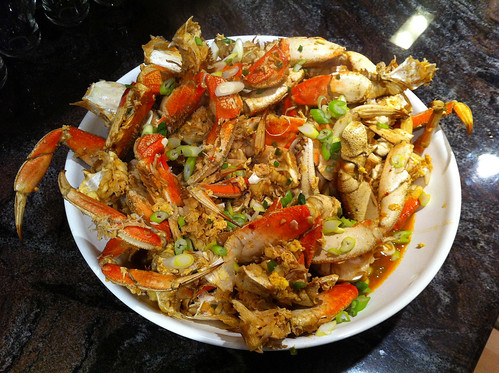
One of my favorite Singaporean dishes is chili crab and it’s also one the most popular dishes in Singapore’s ubiquitous hawker stalls. The best time to make this in the Bay Area is when local Dungeness crab is in season; buy two or three because these will go fast. Chili crab is messy, spicy and saucy, but well worth the trouble.

Singaporean chili crab

Ingredients:

3/4 cup chicken broth
1/4 cup ketchup
2 tablespoons soy sauce
1 tablespoon chili garlic sauce
1 tablespoon rice vinegar
1 tablespoon sugar
2 Dungeness crabs, cooked and cleaned
2 tablespoons vegetable oil
2 tablespoons minced garlic
1 tablespoon minced ginger
1 red jalapeno chili, seeded and minced
1 egg, lightly beaten
1 green onion, thinly sliced

1. Mix chicken broth, ketchup, soy sauce, chili garlic sauce, rice vinegar, and sugar in a bowl and set aside.

2. Twist off the claws and legs from the crabs and crack them with a cleaver or mallet. Cut the body into 4 pieces.

3. Place a wok over high heat until hot. Add oil, swirling to coat sides. Add garlic, ginger, and chili; cook, stirring for 1 minute. Add crab and stir-fry for 2 minutes.

4. Add the sauce and reduce heat to low; cover and simmer, stirring once, until crab is heated through, about 5 minutes. Stir in egg and cook until it begins to set, about 1 minute.

5. Arrange crab pieces on a serving plate. Pour sauce all over and garnish with green onion.

Kirin

Posted on

I can’t believe it’s taken me this long to review Kirin. It’s my favorite Chinese restaurant in Sonoma County, and I’ve been eating there since I was a kid. Sure, it may not be the pinnacle of authentic Chinese cuisine, but it’s delicious, consistent, and oh, the Mongolian beef.

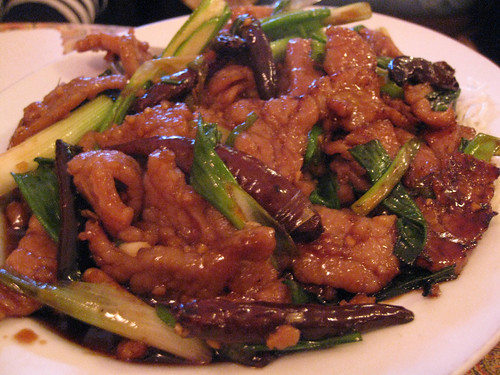
Every time I visit or order take-out from Kirin, I must order the Mongolian beef. Seriously, in my more than fifteen years of dining there, I’ve ordered the Mongolian beef every time. Every. Single. Time. Sure, I order other dishes too, but their super garlicy, oniony, spicy and slightly sweet rendition is the best I’ve ever had.

Mongolian Beef

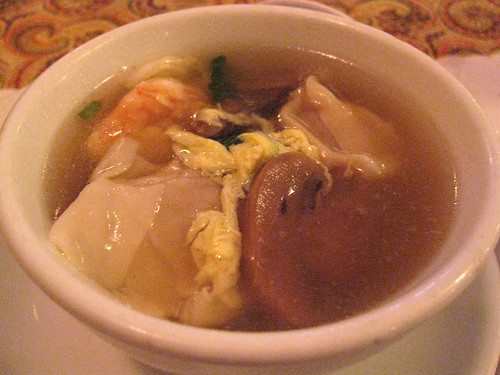
I usually order soup too, and Kirin’s wor wonton soup is my favorite on the menu.

Wor Wonton Soup

The broth is savory and rich, and the meat wontons have a good kick of ginger to them. The portion size is generous too; an order of “small” is meant to feed two people but can easily fill up four bowls.

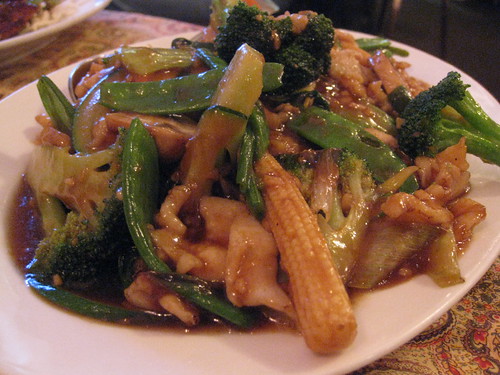
During my last visit, in addition to the requisite Mongolian beef, I also ordered the simply named chicken with vegetables.

Chicken with Vegetables

And that’s exactly what it is: stir-fried boneless chicken with seasonal vegetables, coated with a savory brown sauce.

The service at Kirin can be hit or miss, though it’s always at the very least decent. Expect a wait if you arrive for dinner on a weekend as it tends to get busy. Kirin may not serve Chinese delicacies like sea cucumber and bird’s nest soup, but it’s a solid place for all the classics that you usually find on a Chinese-American menu. You know, like Mongolian beef. Did I mention the Mongolian beef?

Delfina

Posted on

I almost decided to not review Delfina because, well, it’s Delfina. Everyone already knows how incredible the food is and how hip the neighborhood is and how friendly the staff is. What hasn’t already been said?

I’m kind of in love with this place though. It’s one of my favorite restaurants in one of my favorite neighborhoods, and my last dinner here didn’t disappoint. To be on the safe side, I called two weeks ahead of time and made reservations to celebrate a belated birthday.

My dining companion and I started with the puntarelle alla Romana, a Roman specialty of puntarelle shoots.

Puntarelle alla Romana

Similar to chicory, the salad was tossed with salt-packed anchovy, extra-virgin olive oil, and Parmigiano. This was delicious: crisp, tart and slightly bitter. As soon as I can find puntarelle in the markets, I’m making this at home.

Next we had the grilled fresh calamari.

Grilled Fresh Calamari

Served on a white bean salad and garnished with olives and frisée, the calamari had a great smoky flavor from grilling and was super tender. Squid and white beans are a classic pairing; you can’t really go wrong here.

For my entree, I had the rosemary tagliatelle.

Rosemary Tagliatelle

The tagliatelle was served with guinea hen ragu and vin santo. What’s a guinea hen, you ask? They’re cousins of pheasant, leaner than chicken, and more flavorful. I thought that the vin santo sauce would make the dish too rich, but it was actually a perfect compliment.

We were stuffed by this point but we couldn’t resist sharing a plate of dessert at the end of our meal. We decided on the profiteroles.

Profiteroles

The profiteroles were served with espresso gelato, warm chocolate sauce and candied almonds. The whole thing was really high-quality and extremely decadent. I prefer savory over sweet, but even I was swooning over this dessert.

Delfina is a solid restaurant serving excellent cuisine without the attitude that comes with so many fine dining establishments. It’s easily one of the best restaurants in San Francisco. But you knew that already, didn’t you?

Gyoza

Posted on

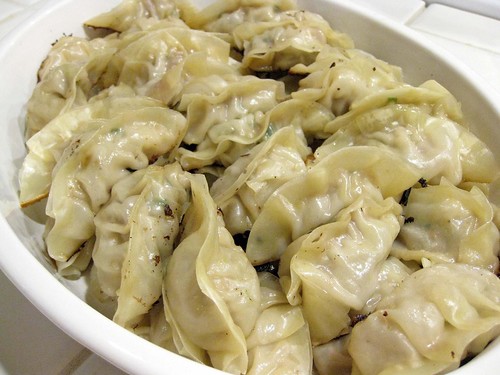
Gyoza, or Japanese potstickers, differ from their Chinese counterparts in that they have a thinner wrapper. They have a richer garlic flavor too, and are usually served with a soy-based rice vinegar and chili sauce. Sometimes I make a double batch as I’m wrapping the gyoza and stick the extras in the freezer – they make for a quick, delicious meal later on, and they’re much healthier than the store-bought frozen version.

Gyoza

Ingredients:

2 cups finely chopped cabbage
1/2 teaspoon salt
1 pound ground chicken or turkey
1/2 cup chopped water chestnuts
4 green onions, minced
3 tablespoons sake
1 tablespoon oyster-flavored sauce
1 1/2 tablespoons minced ginger
1 teaspoon cornstarch
1/4 cup rice vinegar
1/4 cup soy sauce
1 teaspoon chili garlic sauce
1 teaspoon sesame oil
1 package potsticker wrappers
2 tablespoons vegetable oil
1 cup chicken broth

1. In a bowl, toss cabbage with salt; let stand for 10 minutes. Drain and press cabbage to extract excess moisture. Add ground chicken, water chestnuts, 3 minced green onions, sake, oyster-flavored sauce, 1 tablespoon ginger, garlic, and cornstarch; mix well.

2. In another bowl, combine rice vinegar, soy sauce, chili garlic sauce, sesame oil, remaining minced green onion, and remaining 1/2 tablespoon of minced ginger to create dipping sauce. Set aside.

3. To shape each potsticker, place a teaspoon of filling in center of one wrapper. Brush edges with water; fold wrapper over filling to form a half-moon. Press and pleat edges to seal. Set filled potsticker down firmly, seam side up, so that it will sit flat.

4. Place a large nonstick frying pan over medium-high heat until hot. Add 1 tablespoon oil, swirling to coat sides. Add half of potstickers, seam side up, and cook until bottoms are golden brown, about 4 minutes. Add 1/2 cup broth, reduce heat to low, cover, and cook until dumplings are tender and liquid has evaporated, about 10 minutes.

5. With a spatula, remove potstickers from pan and place them on a serving platter. Repeat to cook remaining potstickers. Serve warm with dipping sauce.