Sri Lankan Crab Curry

Posted on

It’s the most wonderful time of the year: Dungeness crab season in the Bay Area. And during the holidays, we eat Dungeness crab. Crab cakes. Crab with butter. Singaporean chili crab. Roasted crab. And now, Jaffna-style crab curry. This stuff is so good it’ll have you licking your fingers and crying tears of joy from the endorphin rush. It burns, my friend. It burns so good. There’s a reason why this is Anthony Bourdain’s favorite Sri Lankan dish.

In my version, I substituted spinach for murungu leaves. I know, I know. A poor substitute, but I couldn’t find a single South Asian grocery in the East Bay that carries murungu leaves. And I’ve of course used Dungeness crab instead of blue swimmer crabs which are native to Sri Lanka. It ain’t pretty and it’s messy, but who cares? This is what crustacean dreams are made of.

Happy holidays, y’all.
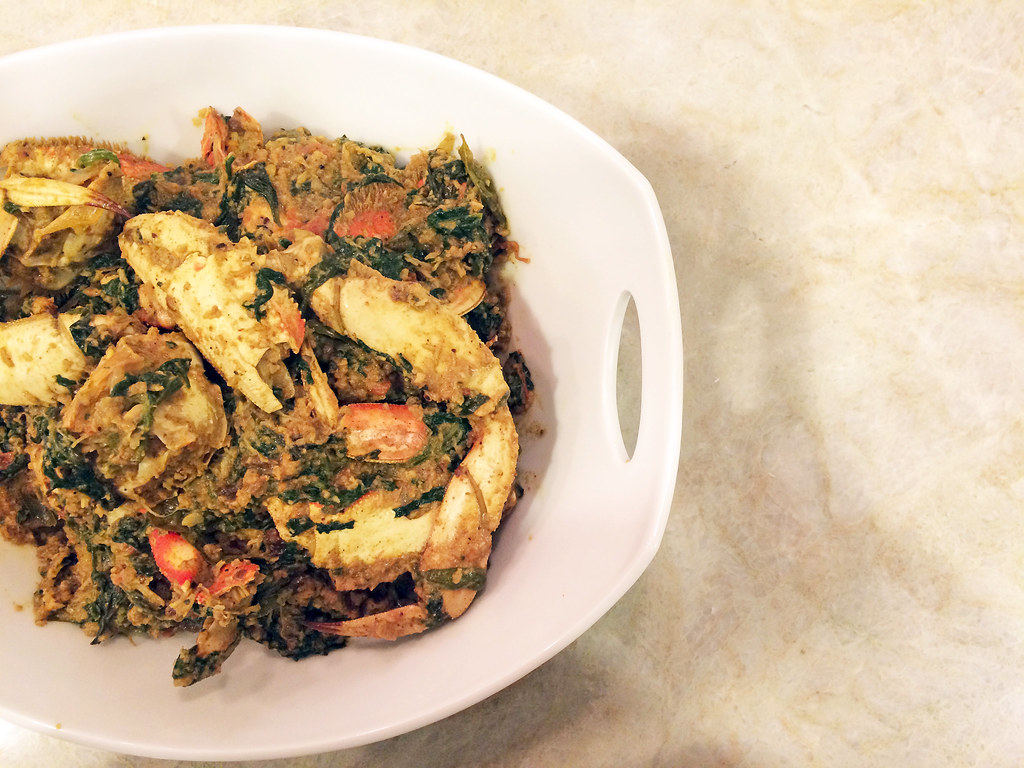
Sri Lankan crab curry

Ingredients:

2 large cooked Dungeness crabs, cleaned
1/2 teaspoon turmeric powder
1 teaspoon cayenne pepper
1 teaspoon salt to taste
1 tablespoon raw basmati rice
1/2 teaspoon black peppercorns
1 teaspoon cumin seeds
3 tablespoons shredded coconut
5 cloves garlic
2 tablespoons oil
1 onion, chopped
2 sprigs curry leaves
1 tomato, chopped
1 bunch spinach or murungu leaves
1 cup water
1 cup coconut milk
2 tablespoons tamarind paste, soaked in 1/3 cup warm water and pressed through a sieve, solids discarded

1. Split crabs down the middle and crack legs. Toss with turmeric powder, cayenne pepper, and salt. Set aside.

2. Toast rice, peppercorns, and cumin seeds in a small saucepan and set aside. Toast coconut in saucepan until slightly browned. Grind spices and coconut with garlic and set aside.

3. Heat oil in a medium saucepan. Saute onions, curry leaves, tomato, and spinach. Add crabs and 1/2 cup of the water. Cover and steam over high heat for 5 minutes.

4. Add the rice mixture, remaining water, and coconut milk to the saucepan. Stir and simmer for 5 minutes. Add strained tamarind liquid to pot and simmer for another 5 minutes. Remove from heat and serve warm.
Okra and Zucchini Sambar

Posted on

No two sambars are the same.

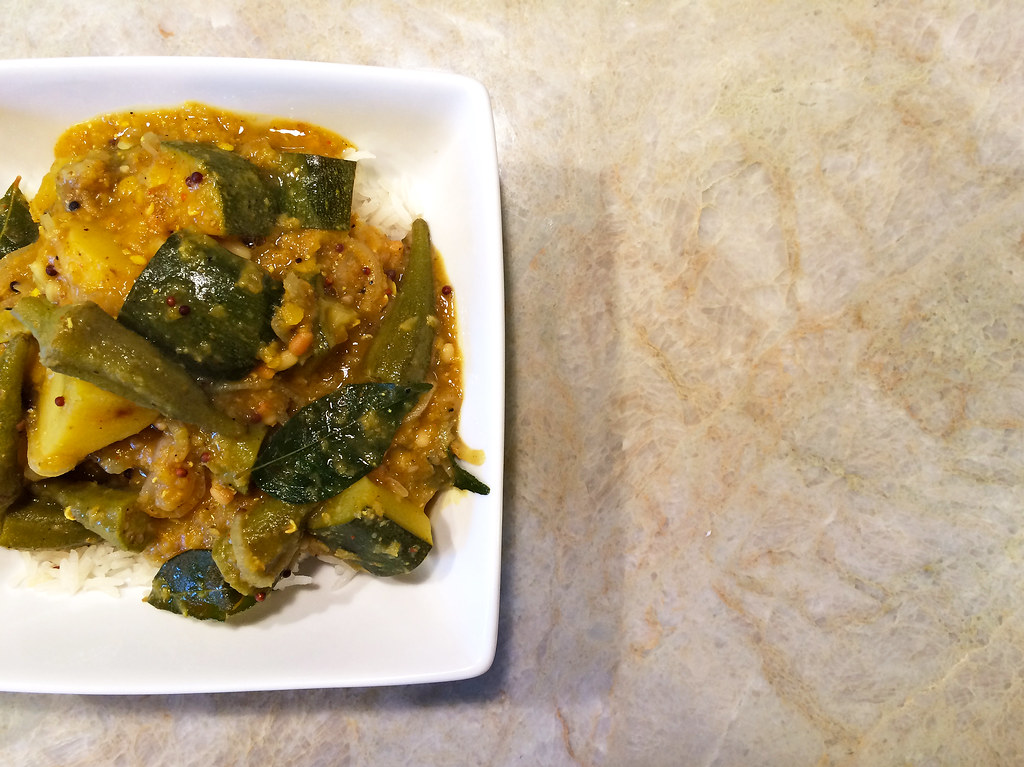
For the uninitiated, sambar is a comforting vegetable dish that’s popular in Sri Lankan Tamil and South Indian cuisine. The lentil and tamarind base are standard but the rest is up to you. Tomatoes in season? Go for it. Cauliflower? You can add that too. My favorite version includes okra and zucchini. Served typically with dosa, idli, or rice, the variations are endless.

Okra and zucchini sambar

Ingredients:

1 cup yellow lentils (toor dal)
6 cups water
2 slices ginger
1 teaspoon salt
1/2 teaspoon turmeric powder
3-4 cups mixed chopped vegetables (I used okra, zucchini, and potatoes here)
1 serrano chili, halved lengthwise
1/4 teaspoon asafoetida
1 tablespoon tamarind pulp, soaked in 1/4 cup warm water and strained for liquid (discard solids)
2 teaspoons coriander seeds
1 teaspoon cumin seeds
1/2 teaspoon cayenne pepper
1/4 teaspoon fenugreek seeds
1/4 teaspoon peppercorns
2 teaspoons vegetable oil
1 teaspoon mustard seeds
1 teaspoon urad dal
1 sprig curry leaves
3 shallots (or 1/2 onion), thinly sliced

1. Place the lentils, water, ginger, salt and turmeric in a large saucepan. Bring to a boil, cover partially with a lid, and simmer until the lentils are very soft, about 30 minutes.

2. While the lentils are cooking, prepare the sambar powder: lightly toast the coriander and cumin seeds in a small pan until they begin to smell fragrant, about 2 minutes. Let cool and grind in a spice grinder with the cayenne pepper, fenugreek seeds, and peppercorns. Set aside.

3. When the lentils are cooked, add the prepared vegetables, serrano chili, asafoetida, tamarind liquid, and sambar powder. Stir well, bring to a boil, and simmer gently with the pan uncovered until the vegetables have cooked through.

4. Just before serving, heat the oil in a small pan and add the mustard seeds, urad dal, curry leaves, and shallots. Stir until the shallots are tender, then pour the contents of the pan onto the vegetables. Stir and serve hot.

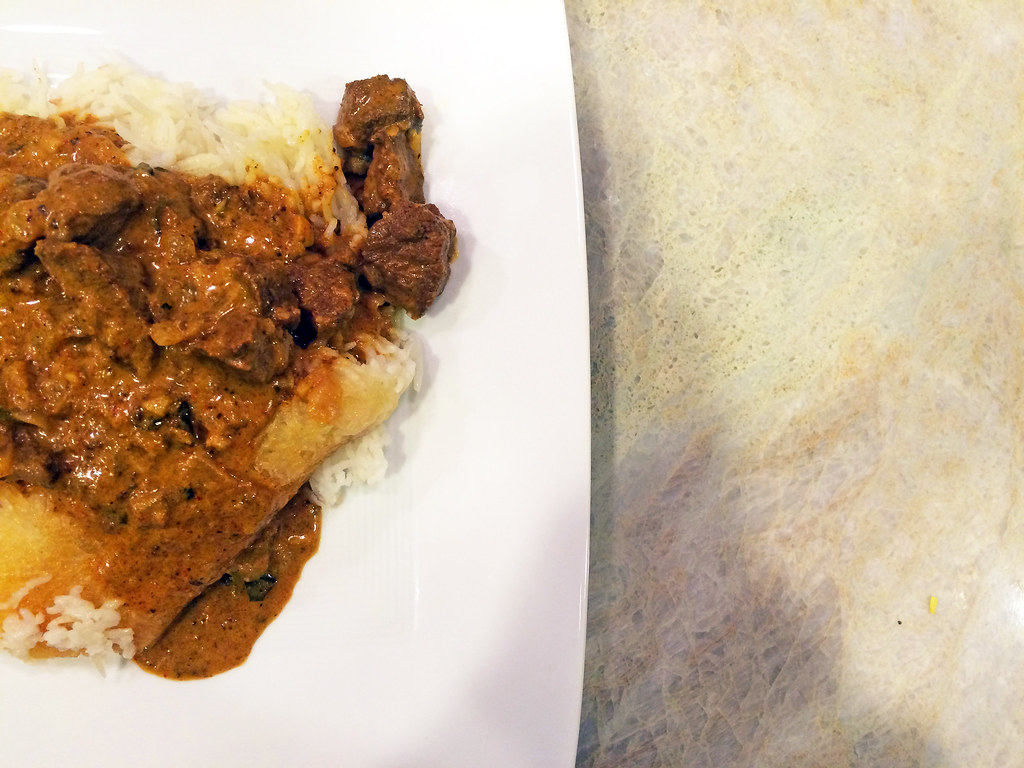
Sri Lankan Lamb (or Mutton) Curry

Posted on

The flight from San Francisco to Toronto is only four hours but each time we land, I’m hungry. I’m dreaming of curry, you see. (Doesn’t everyone?)

My mother-in-law always has a meal for us when we arrive in the evening — we can hardly wait to put away our luggage before sitting down for a meal of parripu, rice, and always some sort of curry. Sometimes fish, sometimes mutton, sometimes lamb. I love them all and as I learn to cook Sri Lankan food, lamb curry has become one of my go-tos, albeit with a few Iranian touches. I cook my basmati rice Persian-style and serve the curry with tahdig and vinegary torshi on the side.

I cannot overemphasize how worth it is to make your own curry powder here. It only takes a few minutes and the flavor is superior to store-bought. Marinate your meat overnight, cook the next day, and voila. This fiery curry tastes even better the next day. You can follow this same recipe and use mutton instead of lamb, if you prefer.

Sri Lankan lamb curry

Ingredients:

2 pounds lamb or mutton, cut into 1-inch cubes
3 tablespoons roasted curry powder
1 teaspoon cayenne pepper
1 teaspoon paprika
1 tablespoon apple cider vinegar
2 tablespoons oil
1 onion, chopped
2-inch piece ginger, minced
2 green chiles, sliced
2-inch stalk lemongrass
2-inch cinnamon stick
1 or 2 sprigs curry leaves
1 1/2 cups water
1 1/2 cups coconut milk
1 teaspoon salt
1 1/2 tablespoons tomato paste

1. Lightly prick meat with a fork to tenderize.

2. Slightly toast the curry powder in a pan for 3 minutes, until fragrant but not burning. Remove from heat and mix with meat, cayenne powder, paprika, and vinegar and marinate for at least 4 hours or preferably overnight.

3. Heat oil in a large pot. Saute onions, garlic, ginger, chiles, lemongrass, cinnamon stick, and curry leaves until onions are translucent.

4. Add marinated meat and saute for a few minutes until browned.

5. Add water and bring to a boil. Reduce heat to a simmer, cover, and cook for about 30 minutes.

6. Add coconut milk, salt, and tomato paste and simmer over low heat, uncovered, for an additional 30 minutes. Serve warm with rice.

Sri Lankan Spiced Potatoes

Posted on

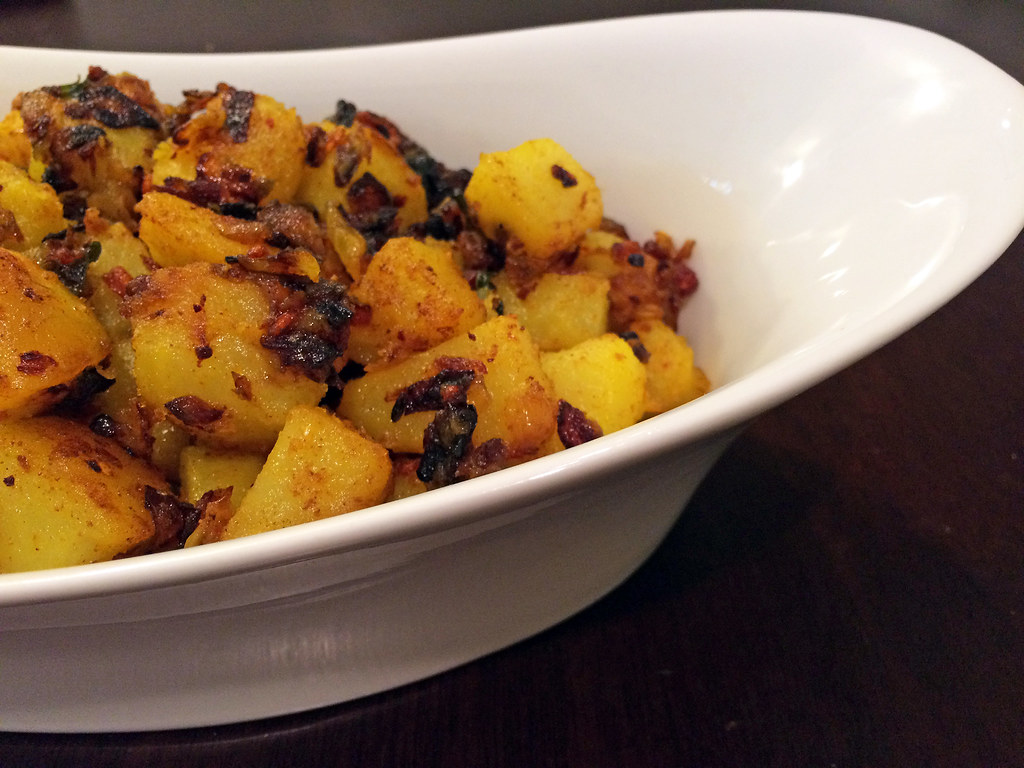
Crispy potatoes, how do I love thee? Let me count the ways. Actually, scratch that, let me just cook up a batch of these generously spiced potatoes, which are like potato hash on overdrive.

This classic Sri Lankan dish is spicy, oniony, flecked with umami-laden Maldive fish, and perfectly crisped at the edges. Letting the potatoes brown sufficiently is key to their success — there’s nothing like the combination of that crispy exterior and creamy interior. These potatoes reheat well, too. Not that there’ll be any left over.

Sri Lankan spiced potatoes

Ingredients:

2 large potatoes, peeled and diced
2 tablespoons vegetable oil
1 onion, chopped
2 sprigs curry leaves
3 dry red chiles, ground (1 to 2 teaspoons)
1 teaspoon Maldive fish
1/4 teaspoon turmeric powder
salt
1 tablespoon lime juice

1. Bring water to boil in a pot. Add potatoes and boil for 5 minutes. Drain and set aside.

2. Heat oil in a pan. Saute onions and curry leaves until onions are translucent.

3. Add potatoes, chiles, Maldive fish, turmeric, and salt. Saute for several minutes, stirring occasionally, until potatoes are browned. Remove from heat and squeeze lime juice over before serving.

Seeni Sambol (Sweet and Spicy Caramelized Onions)

Posted on

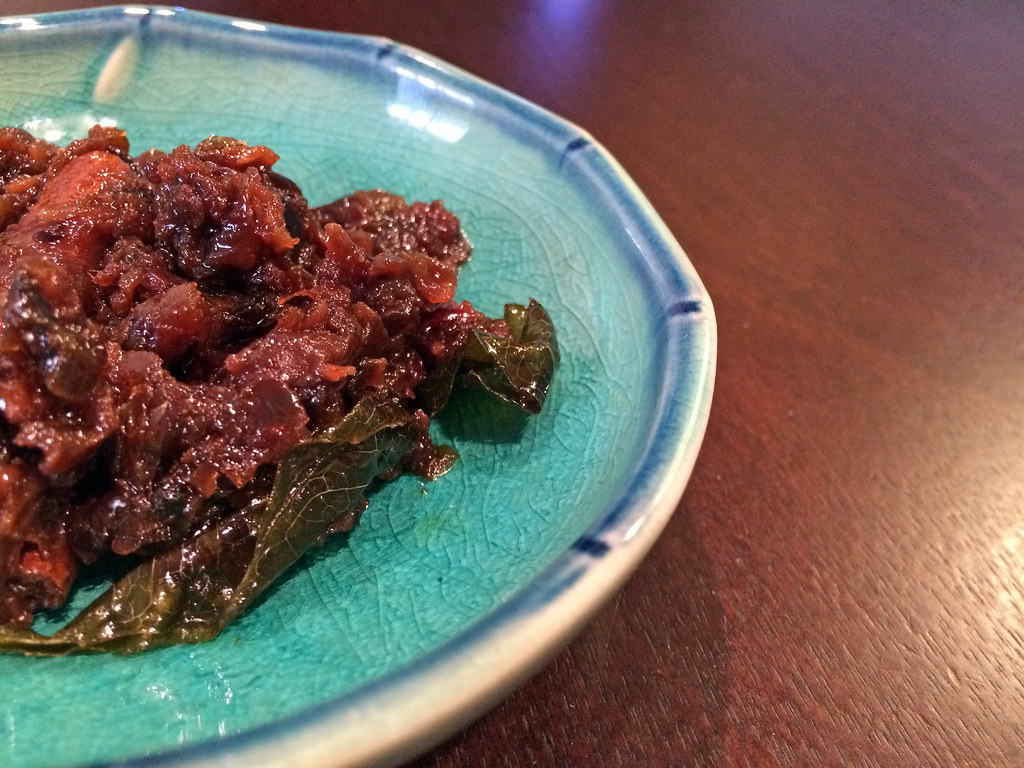
Seeni sambol is meant to be eaten as a condiment, but I love this sweet and spicy onion relish so much that I eat it straight out of the container. No shame.

Like its Southeast Asian cousin sambal, Sri Lankan sambols are part of a larger meal, alongside dishes like hoppers or rice. This is my favorite sambol. It’s easy to make but takes patience: lots of stirring and doting over a pan of slowly caramelizing onions, Maldive fish, chili powder, curry leaves, and sugar. Feel free to adjust the amount of pepper to your preference.

Seeni sambol

Ingredients:

2 tablespoons oil
1 pound red onions, chopped
5 cloves garlic, minced
2 inch piece ginger, finely chopped
1 sprig curry leaves
4 cardamom pods
4 cloves
2 inch cinnamon stick
1 teaspoon salt
1 teaspoon cayenne pepper
1/3 cup Maldive fish
5 tablespoons tamarind pulp, softened in 1/2 cup hot water
1/4 cup coconut milk
juice of 1/2 lime
2 teaspoons sugar

1. Strain softened tamarind pulp in a sieve, discarding solids. Mix tamarind pulp into coconut milk and set aside.

2. Heat oil in pan. Fry onions, garlic, ginger, and curry leaves until onions are golden brown.

3. Add cardamom, cloves, cinnamon, salt, cayenne pepper, Maldive fish, tamarind-coconut mixture, and lime. Cook, uncovered, on low heat for about 40 minutes.

4. Add sugar and mix well. Remove from heat, cool, and store in a glass container in the refrigerator for up to a week. Serve at room temperature.