Salted Chocolate Halva

Posted on

You say halva, I say halvardeh. The crumbly, sticky sesame-based confection that’s called halva in the Levant (and the West) is called halvardeh in Iran and that’s because what’s called halva in Persian refers to a related confection made from wheat flour, butter, and with rosewater. But for the purposes of this recipe, let’s just call the crumbly sesame-based version halva.

Semantics aside, I can’t get enough of this stuff. One of my favorite breakfasts is halva simply wrapped up in lavash with a side of strong black tea. I also, uh, love halva straight out of the box. And I am equally parts delighted and terrified to learn that I can make halva from scratch, at home, with relative ease. Adapted from a Bon Appetit recipe, this bittersweet chocolate-glazed version is much tastier than store-bought. Once cooled, cut this up into tiny squares for a decadent teatime treat.
Salted chocolate halva

Ingredients:

Nonstick oil spray
1 1/2 cups tahini
1/4 teaspoon salt
4 tablespoons sesame seeds, divided
1 1/2 cups sugar
4 ounces dark bittersweet chocolate
Sea salt, for sprinkling

1.Lightly coat an 8 1/2″ x 4 1/2″ loaf pan with nonstick spray and line with parchment paper, leaving a 2″ overhang on both of the long sides. Mix tahini, salt, and 2 tablespoons sesame seeds in a large bowl to combine; set tahini mixture aside.

2. Cook sugar and 1/2 cup water in a small saucepan over low heat, stirring with a heatproof rubber spatula, until sugar is dissolved, about 4 minutes. Increase heat to medium-high. Cook syrup, brushing down sides as needed to dissolve any crystals that form, about 7–10 minutes. Immediately remove syrup from heat and gradually stream into reserved tahini, mixing constantly with spatula. Continue to mix just until halva comes together in a smooth mass and starts to pull away from the sides of bowl (less than a minute). Be careful not to overmix or halva will crumble. Working quickly, scrape into prepared pan and let cool.

3. Melt chocolate in a heatproof bowl set over a pan of simmering water (do not let bowl touch water), stirring often. Remove from heat. Invert halva onto a wire rack set inside a parchment-lined rimmed baking sheet; peel away and discard parchment. Pour chocolate over halva and sprinkle top with sea salt and remaining 2 tablespoons sesame seeds. Let sit until chocolate is set before serving, about 1 hour.
Halvah-Stuffed Challah

Posted on

Growing up, one of my favorite after-school snacks was halvah rolled up with lavash flatbread: simple, sweet, and satisfying. Called halvardeh in Persian, Middle Eastern halvah is ubiquitous these days in well-stocked American grocery stores. But when I was a kid, halvah was precious: we’d make semi-monthly drives from Santa Rosa to San Jose to stock up on Iranian favorites, including halvah, sour cherry jam, lavashak (sour fruit roll ups), and spices and herbs for days.

This halvah-stuffed challah is a grown-up version of my childhood snack and make no mistake about it: this is a weekend project. Adapted from a Food and Wine recipe, this takes the better part of an afternoon to make, and the results are well worth it. This recipe makes two loaves so make like me and freeze one for eating later, when the craving strikes.

Halvah-stuffed challah

Ingredients:

1 1/2 cups warm water
1 1/2 tablespoons active dry yeast
1/3 cup plus 1 teaspoon sugar
5 eggs
1/2 cup canola oil
2 1/2 teaspoons vanilla extract
8 1/4 cups all-purpose flour
2 1/2 teaspoons ground cinnamon
1/8 teaspoon ground cardamom
1 cup tahini
1/3 cup plus 1 tablespoon honey
Salt
1 1/2 cups chopped halvah
Sesame seeds and more sugar, for sprinkling

1. Make the dough: In a small bowl, whisk the water with the yeast and 1 teaspoon of the sugar. Let stand for 10 minutes, until foamy.

2. In a medium bowl, whisk 4 of the eggs with the oil and 1 teaspoon of the vanilla. In the bowl of a stand mixer fitted with the dough hook, combine the flour, pinch of salt, 2 teaspoons cinnamon, 1/4 teaspoon cardamom and the remaining 1/3 cup of sugar. Mix to blend. Add the egg and yeast mixtures and knead until the dough comes together, scraping down the side and bottom of the bowl, about 3 minutes. Scrape the dough out onto a work surface and knead until smooth and slightly sticky, 8 to 10 minutes. Transfer the dough to an oiled large bowl and cover with wax paper and a towel on top.

3. Make the filling and topping: In a medium bowl, stir the tahini with 1/3 cup of the honey, the remaining 1 1/2 teaspoons vanilla, the remaining 1/2 teaspoon cinnamon, a pinch of salt, and 2 tablespoons of water until smooth. In a small bowl, beat the remaining egg with the remaining 1 tablespoon of honey and 1 tablespoon of water.

4. Preheat the oven to 375F degrees and line 2 baking sheets with parchment paper. Divide the dough into 2 equal pieces. Transfer 1 piece to a lightly floured work surface and keep the other piece covered with a damp kitchen towel. Divide the dough on the work surface into 3 equal pieces. Using a rolling pin, roll out 1 piece into a 
14-by-6-inch rectangle. Spread 1/4 cup of the tahini mixture on top, leaving a 1/2-inch border. Sprinkle 1/4 cup of the halvah over the tahini in an even layer. With a long side facing you, tightly roll up the dough into a log, pressing the seam and ends together to seal in the filling. Repeat with the other 2 pieces of dough, 1/2 cup of the tahini mixture and 1/2 cup of the halvah. Arrange the 3 logs on one of the prepared sheets and braid them together. Brush with the egg wash and sprinkle with sesame seeds and sugar. Repeat with the second piece of dough and the remaining filling, egg wash and toppings. Bake the challahs for about 25-30 minutes on the middle and bottom racks of the oven, shifting and rotating halfway through, until deep golden. Transfer to racks to cool.


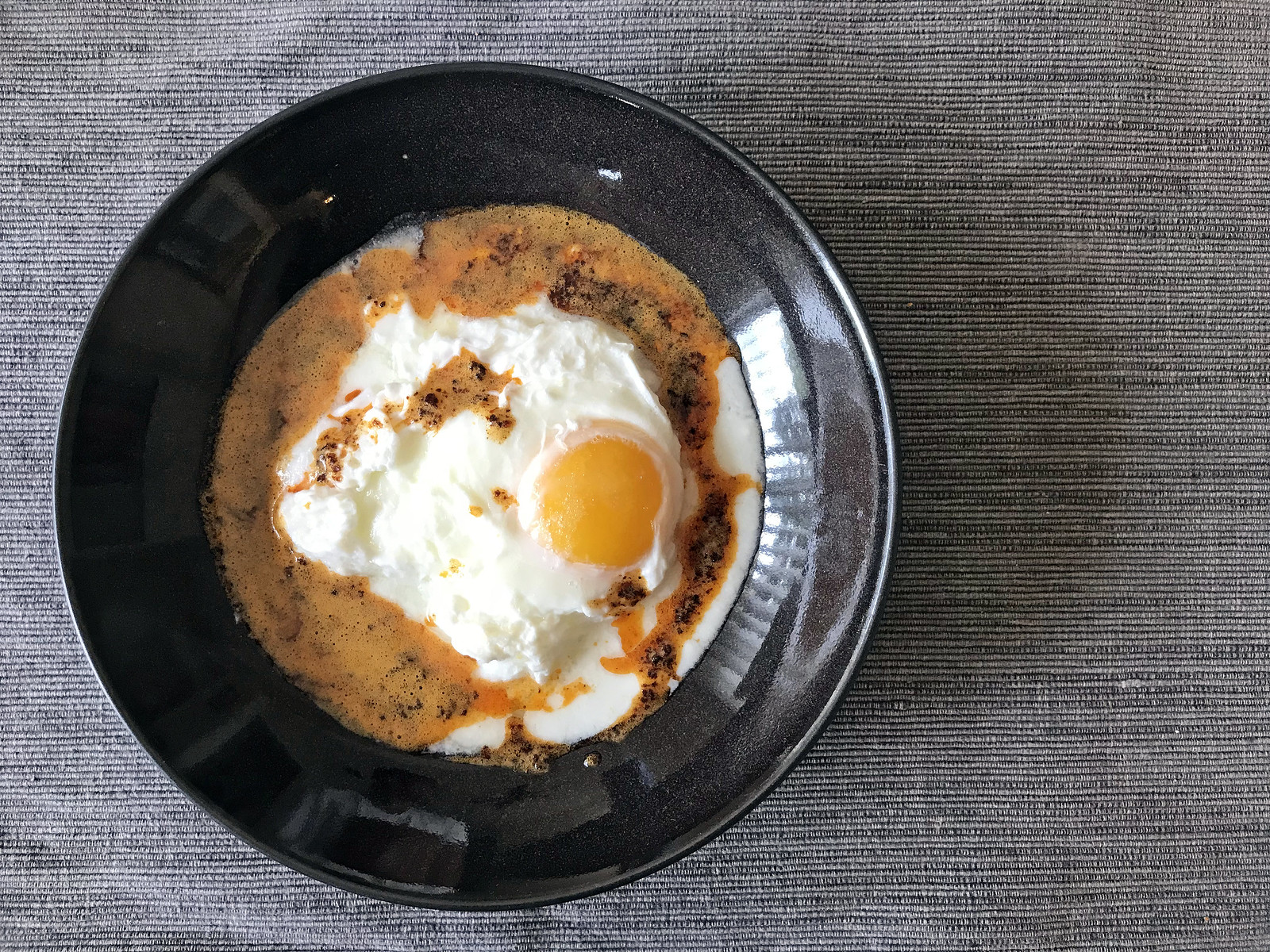
Turkish-Style Poached Eggs

Posted on

What surprised me most about Turkish cuisine when I visited Istanbul several years ago was how spicy it could be. I thought the food would be more like its Iranian counterpart: herbaceous and drizzled with saffron and turmeric at every turn. And while Turkish cuisine incorporates similar flavors, it’s also laden with peppers, both mild and hot. I loved it. Redolent with fresh vegetables, flatbreads, yogurt, lamb, and ingredients similar to the Iranian palate I’d grown up with, Turkish food was at the same time familiar but not.

One of my favorite dishes were these poached eggs. No one does breakfast like the Turks. The silky sauce is garlicy, yogurty, and has just enough heat so that you can’t stop sopping it up with bread, yolks and all. You can serve this with any flatbread, but I prefer this with some good-quality slices of toasted sourdough. Iranian barbari is delicious too.

Turkish-style poached eggs

Ingredients:

1/2 cup plain whole-milk Turkish or Greek yogurt

1 small garlic clove, minced

3/4 teaspoon sea salt

2 teaspoons unsalted butter

1 teaspoon olive oil 

1 teaspoon ground Aleppo pepper or Turkish red chile flakes 

2 large cold eggs
2 teaspoons fresh lemon juice, divided

2 thick sourdough 
slices or pieces of barbari bread, toasted


1. Fill a large skillet with water to a depth of 2 inches. Bring to a simmer over medium.

2. Place yogurt in a small saucepan and slowly warm over low heat. Stir in garlic and salt. Cook, stirring, until yogurt mixture is the consistency of lightly whipped cream, about 3 minutes. Remove from heat.


3. Melt butter in a small saucepan over medium, stirring occasionally, until just beginning to turn brown, about 4 minutes. Remove from heat and stir in oil and Aleppo pepper. 


4. Crack 1 egg into a ramekin or small bowl. Add 1 teaspoon lemon juice. Repeat with remaining egg and remaining 1 teaspoon lemon juice in another ramekin or small bowl.


5. Gently slide eggs, 1 on each side of the large skillet, into the simmering water. Reduce heat so there is no movement in the water, and poach eggs until whites are set and yolks are still runny, 4 to 5 minutes. Using a slotted spoon, remove the eggs to a plate.


6. Divide the warm creamy yogurt mixture between 2 
shallow bowls. Top each with 
a poached egg, and pour the peppery butter around and slightly over the yogurt. Serve with bread.

Iranian Okra Stew (Khoresh-e Bamieh)

Posted on

For the uninitiated, khoresh is a general term for stews and curries in Iranian cuisine that are served alongside basmati rice, fresh sabzi (herbs), and torshi (pickled vegetables). From eggplant to fenugreek to split peas to pomegranates, there are countless varieties of khoresh and at gatherings you’ll see at least two types served alongside other dishes.

My favorite khoresh, though, is a less common one: khoresh-e bamieh. This okra stew hails from southern Iran and although both of my parents are from Tehran, my mom’s family grew up eating this. She introduced it to my dad when they were married, who counts it among his favorites too. And me? Well, I go crazy for this stuff. Luckily for me (and you), it’s easy to make. It’s not quite as good as my mom’s, but I’m getting there.

Like most khoreshs, it can be made vegetarian by simply omitting the meat. You can also substitute the chicken for leg of lamb that’s been cut into 2-inch cubes. Just be sure to adjust the cooking time and water accordingly.

Khoresh-e bamieh

Ingredients:

2 onions, peeled and chopped
6 cloves garlic, peeled and crushed
2 pounds skinless chicken legs and thighs
3 tablespoons olive oil
1 teaspoon salt
1/2 teaspoon pepper
1 teaspoon turmeric
3 tablespoons tomato paste
1 tomato, chopped
juice of 1 lime
1 pound fresh or frozen okra

1. In a large heavy pot or Dutch oven, brown onion, garlic, and chicken in the olive oil. Sprinkle with salt, pepper, and turmeric. Add the tomato paste and tomato. Pour in 1 1/2 cups water, cover, and simmer over low heat for 1/2 hour until the chicken is tender, stirring occasionally.

2. When the chicken is tender, add lime juice and okra. Simmer, covered, for 15 to 20 minutes over low heat. Check to see if okra is tender. Taste the stew and adjust the seasoning if needed. Serve warm with chelo (Iranian-style rice).

Roasted Pepper and Artichoke Antipasto

Posted on

Summer is finally here and I am all about it, y’all. Gimme all the greens, gimme all the corn, gimme all the tomatoes, gimme all the peppers. This simple vegetable antipasto is like summer on a platter. Best of all, you can make it ahead of time and let the flavors marinate. Now go outside and get some sun.

Roasted pepper and artichoke antipasto

Ingredients:

4 red bell peppers
3 yellow or orange bell peppers
1/2 cup sun-dried tomatoes in oil, drained
2 tablespoons balsamic vinegar
4 tablespoons olive oil
a few drops of hot pepper sauce (optional)
4 canned artichoke hearts, drained and quartered
1 garlic clove, sliced
salt and pepper
1 handful basil leaves, plus more to garnish

1. Preheat the oven to 400F degrees. Lightly oil a foil-lined baking sheet and place the whole peppers on the foil. Bake for about 45 minutes, until beginning to char. Remove from the oven, place in a heatproof bowl and cover lightly with plastic wrap for 5 minutes.

2. Slice the sun-dried tomatoes. Remove the core and seeds from the peppers and peel away the skins. Slice each pepper into thick strips.

3. Whisk the vinegar, oil, and hot pepper sauce, then season with salt and pepper.

4. Toss the peppers with the sliced artichokes, tomatoes, basil, and garlic. Pour the dressing over and sprinkle a few more basil leaves on top.