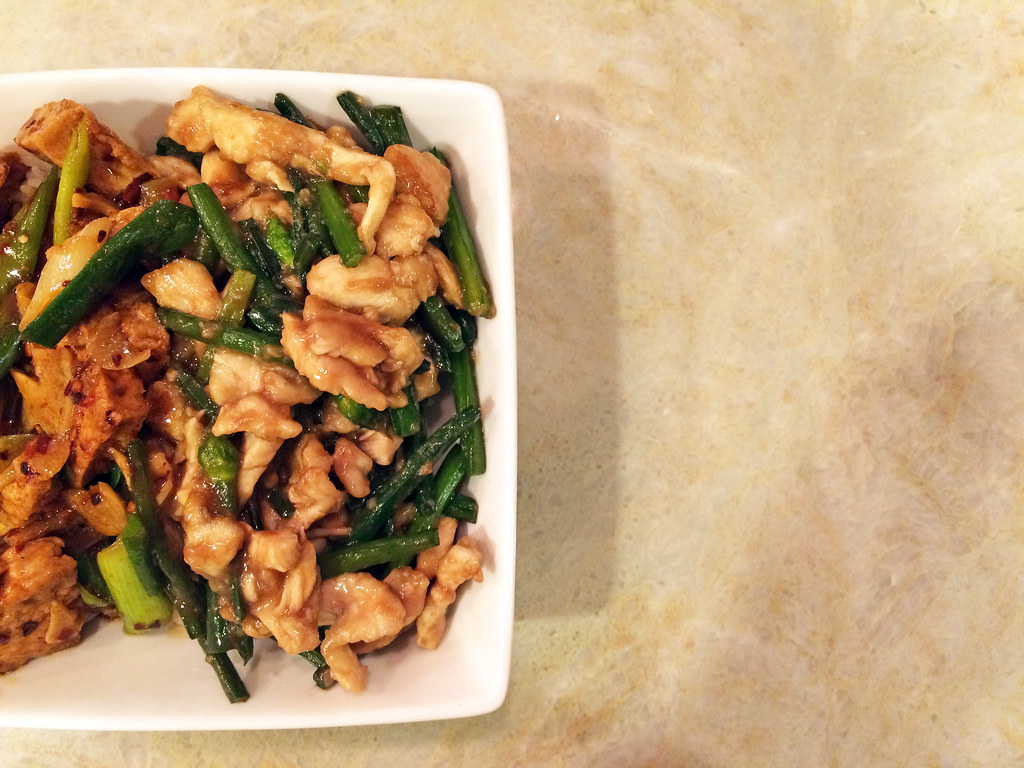
Flowering Chives with Turkey and Black Beans

Posted on

I was missing Taiwan and the cornucopia of food I ate during my trip last year, so I made this spin on what’s colloquially known as “fly’s head,” but is really more like Chinese chives with minced pork and salted black beans. Except my version uses ground turkey instead of pork (I stay halalifying Chinese recipes on the regular).

Try to seek out the flowering chives jiu cai here, as opposed to the flat, leafy ones. These stalks are light and crisp and will make all the difference in the final dish, which is perfect alongside a simple bowl of steamed rice.
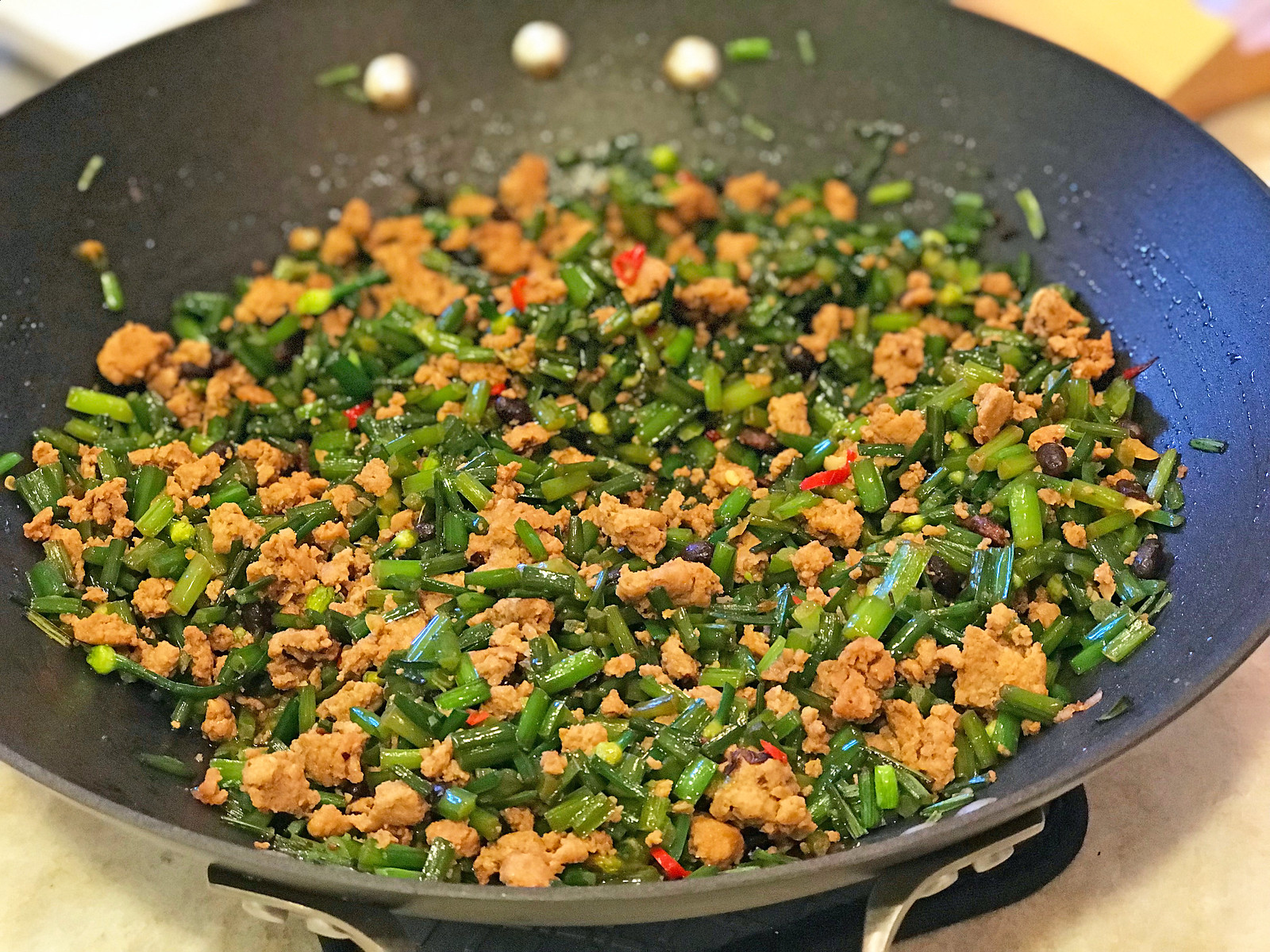
Flowering chives with turkey and black beans

Ingredients:

2 tablespoons cooking oil
1 1/4 pounds ground turkey
3/4 cup mirin
1/2 cup soy sauce
1 1/2 pounds flowering chives, cut into 1/2-inch pieces
4 garlic cloves, finely grated
3 Thai chiles, thinly sliced
2 tablespoons sesame oil
2 tablespoons dried fermented black beans, rinsed and drained

1. Heat oil in a wok over high. Add turkey and stir-fry while breaking up the pieces, until almost cooked through but with some remaining pink spots, about 3 minutes. Add mirin and soy sauce and simmer, continuing to press down on the turkey to break into small pieces, until liquid is reduced by half and meat looks slightly glazed, about 8 minutes. Add flowering chives, garlic, chiles, sesame oil, and black beans. Cook, tossing, until chives are just tender and fragrant, about 2 minutes. Serve over rice.
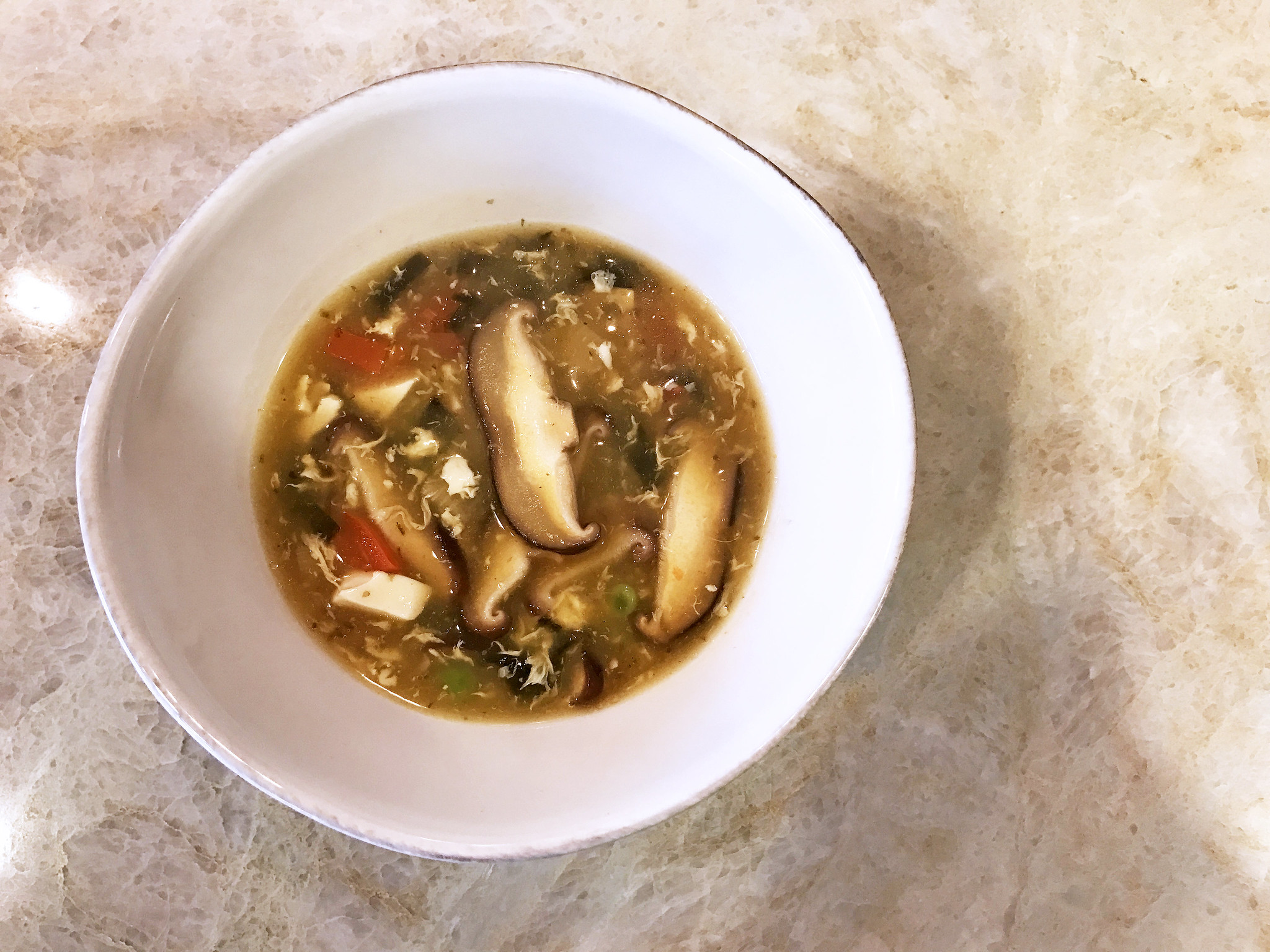
Egg Flower Soup with Lemongrass and Mushrooms

Posted on

This isn’t a traditional egg flower soup recipe by any means. But I love egg flower soup in any permutation and have been making this easy version for years — decades, even! Lemongrass, tomato and nori seaweed are unexpected ingredients here, but trust me, it works. Sometimes, the sum is greater than the parts.

Egg flower soup with lemongrass and mushrooms

Ingredients:

4 cups chicken stock
2 stalks lemongrass, bottom 8 inches, lightly crushed
3 fresh shiitake mushrooms, caps thinly sliced
1 ounce enoki mushrooms, trimmed and separated
1/3 cup frozen peas, thawed
1/2 cup thinly sliced bamboo shoots
1 sheet nori, shredded
1/2 teaspoon salt
1/4 teaspoon pepper
1/2 package soft tofu, cut into 2-inch-long x 1-inch long strips
1/2 cup chopped tomatoes
2 tablespoons cornstarch, dissolved in 3 tablespoons water
1 egg, beaten
1 teaspoon sesame oil

1. Bring the chicken stock and lemongrass to a boil in a large saucepan. Reduce the heat to a simmer and cook for 10 minutes.

2. Stir in the mushrooms, peas, bamboo shoots, salt, and pepper and bring to a boil. Add the tofu, tomatoes, and nori, stirring gently so the tofu does not break apart. Pour in the dissolved cornstarch and cook, stirring gently, until the soup returns to a boil and is slightly thickened.

3. Slowly pour in the beaten egg, stirring slowly but constantly to create “egg flowers.” Drizzle in the sesame oil and serve.

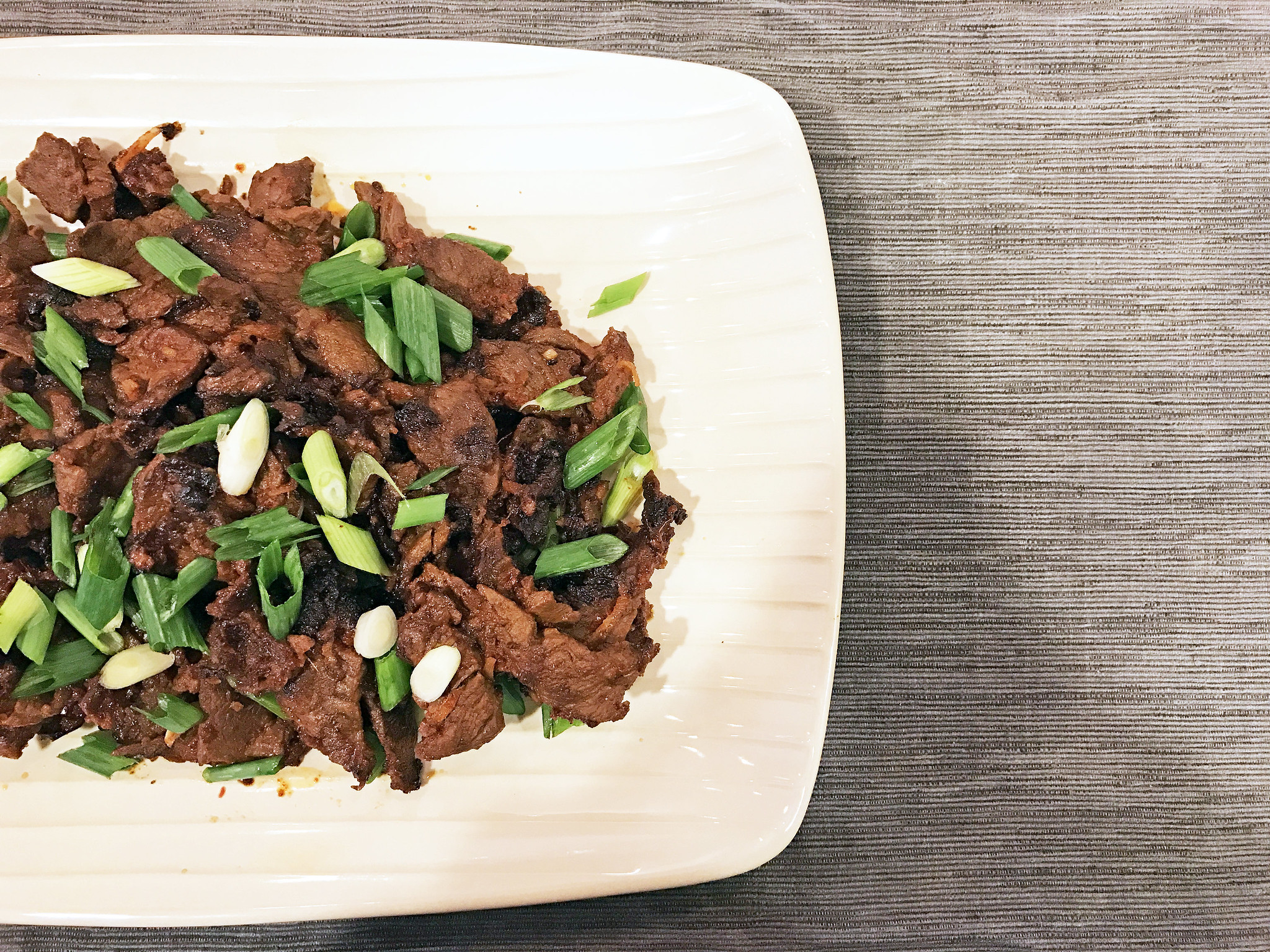
Spicy Beef Bulgogi

Posted on

The weather may be warming up (at least in California) but grilling season is still a couple of months away. In the meantime, I’ve been satiating my cravings with this spicy beef bulgogi: it’s easy to make on the stovetop but the flavor still imparts a pleasant smoke and char.

This marinade is endlessly adaptable and the final dish is fun to enjoy as a group. I served this alongside lettuce leaves, sticky rice, and homemade ssamjang, or Korean barbecue sauce. I include the recipe for my version below.

Spicy beef bulgogi

Ingredients:

For the bulgogi:

1/3 pear, grated
1 garlic clove, grated
2 tablespoons soy sauce
1 teaspoon gochugaru (Korean red pepper flakes)
1 tablespoon grated peeled ginger
1 tablespoon brown sugar
1 tablespoon sesame oil
1 pound hanger steak, boneless short rib, or sirloin
2 tablespoons olive oil, divided
sliced green onions, for serving

For the ssamjang:

5 tablespoons doenjang (Korean fermented soybean paste)
3 1/2 tablespoons gochujang (Korean red chile paste)
1 tablespoon chopped walnuts (optional)
1 1⁄2 tablespoons rice syrup
1 tablespoon minced white onion
1 tablespoon sesame seeds
1 tablespoon sesame oil
1/2 green onion, sliced
1 or 2 garlic cloves, minced

1. Marinade the beef: combine pear, garlic, soy sauce, gochugaru, ginger, sugar, and sesame oil in a large resealable plastic bag or bowl. Slice meat into very thin strips. Add to marinade, seal bag, and squish everything around until the meat is coated. Let sit at room temperature 30 minutes or chill up to 8 hours.

2. Make the ssamjang: In a bowl, add all the ingredients; stir until combined. Set aside.

3. Heat 1 tablespoon olive oil in a large skillet over medium-high until oil is shimmering. Remove half of meat from marinade, letting excess drip back into bag; cook in a single layer without moving until lightly browned, about 2 minutes. Toss meat and continue to cook, tossing occasionally, until cooked through and crisp at edges, about 4 minutes. Transfer to a plate. Repeat with remaining 1 tablespoon olive oil and remaining meat. Serve topped with green onions.

Chicken Slivers with Flowering Chives

Posted on

This recipe is malleable to say the least. Originally a Sichuan recipe of pork with yellow chives, I’ve adapted it to make it less, uh, porky. But I also swapped out the chives. Chinese yellow chives have been grown under cover without exposure to sunlight, and were originally called for here. They’re similar to the more commonly found Chinese chives, or jiu cai, but more delicate in flavor. There are also flowering chives, which are just as delicious and crunchier.

I love them all. But I can’t always find yellow chives or flowering chives, so feel free to use them interchangeably here. Just don’t use regular ol’ supermarket chives. It’s just not the same.

Slivered chicken with garlic chives

1 pound boneless, skinless chicken
3/4 pound flowering chives (or yellow chives or garlic chives), washed and trimmed
3 tablespoons vegetable oil
1/4 teaspoon salt
1 teaspoon Shaoxing rice wine
2 1/2 teaspoons cornstarch or potato flour
1 teaspoon soy sauce
3/4 teaspoon black Chinese vinegar
1/4 cup chicken stock

1. Slice the chicken into fine strips, about 2 inches long. Place them in a bowl, add the salt, rice wine, 2 teaspoons cornstarch, 2 teaspoons water, and mix. Let stand for 15 minutes.

2. Cut the chives into 2-inch lengths. Combine the soy sauce, vinegar, 1/2 teaspoon cornstarch, and chicken stock in a bowl and set aside.

3. Add oil to a wok over high heat. Add the chicken slivers and stir-fry to separate them, about 2 minutes until the meat is just about cooked, then add the chives. Continue to stir-fry until the chives are tender, then add the sauce to the wok. Cook for a minute longer, until the sauce has thickened, then turn onto a serving platter.

Tuna Poke on Nori Crakers

Posted on

Listen, I love my poke bowls like any good millennial should, but sometimes I want to mix it up. Sometimes I want poke straight out of the mixing bowl sans rice. And sometimes, I like to get fancy and serve poke on crispy, briny seaweed.

Adapted from a recipe by Liholiho Yacht Club’s Ravi Kapur, this is one of my favorite appetizers to make. It’s a showstopper and delicious to boot. The crackers are a little bit time consuming but the method is easy. Just make sure you assemble the final dish at the last minute so the crackers don’t get soggy.

Tuna poke on nori crackers

Ingredients:

Canola oil, for frying
3/4 cup cornstarch
Four 8-inch-square nori sheets, cut into quarters
salt
1/4 cup mayonnaise
1 1/4 teaspoon soy sauce
1 teaspoon chili garlic sauce
12 ounces sushi-grade tuna cut into 1/2-inch dice
4 teaspoons minced green onion
2 teaspoons minced ginger
2 teaspoons seeded and minced jalapeno
1/2 teaspoon toasted sesame oil

1. Make the nori crackers: in a large frying pan, heat 1 inch of oil to medium-high. Set a rack over a baking sheet and line with paper towels.

2. In a medium bowl, whisk the cornstarch with 1/2 cup of water until smooth. Dredge the nori in the cornstarch mixture, letting the excess drip off. Slowly drop the nori into the hot oil and fry for 2 minutes. Flip and fry for 
2 minutes longer, until crisp. Transfer to the rack, season with salt and let cool.

3. Make the spicy mayonnaise: In a small bowl, whisk the mayonnaise, 1/4 teaspoon soy sauce, and chili garlic sauce until smooth. Set aside.

4. Make the poke: In a large bowl, fold the tuna, green onion, ginger, jalapeno, remaining soy sauce, and sesame oil together; season with salt.

5. Place the poke onto the nori crackers and dollop with some of the spicy mayo. Serve immediately.