Italian-ish Ramen

Posted on

This is the most comforting soup you’re going to have this winter. If tortellini soup and ramen had a baby, this would be it.

Ingredients:
  • 2 large chicken thighs, preferably skinless and boneless
  • 3/4 teaspoon black pepper
  • 1 teaspoon salt, divided
  • 2 tablespoons avocado oil
  • 4 cups lower-sodium chicken stock
  • 3/4 ounce Parmesan cheese, grated (about 3 tablespoons), divided
  • 8 ounces uncooked thin spaghetti 
  • 10 basil leaves, sliced, divided
  • 4 soft-cooked large eggs, peeled and halved lengthwise
  • Calabrian chile paste, for serving
  1. Pat chicken dry using paper towels; sprinkle with pepper and 3/4 teaspoon salt. Heat oil in a large Dutch oven over medium-high. Place chicken and cook, undisturbed, until crispy and golden brown, about 7 minutes. Flip chicken, and cook until browned on other side, about 4 minutes. Carefully remove and discard all but 2 tablespoons of rendered chicken fat from Dutch oven, leaving chicken in Dutch oven.
  2. Add chicken stock and 1 1/2 tablespoons Parmesan to Dutch oven; bring to a simmer over medium-high. Reduce heat to medium-low; cover and cook about 15 minutes.
  3. While chicken cooks, bring a large pot of salted water to a boil over high. Add pasta, and cook 1 minute less than package directions for al dente.
  4. Remove chicken from Dutch oven, and let cool slightly, about 10 minutes. Shred chicken (discard skin and bones if using), and set aside. Reduce heat under Dutch oven to low; sprinkle stock mixture with remaining 1/4 teaspoon salt, plus more to taste. Add shredded chicken and half of sliced basil (about 1 tablespoon) to stock in Dutch oven. Bring to a simmer over medium-high. Drain pasta, and add to simmering stock mixture in Dutch oven. Cook until pasta is al dente, about 1 minute.
  5. Divide pasta, chicken, and broth among 4 bowls. Top evenly with eggs, remaining 1 1/2 tablespoons Parmesan; remaining basil, and a small spoonful of Calabrian chile paste, to taste.

Kimchi Sundubu Jjigae

Posted on

This Korean tofu and kimchi stew is the ultimate cold weather comfort food. Of all the jjigaes (Korean stews), this one is my favorite. Briny, spicy, and deeply savory, there’s a reason why it’s one of the most popular dishes at Korean restaurants. This was my go-to order at Pyeong Chang Tofu House in Oakland for ages. These days, I’ve learned to make it at home.

Ingredients:

  • 1 cup sour, aged kimchi with juice
  • 1 tablespoon avocado oil
  • 6 green onions, cut into 1-inch segments, green and white sections separated
  • 1 tablespoon minced garlic
  • 2 teaspoons gochujang
  • 1 tablespoon soy sauce
  • 3 teaspoons gochugaru
  • 1 quart dashi
  • 1 1/2 pounds soft tofu
  • 1 egg per serving (4, depending on serving size)
  • Cooked rice, for serving
  1. Drain the kimchi in a strainer set over a small bowl, squeezing to remove liquid. Roughly chop the kimchi and reserve the kimchi and juice seperately.
  2. Heat the oil in a heavy saucepan (or similar) over medium-high heat. Add the whites of the green onions, garlic, and chopped kimchi. Cook, stirring constantly, until fragrant, about 1 minute.
  3. Add the kimchi juice, gochujang, and soy sauce. Cook until the vegetables are coated in an even layer of sauce. Add the gochugaru and dashi, bring to a simmer and cook about 10 to 15 minutes. (Optional step: add a handful of cubed daikon radish, enoki mushrooms, or beech mushrooms before simmering at this stage. You could also add a handful of shellfish in the last few minutes of cooking.)
  4. Add the tofu and green tops of the green onions, stir gently, and heat until boiling. Break the eggs directly into the simmering broth. Stir the egg in to make a richer soup, or let them loosely poach int the broth. Serve with rice.

Thai-Style Jok with Chicken Meatballs

Posted on

I visited Thailand nine years ago and have been missing it ever since. Bangkok was brimming with delicious food and I was so excited to try it all. But on my third day there, I got sick. This jok (or congee) nursed me back to health within a couple of days. Sick or not, this jok is delicious and I find myself craving it whenever the weather gets cold. It’s savory, salty, spicy, and super comforting.

Ingredients:
  • 1 lemongrass stalk
  • 1/2 cup jasmine rice
  • 5 cups chicken stock (or water)
  • 1/2 teaspoon white pepper
  • Fish sauce

For the meatballs:

  • 8 ounces ground chicken
  • 1/4 teaspoon white pepper
  • 1 teaspoon fish sauce
  • 1/2 teaspoon salt
  • 1 tablespoon soy sauce
  • 2 garlic cloves
  • 1 tablespoon sugar

For the prik nam som:

  • 1/4 cup white vinegar
  • 1/4 cup boiling water
  • 1 teaspoon sugar
  • Two garlic cloves
  • 1/4 cup thinly sliced serrano or Thai bird chiles

To serve:

  • 2 cups roughly chopped greens such as kale or spinach
  • 4 eggs
  • Cilantro, minced
  • Green onions, thinly sliced
  • Sweet Thai preserved radish, minced
  • Fried shallots
  • Prik nam som
  1. Make the prik nam som: Combine all the ingredients in a jar. Allow to cool and set aside.
  2. Make the jok: Smash the lemongrass a few times using the back of a knife to bruise it up and help release flavor. Combine the rice, lemongrass, and stock in a large saucepan. Bring to a simmer over high heat, stirring occasionally. Reduce to a simmer and cook, stirring occasionally, until the rice is tender and the water has thickened into a porridge, about 1 hour total. Discard the lemongrass when the congee is done. Season with pepper and fish sauce to taste, and set aside, keeping the congee at a bare simmer on the stove, stirring occasionally and thinning it with water if it gets too thick.
  3. Make the meatballs: Combine the chicken, pepper, fish sauce, salt, soy sauce, garlic, and sugar in a small bowl. Mix with your fingers until the mixture is homogenous and sticky, about 30 seconds. Wash your hands and using wet hands, pinch off teaspoon-sized pieces of the chicken mixture and form into small balls. Drop the balls directly into the simmering congee. Cover and continue to simmer until the meatballs have firmed up, about 3 minutes.
  4. To serve: stir in the greens and continue cooking until greens are wilted and the meatballs are cooked through, about 3 minutes longer.
  5. Ladle some hot congee into the bottom of each of 4 serving bowls, then crack a raw egg on top. Divide remaining congee among the bowls. Let them rest for a couple of minutes before serving to allow the egg to cook partially. Garnish each bowl with cilantro, green onions, preserved radish, and fried shallots. Serve, passing prik nam som to the table to be added as desired.

Ma Po Tofu, Version Two

Posted on

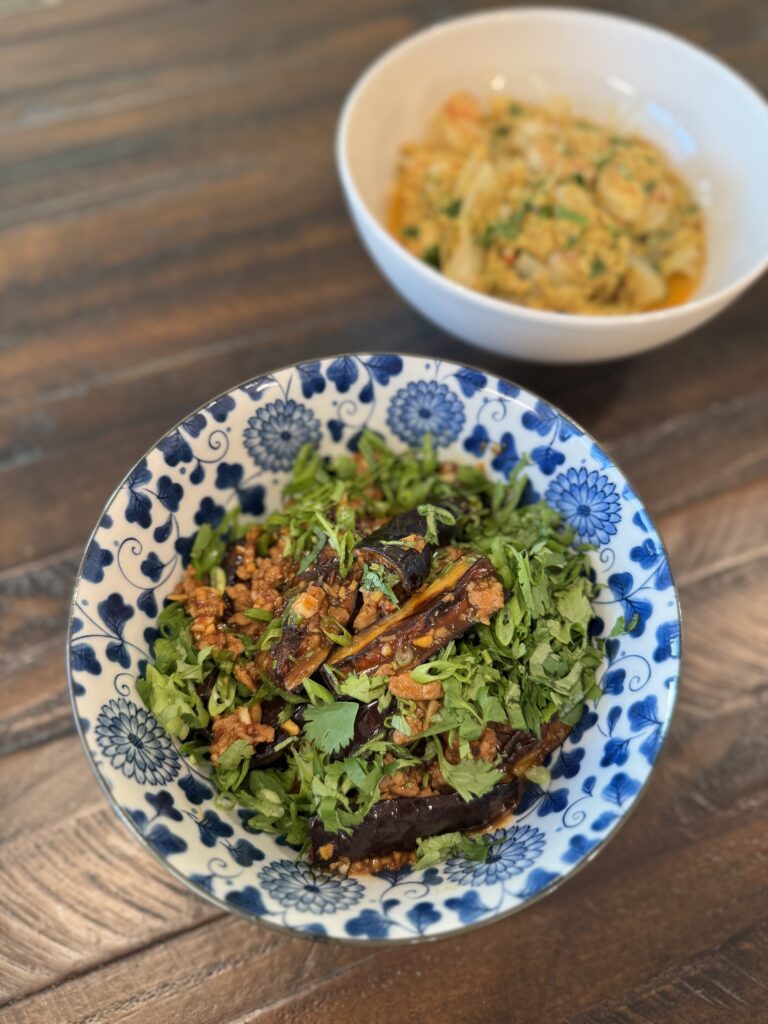
I’m a fiend for ma po tofu. It’s easily one of my favorite Chinese dishes of all time. Actually, it’s one of my favorite dishes, period. My original version isn’t particularly authentic but is loosely adapted from one of the OGs of Chinese-American cooking, Bay Area legend Martin Yan himself.

This version, however, tastes closer to something you might find in a Sichuanese restaurant. Both are spicy, comforting, and perfect over a bowl of rice.

Ingredients:

  • 2 tablespoons avocado oil
  • 1/2 tablespoon Sichuan peppercorns
  • 4 ounces ground beef
  • 1 tablespoon minced ginger
  • 2 tablespoons minced garlic
  • 3 tablespoons zha cai (preserved radish), minced
  • 2 tablespoons doubanjiang (spicy chili bean paste)
  • 1 tablespoon Shaoxing wine
  • 1/4 cup chicken stock
  • 1 16-ounce package silken tofu, diced into large bite-size pieces
  • 2 tablespoons chopped green onions
  • Steamed rice, for serving
  1. Heat the avocado oil in a wok over high heat. When the oil is smoking hot, add the Sichuan peppercorns. Stir-fry for 5 seconds, until fragrant, then add the ground beef. Stir-fry and brown the beef, about 3 minutes, then add the ginger, garlic, and preserved radish to the wok.
  2. After about 1 minute, add the doubanjiang and Shaoxing wine and stir, then add the chicken stock; mixture should be saucy, like a ragu. Lower the heat and let the mixture simmer for 3 minutes. Add the tofu to the wok and gently stir to not break up the tofu pieces. After 4 minutes, add the green onions to the wok, gently mix, and serve warm with rice.

Korean-Style Seafood and Green Onion Pancakes

Posted on

These are not the most beautiful seafood and green onion pancakes, but they are the most versatile. Adapted from a J. Kenji Lopez-Alt recipe, these savory pancakes can be made with nearly any combination of seafood, including canned tuna or salmon, making it easy for a quick weeknight dinner. Serve them warm or serve them room temperature, but be sure to serve them with the tasty dipping sauce.

Ingredients:

For the dipping sauce:

  • 3 tablespoons soy sauce
  • 2 tablespoons rice or black vinegar
  • 2 tablespoons water
  • 1 teaspoon sesame oil
  • 1 tablespoon sugar
  • 1 green onion, sliced
  • 2 teaspoons minced fresh ginger

For the pancakes:

  • 8 ounces mixed seafood (I recommend canned tuna, oysters, mussels, or surimi)
  • 6 green onions, split lengthwise and cut into 1-inch pieces
  • 4 ounces (about 3/4 cup) flour
  • 1 ounce cornstarch or potato starch
  • 2 teaspoons sugar
  • 6 ounces (about 3/4 cup) cold water
  • 1 egg
  • Avocado oil, for pan-frying
  1. Make the dipping sauce: combine all the ingredients and stir until the sugar dissolves. Set aside.
  2. Make the pancakes: combine the seafood, green onions, flour, cornstarch, sugar, water and egg in a large mixing bowl. Stir rapidly with a spoon just until no dry flour remains (do not over mix). The batter should be thin enough to flow when you tilt the bowl.
  3. Heat 2 tablespoons oil in the bottom of a 10-inch nonstick skillet over medium-high heat until shimmering. Add just enough batter that you can spread it into a thin pancake with the back of a spoon (you should be able to make 2 10-inch pancakes or several smaller pancakes). Let the pancake cook without moving until the bottom of the pancake is set, about 2 minutes.
  4. Continue to cook, swirling the pancake around to encourage even browning until the first side is browned, about 5 minutes. Use a spatula to carefully flip the pancake. Continue cooking until the second side is also browned, about 4 minutes longer.
  5. Slide the pancake out onto a cutting board. Repeat steps 3 through 5 for remaining batter. Cut into wedges with a knife or pizza slicer and serve with the dipping sauce.