Rome, Day One

Posted on

It’s been five months since I returned from a trip to Italy and I’m yet to write about it. Now that we’ve got that embarrassing admission out of the way, let’s get started, okay?

I’d originally planned to go somewhere warm, but once I realized I’d be traveling at the height of the holiday season, I consulted my travel partner (also known as Melody, my sister), and we brainstormed. Our stomachs guide us, so we eventually arrived at Rome. Sure, it’d be cold, but it was Italy, home of pasta, pizza, cured meats, gelato and assorted glorious things to eat.

And that’s how we found ourselves at Fiumicino Airport the day after Christmas, held up at the Alitalia airport baggage claim in search of our missing luggage. Five hours and a ton of paperwork later, our bags miraculously appeared on the carousel and off we went to Rome’s Termini Station.

Italophiles, please don’t hate me, but Termini Station was not what I was expecting. It was under construction during our visit, but the poor lighting, bad ventilation, grumpy crowds and sad dining options (Tokyo spoiled me) took me by surprise. No matter. We found our train and once we reached our hotel, we quickly checked in. Wanting to make the most of our time, we went right back to the station and made our way towards Via Appia Antica.

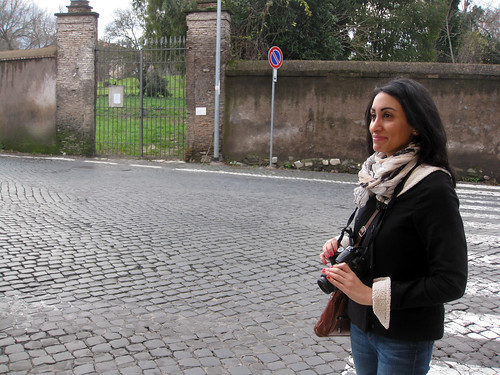
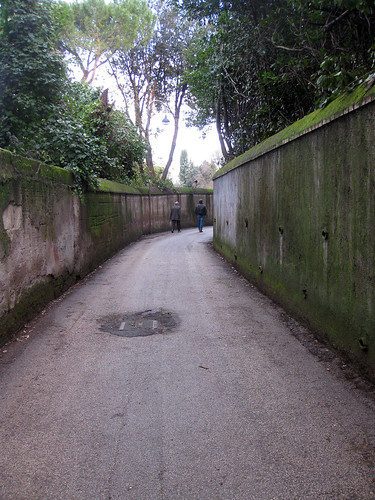
Rome’s public transportation system escapes me, and after an hour of riding a train here, transferring to a bus there, and walking up and down the same neighborhood, we found it. Via Appia Antica:
Via Appia Antica

Via Appia Antica

Via Appia Antica is one of the oldest roads of the Roman Empire, and it’s also where Spartacus and his army were crucified in 71 BC. Nowadays, it’s lined with catacombs, cypress trees, and the homes of the well to do. The neighborhood started to feel a little eerie as the sun set, so we headed back towards down and the nearby Basilica di San Giovanni Laterano.
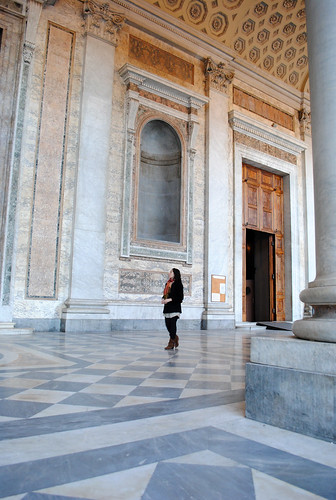

Basilica di San Giovanni Laterano

Basilica di San Giovanni Laterano

This is the official ecclesiastical seat of the Bishop of Rome (the Pope), and ranks first among the four major Roman basilicas. Oddly enough, there were few people around, so we explored the cathedral in silence. The basilica is stunning, and I learned that its huge, imposing doors were moved all the way over from the Roman Forum.

After a day of travel and half a day of sightseeing, we called it an early night. Finding a good dinner was a challenge (as it would prove to be for much of the trip), so we picked up a quick bite at Termini Station and made our way back to the hotel. I was tired, but like the beginning of any trip, excited at what was yet to come.
Imperial Tea Court

Posted on

The problem with the Ferry Building in San Francisco is that there’s tons of competition. With so much to choose from, I get distracted by all the options, always making a mental note to try out a restaurant but never getting around to it. I’d often walked past Imperial Tea Court while visiting the building, and during my last visit, I finally dropped in with a friend for a quick bite to eat.

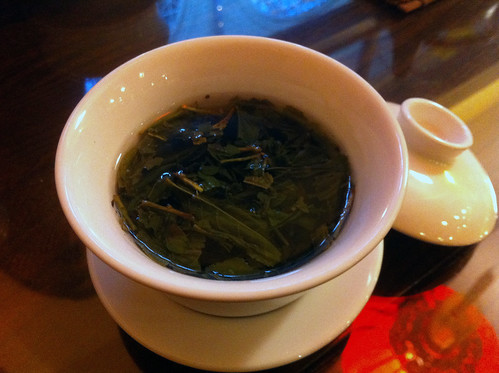
I’d visited Imperial Tea Court’s Berkeley outpost a couple of years ago, so I was excited to try the San Francisco location. Imperial Tea Court is a tea house first and foremost, but it also boasts a great menu if you’re hungry. Once we were seated, we ordered a pot of sencha tea. Sencha is more delicate than most green teas, and we enjoyed its grassy, fresh flavor while we perused the menu.

Sencha Tea

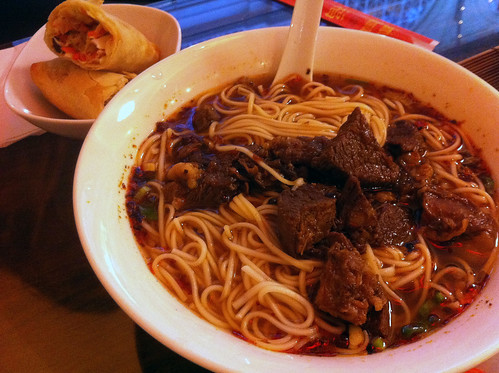
It was chilly outside, so we ordered a big bowl of spicy hand-pulled noodles with beef, and a side of vegetable spring rolls. The dish wasn’t quite as spicy as I’d expected, but oh man, was it delicious. The noodles had a perfect bite to them, the broth was hearty, and the beef was richly browned and fall-off-the-bone tender. The spring rolls were a delicious side: crispy on the outside, piping hot on the inside, and full of freshly julienned vegetables.

Hand-Pulled Noodles with Beef

Now, a word about Imperial Tea Court’s service. Maybe they were having a bad day, or maybe they were short-staffed – I’m not sure. But from start to finish, our service was cold and curt, and we kept feeling as if our waiter was annoyed at us for, I don’t know, dining at the tea house.

I want to give Imperial Tea Court the benefit of the doubt, though, so I won’t write off the tea house based off of this one experience. Besides, those noodles are really out of this world, and I know I’ll want to go back for more.

Boccalone

Posted on

You might not know this, but mortadella is very much an Iranian food. Sure, it may have originated in Italy, but for me and countless other kids in the Iranian diaspora, we grew up eating garlic and pistachio-flecked mortadella, wrapped up in lavash and enjoyed with a side of pickled Persian cucumbers.

It’s this childhood nostalgia that compels me to seek out new variations of mortadella wherever I can find it, and Boccalone in San Francisco’s Ferry Building is doing amazing things with it. (Not to mention a whole cornucopia of other high-quality cured meats.) Run by Chris Cosentino of Incanto fame, one of my favorite things to do is to buy a sandwich at Boccalone and enjoy it in front of the pier. (The shop does not have a seating area.)

Truffled Mortadella Sandwich

During my last visit, Boccalone was carrying their seasonal truffled mortadella, so I shared a sandwich with a friend. Stuffed with provolone, lettuce, tomatoes and mortadella and encased in a crispy baguette, the sandwich was perfect except for one thing: too much mustard. I mean, it was terrific, whole-grain mustard, but whoa. The mustard was so strong that I couldn’t taste the truffles.

Despite the overzealous mustard incident, Boccalone is still one of my favorite sandwich shops and I’ll be back the next time I’m at the Ferry Building. Their menu is always changing so I know I’ll be in for a surprise. Just go easy on the mustard, thanks.

Okonomiyaki

Posted on

The first time I tried okonomiyaki, I had just moved in with my new roommates for college, two of whom were from Japan: Sanae from Tokyo and Sanae from Osaka. Throughout the year, I was fortunate to learn to cook all kinds of regional dishes with them, many of which can be hard to find in restaurants.

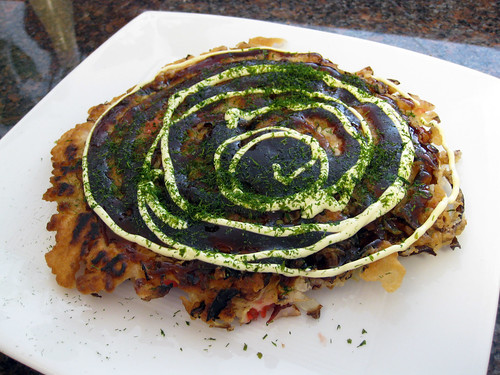
Okonomiyaki was the first homestyle Japanese dish that they taught me, and to this day, it remains one of my favorites. Loosely translated as “as you like it,” okonomiyaki is a savory pancake consisting of varying filling ingredients but the flour, egg, cabbage, and dashi base remain consistent.

Okonomiyaki, part one

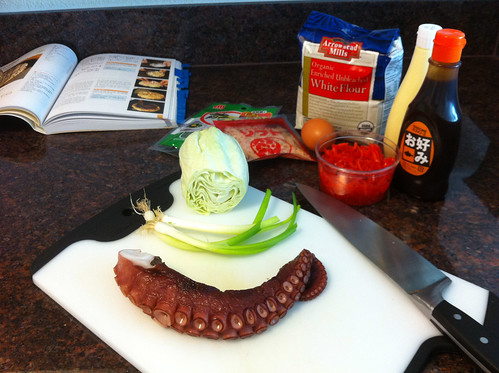
My version of okonomiyaki is pretty standard, albeit without the mountain yam that can be so hard to track down. When I was in Japan two years ago, I tried a delicious rendition in Kyoto that had a fried noodle base, as well as another version with melted cheese and dried anchovies, so the possibilities are endless. The ingredient list might be daunting, but it’s worth the search – and oh, don’t forget the giant octopus tentacle.

Okonomiyaki, part two

Ingredients:

1/2 cup all-purpose flour
2/3 cup dashi stock
1 egg
1 cup cabbage, shredded
2 green onions, thinly sliced
benishoga red pickled ginger, chopped (not to be confused with gari pickled ginger, which is commonly served alongside sushi)
3 inches cooked octopus, finely chopped
1 handful dried bonito flakes
1/2 teaspoon dried nori flakes
okonomi sauce (available in Japanese and well-stocked Asian grocers)
Japanese-style mayonnaise (I recommend Kewpie brand)
vegetable oil

1. Place the flour and dashi stock in a bowl, and mix well. Add the cabbage, onion, benishoga ginger, octopus, and egg to the bowl, and mix well.

2. Heat a nonstick frying pan over medium-high heat and add one tablespoon vegetable oil. Pour 1/3 cup of the batter mixture into the pan, and sprinkle a few dried bonito flakes on top. Cook for about 3 minutes.

3. Carefully flip the pancake over, and cook for about 4 minutes. Reverse again, and cook for another 4 minutes. Transfer the pancake to a serving plate.

4. Spread okonomi sauce and mayonnaise on top of the pancake, and sprinkle with dried nori and bonito flakes.

5. Repeat steps 2 to 4 until batter is finished.

Comstock Saloon

Posted on

Ever since it opened last year, Comstock Saloon in North Beach has become one of my favorite after-work hangouts. As its name implies, the vibe is saloon-like, down to the live piano on the mezzanine and the old-school cocktails (think Manhattans and Sazeracs). And to be honest, I rarely visit a bar with the quality of food in mind, but Comstock’s dishes are just as good as their drinks.

Hop toad cocktail

During one of my last visits, I ordered a hop toad cocktail, made of Jamaican rum, apricot brandy, lime and bitters. Strong and oh-so-slightly sweet and tart, it was a good accompaniment to the plate of fried potatoes I shared with a friend. Served with cheese curds and gravy, I imagine these amazing potatoes are a tribute to poutine, the classic Quebecois dish that I wish would take hold in California already.

Fried potatoes, cheese curds and gravy

That’s what makes Comstock so great. They have terrific all-day fare, with an emphasis on hearty, traditional cuisine. Naturally, a place with solid drinks and food, and in a convenient neighborhood to boot, gets busy, even on weeknights. If you’re coming with a large group, it’s best to make reservations ahead of time. But even with a crowd, the service at Comstock is consistently friendly yet professional.

They may have been open for less than a year, but Comstock seems to have it all.