Hapa Ramen

Posted on

I tend to take fusion cuisine with a grain of salt. Too many wasabi-creme foams and deep-fried California rolls have made me apprehensive, but done right, fusion can be a beautiful thing. At the Embarcadero’s Ferry Building, Hapa Ramen does fusion right by serving up bowls of locally sourced and locally influenced noodles.

I stopped by the Ferry Building on a Thursday, and easily found the Hapa Ramen booth by the long line of hungry office workers. Intrigued by the fried chicken bowl, I ordered a bowl and sat outside to enjoy.
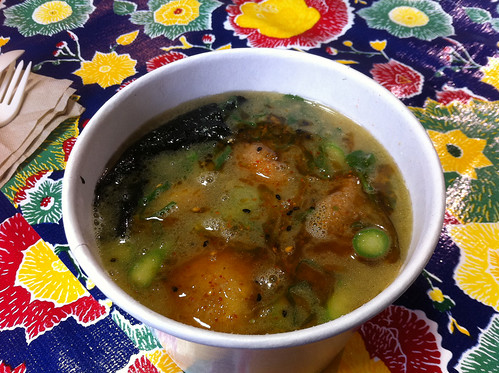
Fried chicken ramen

It may not be the prettiest thing to look at, but this was pure comfort food, California style. Instead of bamboo shoots and wakame seaweed, this ramen featured artichoke hearts and asparagus. The curious combination worked, and I happily munched on the juicy fried chicken before it had a chance to get lost in the broth. The noodles themselves were done right too: chewy and with the right amount of pull.

Hapa Ramen’s serving sizes are smaller than the standard ramen served in sit-down restaurants, but if you’re ordering at the Ferry Building, you’ll have plenty of snack and dessert options aftewards. Hapa Ramen sets up shop at the Ferry Building on Tuesdays and Thursdays from 10am to 2pm, and at Off the Grid at Fort Mason on Fridays from 5pm to 9pm.
Indus Village Restaurant

Posted on

It’s no secret that Berkeley is home to countless South Asian restaurants, and it’s easy to get lost in the mix. But Indus Village is a notch above the others, and that’s saying a lot. When I asked my friend Veena for a new recommendation, she listed Indus among her favorites, and now it’s one of mine too.

Nestled on San Pablo Avenue among a string of halal markets and sari boutiques, Indus Village offers all the usual South Asian fare like okra masala and chicken biryani, plus an impressive list of halal Pakistani regional specialties like goat karahi and lamb nihari.

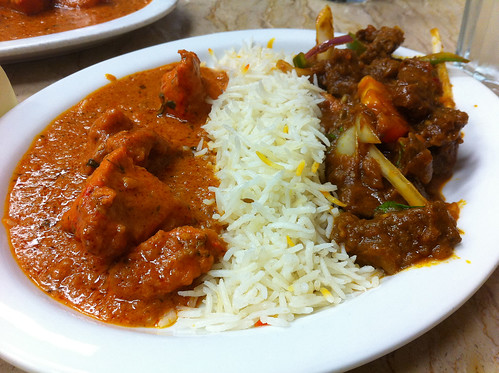
Beef jalfrezi and chicken tikka masala

During my first visit, I was craving the ubiquitous chicken tikka masala, which I ordered alongside beef jalfrezi and basmati rice. The tikka masala had an underlying smokiness that I haven’t tasted anywhere else, and best of all, it wasn’t as cream-laden and unhealthy as most restaurant’s renditions. The jalfrezi was rich, oniony, and delicious alongside the fluffy rice. I washed it all down with a refreshingly salty lassi.

Indus Village is ridiculously well-priced and the service is friendly too. I’ve been back countless times since my first visit (in fact, it was the first restaurant I ate at when I returned from my last trip, exhausted and in need of fortification), and I’m yet to have a disappointing meal. It’s no wonder Indus Village is always busy, despite the stiff Berkeley competition.

Kashk-e Bademjaan (Iranian Eggplant Dip)

Posted on

Note: This entry also appeared at my friend Sherisa de Groot’s blog, L’élephant Rose. L’élephant Rose is a collection of jewelry designed by Sherisa, based in Amsterdam. It’s also the name of her blog about design, music, green living, food, and fashion.

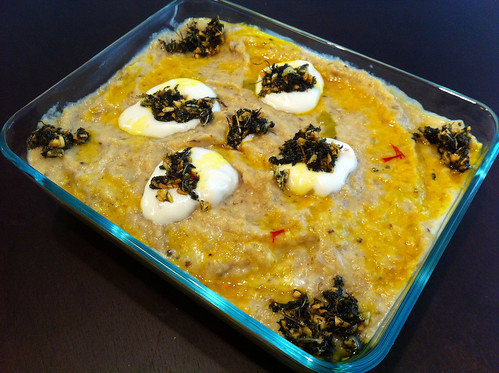
It’s eggplant season! Eggplant is ubiquitous in Iranian cuisine, and luckily for me, it’s in season in the Bay Area right now. I’ve been buying pounds and pounds of it to cook kashk-e bademjaan. A favorite at Persian gatherings, this dip is garlicy, minty, and slightly piquant, thanks to kashk, a thick condiment similar to whey that’s used in Persian cooking. Served with naan or a similar flatbread, kashk-e bademjaan is the perfect way to make use of the eggplant bounty.

This recipe is adapted from two sources: my mom’s guidance over the phone as I hurriedly cooked this the first time for a dinner party, and Najmieh Batmanglij’s definitive English-language cookbook on Iranian cuisine: Food of Life. (Sidenote: Batmanglij’s son, Rostam, is a member of Vampire Weekend and Discovery. Guess what I listen to when I’m cooking from Najmieh’s cookbook?)

Kashk-e bademjaan

Ingredients:

2 medium eggplants
1 onion, chopped
3 cloves garlic, chopped
1/4 cup olive oil
1/2 cup liquid whey (kashk)
1/2 teaspoon salt
1/2 teaspoon pepper

For the garnish:
3 cloves garlic, minced
2 tablespoons olive oil
2 tablespoons dried mint
2 tablespoons liquid whey (kashk)
1/4 teaspoon ground saffron, dissolved in 1 tablespoon hot water

1. Peel eggplants and cut into 4 slices lengthwise. Place in a colander and sprinkle with 2 teaspoons salt to remove bitterness and excess moisture. Let stand for 30 minutes, then pat dry.

2. Brown the eggplants in a non-stick skillet with 1/4 cup of oil. Add onions and garlic and brown for an additional two minutes, adding another tablespoon of oil if needed. Add 1 cup of water, cover, and cook over medium heat for 20 minutes. Remove from heat and mash in a food processor. Add 1/2 cup of whey, salt, and pepper, and mix well.

3. Just before serving, saute minced garlic in remaining 2 tablespoons oil at low heat, until golden. Remove skillet from heat, add dried mint, and mix well.

4. Place the eggplant in a serving bowl and garnish with 2 tablespoons whey, the garlic and mint mixture, and a few drops of saffron water. Serve with flatbread and fresh herbs.

Cafe de la Presse

Posted on

I rarely eat French food. It’s not that I don’t like it, it’s just that, well, I don’t know what I’m doing when it comes to ordering off a French menu. The last time I tried, I wound up accidentally ordering sweetbreads deep-fried in butter. (Word to the wise: sweetbreads are not what they sound like.)

Thankfully, when I visited Cafe de la Presse in San Francisco’s Union Square, I went with my cousin, who was raised in Paris. I never would have known about this classic, rustic restaurant quietly tucked away from the bustle of the city were it not for her suggestion. Filled with vintage posters and foreign-language magazines, I could easily forget that I was on Grant Avenue and not in Le Marais.

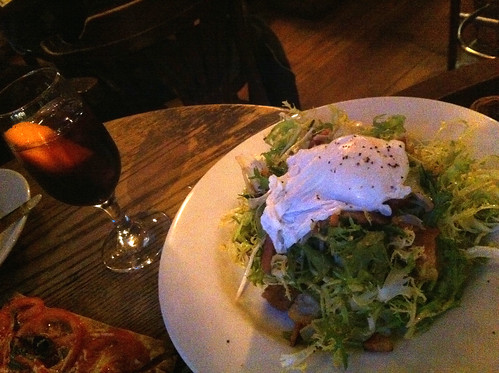
Salade aux Petits Lardons

We started with a salade aux petits lardons, which was topped with a wonderfully gooey egg that melded perfectly with the piquant Dijon vinaigrette and savory bacon. I have a French cookbook with this recipe that I’ve been ignoring for too long, and after sampling this salad, I’m determined to learn how to recreate it.

We also shared a tarte Provencale, topped with tomatoes, basil, Nicoise olives and a light smattering of cheese. The real highlight here was the crunchy, crispy flatbread: thin, but hearty enough to hold up against the toppings.

Service is friendly and timely at Cafe de la Presse, but in the interest of full disclosure, my cousin conversed with our waiter only in French, so I suppose that didn’t hurt. Still, Cafe de la Presse convinced me that it’s time I give French food another chance. And with a little corner of the 4th arrondisement in our own backyard, I no longer have an excuse.

Wat Mongkolratanaram

Posted on

Wat Mongkolratanaram, better known as the Berkeley Thai Temple, is one of those secrets that you’re excited to learn about, only to discover that everyone was already in on it. When my colleagues organized a brunch outing to celebrate the Thai new year this past spring, I was delighted to learn that one of the East Bay’s brunch locales is really a temple and community center. The place is immensely popular for brunch with Thai folks and non-Thai alike, with more hungry stomachs than seats. (No matter, eaters spill out into nearby Berkeley lawns.)

Wat Mongkolratanaram serves brunch only on Sundays, but the process is simple: arrive early, get in line, and exchange your cash for tokens. There are separate lines for different dishes and drinks and food can be eaten at the temple’s garden or packed up as take-out. The dishes are very reasonably priced, which means more sampling of what’s some of the best Thai food I’ve ever had. My colleagues and I shared our food family-style, and I got to taste a bit of everything.

Berkeley Thai Temple brunch

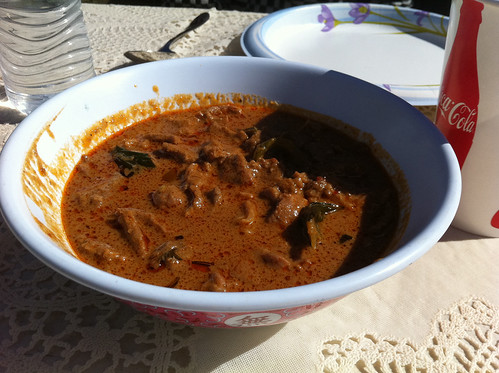
Everything arrived so quickly that I could hardly keep up, but the first dish I tried was a rich, mildly-spiced meat curry over rice. I was ravenous, so this quickly whet my appetite.

Berkeley Thai Temple brunch

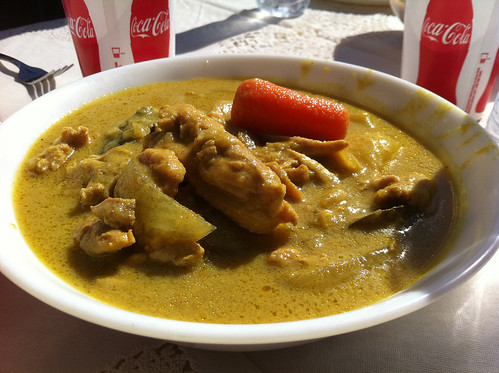
Next came the ubiquitous yellow chicken curry. Filled with chicken, carrots, onions, potatoes and spiked with a hit of coconut, this was better than anything I’ve had at a restaurant.

Berkeley Thai Temple brunch

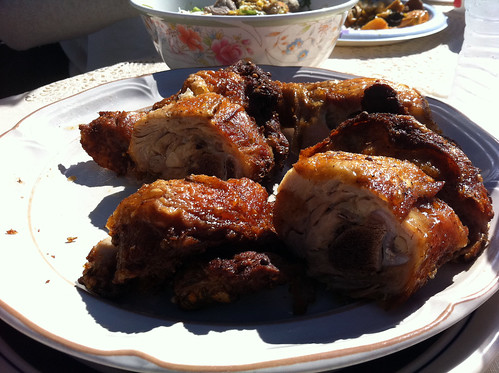
My favorite dish of the meal came next. I’m not sure what this chicken was spiced with (I think I detected coriander but I’m not sure what else), but it was fried to perfection: crispy on the outside and juicy on the inside.

Berkeley Thai Temple brunch

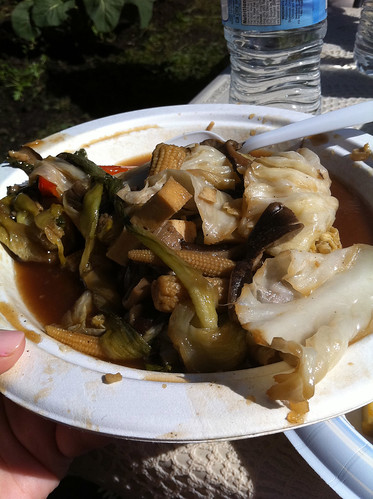
A simple but flavorful vegetable and tofu stir-fry also came around. Flecked with bits of baby corn and mushrooms, this lighter plate was welcome after so many rich dishes being passed around.

There was simply too much going around for me to capture it all: soups, noodles, and more curries made their way around our communal table until I couldn’t take any more.

Berkeley Thai Temple brunch

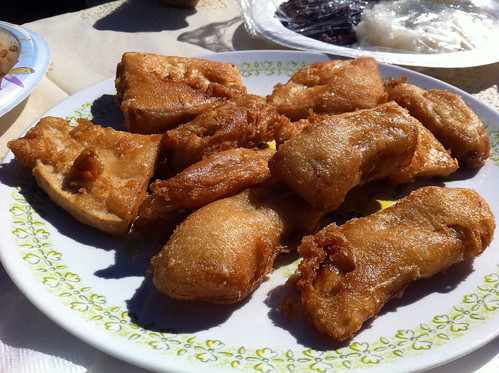
And yet there was still dessert. Fried bananas and black sticky rice lent our meal a sweet finish before we got up to explore the rest of the Wat Mongkolratanaram.

With a thriving vegetable garden, a Sunday school for children, and cultural programs for the Thai Buddhist community, the temple is a Berkeley gem. I may have been late in learning about the East Bay’s unique brunch secret, but I’m making up for it now.