I generally stick to reviewing restaurants in the Bay Area, but Tuk Tuk Restaurant is one of my favorite places to eat in Sacramento so I’m making an exception. Besides, Sacramento is close enough to the Bay Area, so it sort of counts, right?
The first thing that stands out about Tuk Tuk is its elegant interior. Located in a newish strip mall in the Natomas area, a trendy dining ambiance is not the first thing one would expect when walking in. But the restaurant is stylishly designed with dark wood furniture, colorful pillows and dusky lighting.
The menu has all the usual Thai classics, plus a few dishes less commonly seen on Thai restaurant menus. My dining companions and I shared three entrees, starting with the pad makur.
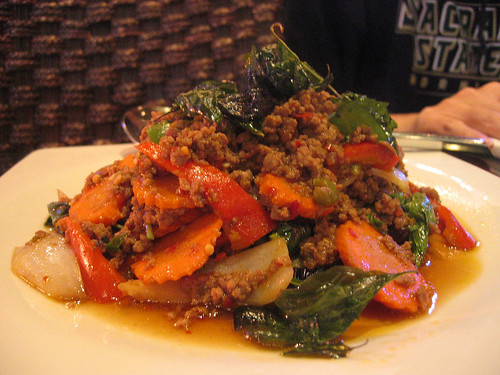
The pad makur, or stir-fried Japanese eggplant, is extremely spicy. Like, tongue-numbing, sweat-inducing spicy. Stir-fried with loads of basil and chili peppers, the eggplant is tossed with browned ground beef before being served.
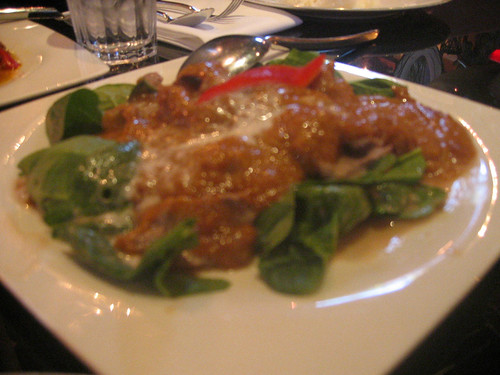
We also ordered the pra ram beef, or beef with spicy peanut sauce.
Served on top of a bed of steamed spinach, this is the go-to dish that I usually order at Thai restaurants if I’m not ordering noodles. I love peanut sauce, and Tuk Tuk’s version had a good coconut flavor to it as well.
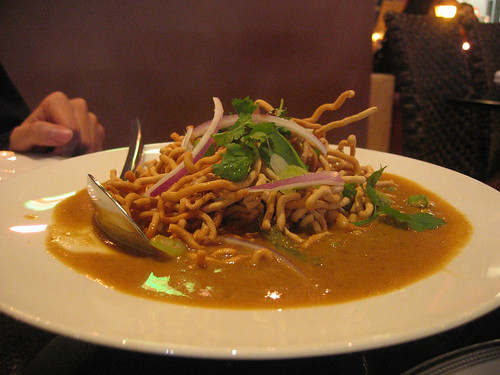
Lastly, we sampled the rad nah, or soft rice noodles, fried noodles and chicken in a savory and spicy coconut sauce.
Tuk-Tuk’s menu describes rad nah as a “soothing food. I guess it is the warm gravy and the soft noodles.” I don’t know about soothing, but the sauce, or gravy, is indeed delicious. This was my favorite dish out of three.
I’m not nearly as familiar with the restaurant scene in Sacramento as I am in the Bay Area, but if you ever find yourself in our state’s capital and are craving Southeast Asian cusine, Tuk Tuk Restaurant is a solid choice.
It’s only in the past few years that I’ve been introduced to Burmese food, and I wish that the Bay Area had more restaurants outside of San Francisco offering this delicious but underappreciated cuisine. For those in the Peninsula, there is Mingalaba restaurant in downtown Burlingame. They’re always busy, and for good reason.
During my last visit, I started with the lap pat dok, or tea leaf salad. I devoured it before remembering to take a photo, but believe me that this mixed salad of Burmese tea leaves, tomatoes, cabbage, dried shrimp, fried garlic, sesame seeds, peanuts and yellow split peas is incredible.
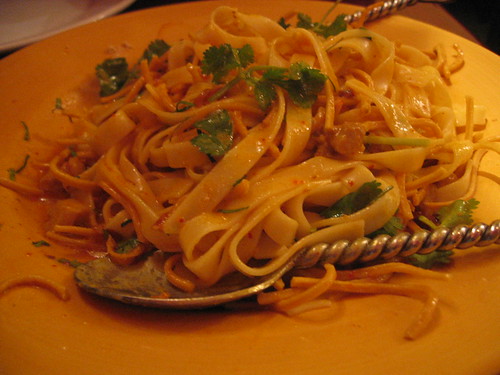
For my entree, I tried Mingalaba’s house special noodles:
Made of flat noodles, coconut chicken, lime leaves, yellow split pea flour, onions and fried noodles, this dish was a wonderful combination of savory, sour, salty and ever so slightly sweet.
Mingalaba offers a menu of classic Chinese dishes as well, but stick with the Burmese specialties here. Although Burmese food has been influenced by the cuisines of China, India and Thailand, it retains its own distinctive identity, particularly in its unique presentation and distinctive ingredients. While Burmese cuisine isn’t as popular yet as I wish it was, Mingalaba is doing a fine job of spreading the word.
Located in Berkeley’s Gourmet Ghetto, Imperial Tea Court can be easy to miss. Tucked away above a Asian-themed garden, the restaurant provides a welcome refuge from busy Shattuck Street. I ate here one late morning weekend, right as they were opening for lunch.
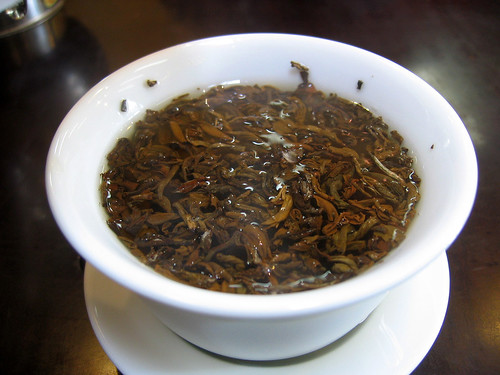
As their name suggests, Imperial Tea Court’s emphasis is on tea. While perusing their menu, I ordered a cup of Superior Yunnan Tea, and the server patiently showed me how to properly allow my cup to steep, while I ordered my lunch.
The tea was excellent, with a gentle aroma and sweet taste. A small pot of hot water allowed me to enjoy ample refills.
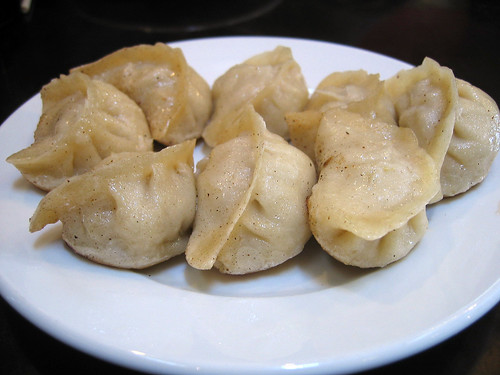
For lunch, I started with the chicken potstickers:
I was initially apprehensive about these since, well, chicken potstickers are usually so run of the mill. But these had a wonderfully thin and crispy wrapper, and filled with a juicy and delicate meat filling. It was hands down my favorite part of the meal.
Since it was a chilly day, I had also ordered the hand-pulled noodles in broth:
See those pepper flakes? I removed most of them before mixing my bowl and it was still almost too hot to bear. Despite the heat, the noodles were chewy and had a great texture, even if I was a little disappointed by the greens taking up most of the bowl. (Don’t get me wrong, I love my greens, but I love my noodles even more.)
Service is slow at the Imperial Tea Court, at least when I visited, so make sure you’re not too famished before dropping by. If you’re looking for a break from the crowded streets and good cup of tea though, then Imperial Tea Court is the place to go.
Be forewarned, this is about to be a long post (and deservedly so).
When my friend Ario first told me about Jai Yun several weeks ago, I was intrigued. I’d recently finished reading Fuschia Dunlop’s Shark’s Fin and Sichuan Pepper: A Sweet-Sour Memoir of Eating in China and was eager to learn more about Sichuanese cuisine. Luckily for me, it turns out that San Francisco’s Chinatown is home to one of the finest Sichuanese banquet restaurants this side of the Pacific, and I jumped at the chance to dine there.
There is no menu at Jai Yun. Each dining group (in our case, a party of ten), selects a per-person price level (ranging from $55 to to $150) and Chef Nei, who is an incredible one-man show, cooks the most unforgettable Chinese meal you will ever have.
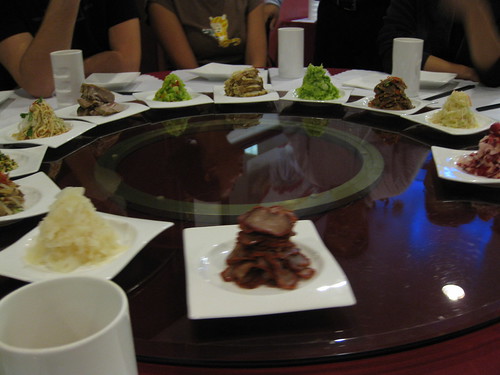
The meal began with a round of twelve appetizers:
These included thinly sliced lotus root, cured pork tongue, sliced intestines, enoki mushroom salad, pressed tofu with parsley, smoked duck, gong tsai with tiger lily flower buds, smoked tofu skin, pickled cucumber with sesame oil, spiced beef shank slices (sliced so thinly they were translucent), jellyfish, and pickled radish. Each dish allowed for a bite or two for each guest, and the quality and care put into each appetizer was easily apparent. My favorites were the gong tsai and spiced beef shank slices.
Next, we were served an ethereal platter of abalone with egg whites. This was my first taste of abalone, and in my excitement, I forgot to take a photo. But rest assured it was absolutely delicious, light and velvety.
After the abalone came a plate of wheat gluten with vegetables:
I’m a meat eater, but I love gluten’s unique texture. I don’t think of it as a substitute for meat, but rather an ingredient strong enough to hold its own. Served with vegetables and a savory sauce, this dish was a perfect example.
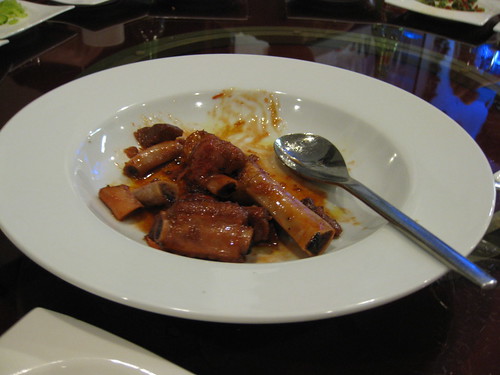
Next we were served braised ribs with and taro root balls:
I cannot stop thinking about these taro root balls. I was expecting something heavy and dense, but I was surprised to find them delicately crispy on the outside and almost spongy on the inside. They collapsed in my mouth as soon as I bit down on them. The ribs were a hearty accompaniment too – this was easily one of my favorite dishes of the evening.
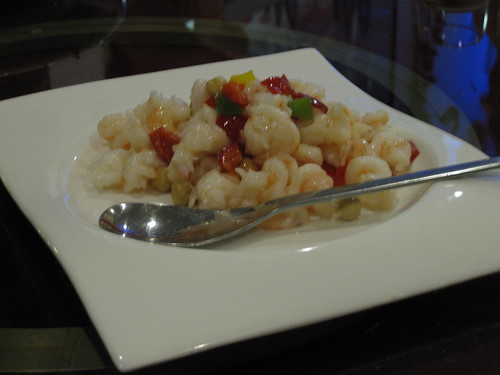
Chef Nei made sure to balance the types of flavors that were presented in each dish that arrived at our table, one by one. If we received a heavy or spicy dish, our next one would be lighter and easier on the palate. That was the case with the crystal shrimp that came next:
These shrimp were succulent and fresh-tasting, just the way they should be. It’s so easy to overcook shrimp and end up with a gummy plate of seafood. Not with these – they were cooked just right.
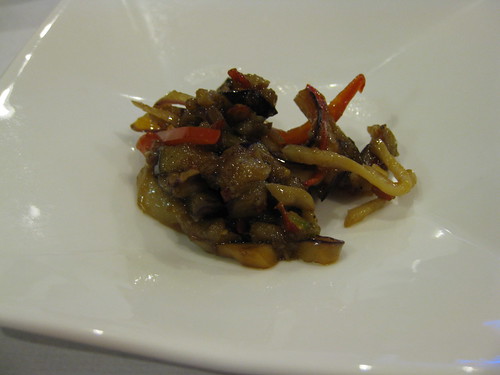
Next we tried the Sichuan-style eggplant in spicy garlic sauce:
I absolutely love eggplant (show me an Iranian who doesn’t), so I was head over heels for this dish. The julienned slices of eggplant were incredibly tender yet retained their shape and the Sichuan peppercorns lent just the right hit of tongue-numbing tingliness. (Is tingliness a word? Whatever, this was delicious.)
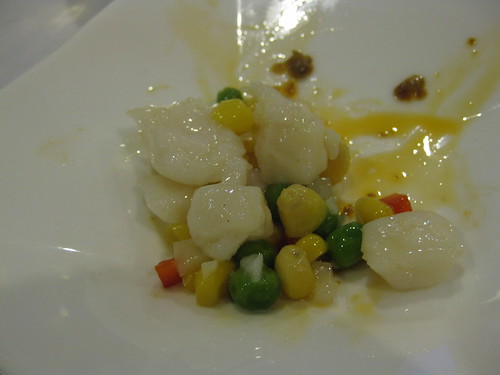
Next we tried the rock cod fish fillet sauteed with sweet corn and peas:
If I had to choose, I usually prefer shellfish over fish. Not in this case. Chef Nei is a master with achieving the right texture with fish and it won me over with this dish. The light sauce was refreshing too after having just eaten the spicy eggplant.
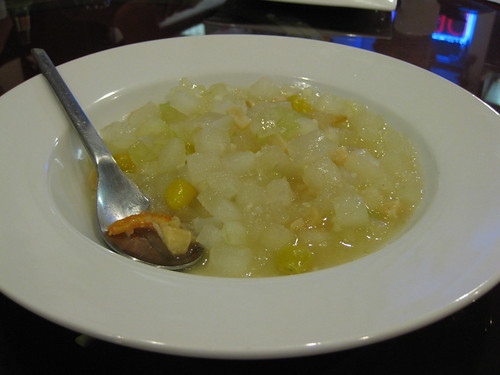
Our server then brought out a plate of winter melon, ginko and coconut jelly:
I love coconut jelly and this was my first taste of winter melon so I was excited. This was the sweetest dish of the night, and my favorite thing about it was the uniform cut, shape and color of the coconut jelly and winter melon, making them almost indistinguishable until you bit into a piece.
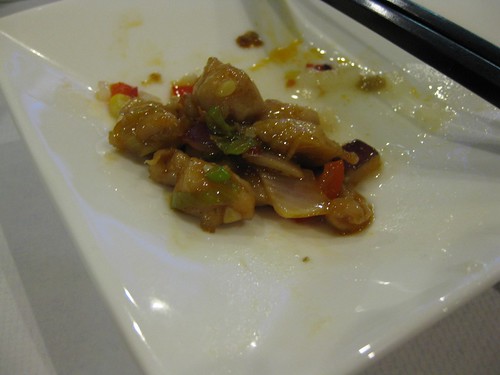
Next we were served strange flavor chicken:
Fuschia Dunlop writes about this dish in Shark’s Fin and Sichuan Pepper, and I’d long imagined what it would actually taste like. Surprisingly, it wasn’t strange at all, but it certainly was deliciously spicy, so I can’t complain at all.
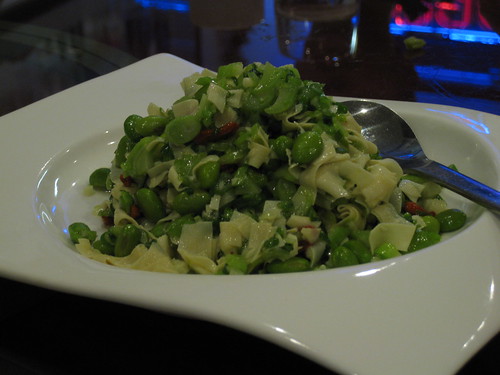
At this point I didn’t know how much more I could eat, but the dishes kept coming. A plate of tofu skin with edamame and fava beans was brought to our table:
I love tofu skin. I love fava beans. I love edamame. Therefore, I loved this dish.
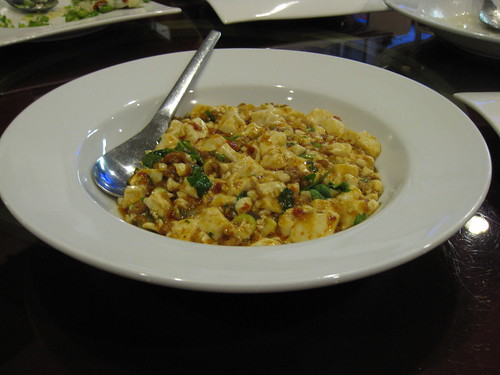
Next we were brought a very special dish: silky tofu with crab roe:
You know the slimy green stuff in fresh crab that rarely makes it to your dinner table because fishmongers clean it out for you? That’s the roe, and it’s the equivalent of crab caviar. Our server told us that it’s very difficult to cook properly and must be eaten while it’s still hot in order to taste good. It was creamy, super-briny and melded really well with the soft tofu.
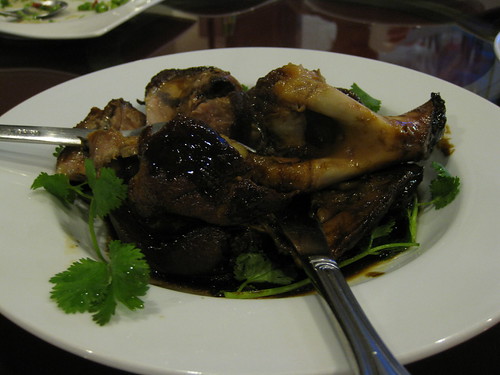
One of the heaviest dishes of the meal was served next, five-spice braised pork leg:
I don’t really eat pork, but I gave in and tried this out. This meat needed no coaxing; it fell right off the bone at the slightest touch and was incredibly tender. And oh, that sauce. So rich and flavorful.
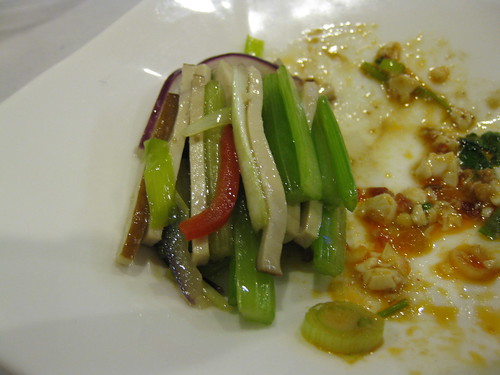
Are you still with me? Good, because next we were served a cleansing dish of Chinese celery, yellow leeks and pressed tofu:
This is another Sichuanese classic that I was excited to try and despite how simple it may look, it had been tossed in a light sauce that I can’t quite put my finger on but it brought everything together really well.
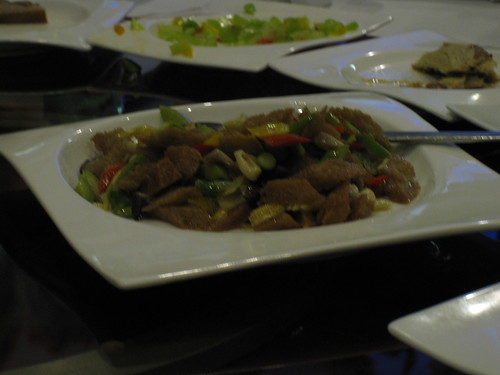
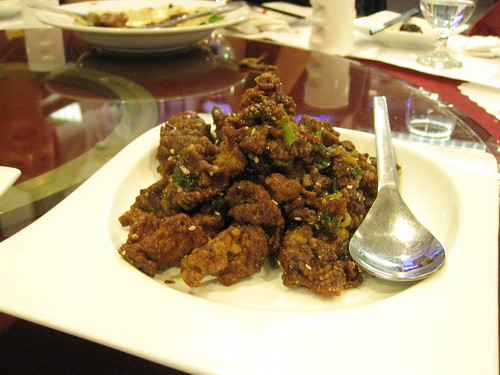
Next we were served the fried ginger beef:
We couldn’t tell exactly what was in the marinade, but the beef had a mildly sweet, almost tamarind or tangerine flavor to it underneath the crispy exterior. This dish was a crowd pleaser, and with good reason.
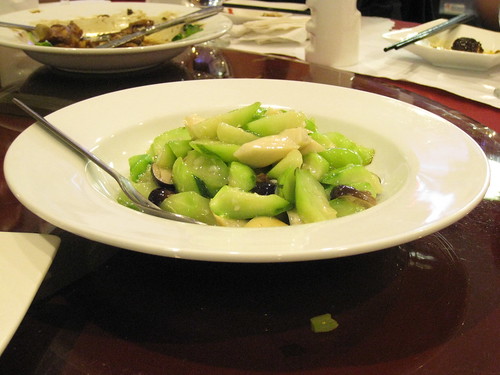
We were nearing the end of our meal, but it wasn’t over yet. Our server brought us a big plate of loofah with mushrooms in a chicken broth glaze:
Not to be confused with the loofah more commonly associated with shower time, Chinese loofah is a gourd vegetable that I hadn’t tasted until this dish. I’d always been curious and I was pleased that the simple broth glaze didn’t overpower the vegetables.
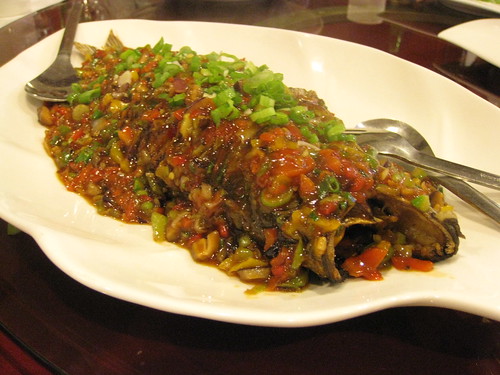
Internet, if the photo enough doesn’t do this dish enough justice, I’m happy to report that this fish was incredible. The spicy sauce, the vegetables, the whole thing was so good. It was only a shame that I was too full to have more than a couple of bites at this point.
If you live in the Bay Area or if you find yourself visiting San Francisco, make sure to visit the restaurant. I cannot believe that I’ve lived here my whole life and have only recently learned of Jai Yun. I feel like I’ve unearthed an epic secret, and can’t wait to go back for more.
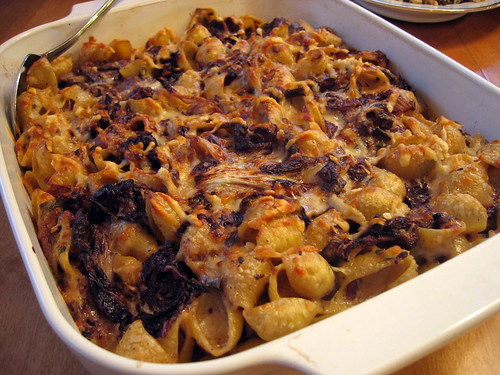
I have four macaroni and cheese recipes that I keep in regular rotation, and this is the most frequently requested of the bunch. It’s also the most labor intensive, so I tend to make it one or twice a year, usually during the holidays. Radicchio is not the most traditional ingredient in baked pasta dishes, but it lends a beautiful light purple hue to the dish and despite all the cheese and other not-so-good-for-you ingredients, you’re getting your vegetables too.
I adapted this dish from a Food and Wine magazine recipe. I use less than half the butter and cream than the original, making it not too unhealthy for a special occasion dish.
Ingredients:
1/2 ounce dried porcini mushrooms
Boiling water
2 tablespoons unsalted butter
1 tablespoon extra-virgin olive oil
2 ounces sliced pancetta, cut into 1/2-inch pieces
3 large garlic cloves, minced
2 heads of radicchio, each cut into 8 wedges through the core
Salt and ground pepper
2 teaspoons chopped fresh sage
1 pound medium shell pasta
1/4 cup all-purpose flour
2 cups low-fat milk
1 1/4 cup heavy cream
Pinch of freshly grated nutmeg
1/4 pound Asiago cheese, grated
5 ounces Fontina cheese, grated
1/4 cup freshly grated Parmesan cheese
1. Preheat the oven to 350°. Butter a 3-quart baking dish. In a heatproof bowl, soak the porcini in boiling water until softened, about 15 minutes. Rinse the porcini to dislodge any grit, then drain and chop them. Discard the soaking liquid.
2. In a large skillet, melt 1 tablespoon of the butter in the olive oil. Add the porcini, pancetta and one-third of the garlic and cook over medium-high heat, stirring occasionally, until the garlic is fragrant, about 3 minutes. Using a slotted spoon, transfer to a plate.
3. Add the radicchio wedges to the skillet and cook over high heat until wilted and beginning to brown, about 4 minutes. Add the remaining garlic, season with salt and pepper and cook, stirring, until the radicchio is slightly caramelized, about 5 minutes longer. Stir in the porcini mixture and the sage. Transfer the mixture to a large bowl.
4. Cook the pasta in a large pot of boiling salted water until al dente. Drain. Meanwhile, in a medium saucepan, melt the remaining butter. Add the flour and cook over moderately high heat, stirring, until foamy, about 2 minutes. Gradually whisk in the milk and bring to a boil; cook, whisking until thickened, about 3 minutes. Add the cream and nutmeg and season with salt and pepper. Transfer the sauce to the bowl with the radicchio.
5. Add the pasta to the bowl along with the Asiago and Fontina; toss to combine. Transfer the pasta to the prepared baking dish. Sprinkle with the Parmesan cheese. Bake for 20 minutes, or until heated through.
6. Preheat the broiler. Broil the pasta for 2 minutes, until the top is golden and bubbling. Let stand for 10 minutes; serve.