Ton Kiang

Posted on

I found out today that one of my favorite dim sum restaurants, Fook Yuen in Millbrae, has closed. If you know me, you know that I’m on a continuous quest to identify the Bay Area’s best dim sum offerings, so I was sad to see Fook Yuen go. But it also got me thinking about my all-time favorite dim sum establishment: Ton Kiang.

I used to live a few short blocks from Ton Kiang in San Francisco’s Richmond District, and I was a frequent visitor. I still stop by whenever I find myself in the neighborhood, and each visit has left me satisfied.

Specializing in Hakka-style cuisine, Ton Kiang offers all the dim sum classics and then some. The Hakka people originated in northern China a millennium ago, migrating all over Asia, particularly to southeastern China. Hakka cuisine heavily utilizes dried and preserved ingredients, as well as onions and lots of subtle spices.

The first dish our group tried was the shrimp and chive dumplings.
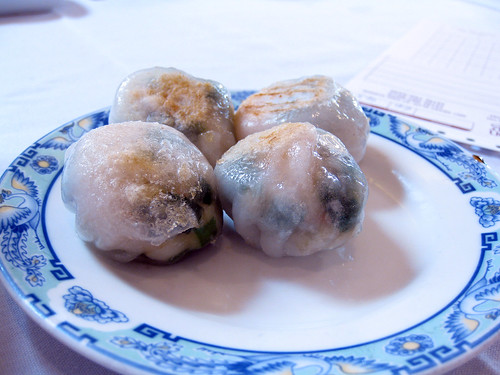
Shrimp and Chive Dumplings

You know when glutinous dumpling wrappers become ever-so-slightly crispy yet maintain their translucency? Yeah. These dumplings pulled that off just right. The filling was good was a good balance of seafood to greens too.

Next, we tried the roast duck.
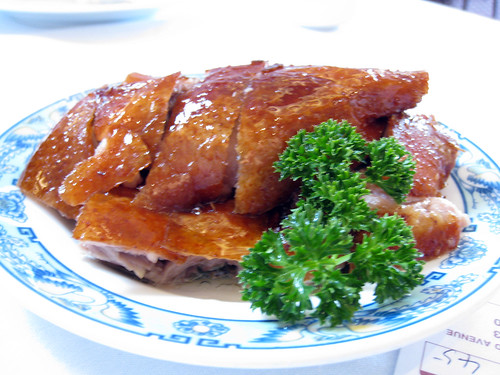
Roast Duck

I love duck but my problem with it is how much fat clings to the meat and skin. Now I consider myself pretty adept with chopsticks, but delicately removing the fat from the skin from the meat from the bones with chopsticks is a major challenge. Almost challenging enough to not want to eat any duck. Almost.

After sampling the duck, we moved on to the chicken dumplings.

Chicken Dumplings

This was my least favorite of the dim sums we ate during this visit. The dumplings were plainly seasoned, the chicken was average and the wrappers were a little dry.

Next, we tried the xiaolongbao, which I’ve been wanting to taste for ages.

Xiaolongbao

Xiaolongbao, or soup dumplings, are filled with brothy, steamy morsels of meat inside. The trick is to cradle your xiaolongbao carefully in a soup spoon and prick a little hole with your chopsticks before diving in, lest you make a mess. Someday, I’d like to try the original version in Shanghai.

Afterwards, we shared a plate of potstickers.

Potstickers

I know potstickers are run-of-the-mill, but Ton Kiang’s hold their own. Plus, doing a good job with a basic dish is often a sign of a restaurant’s quality and adeptness. The dough is thick and chewy and the insides are juicy and oniony.

Next came the plate of shrimp-wrapped scallops.

Shrimp-Wrapped Scallops

Internet, I think my eyes rolled back in unadulterated pleasure when I tried these. The shrimp-wrapped scallops have since become my favorite dim sum at Ton Kiang. Succulent, sweet, juicy, garlicy, crispy – these babies have it all. This is the stuff dim sum dreams are made of.

Despite being stuffed at this point, we trudged ahead. After all, a cart of crab noodle rolls had come by, and who can resist their siren call?
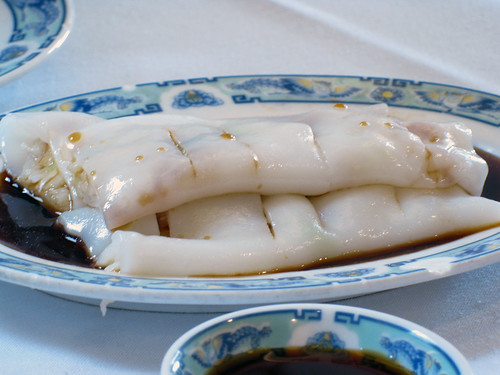
Crab noodle rolls

I often have shrimp or beef noodle rolls, but crab is much harder to come by. The crab had a very delicate flavor, and thankfully the sauce did not overpower the crab. Ton Kiang’s noodle rolls, as always, were thin and slightly chewy.

We ended our meal on a sweet note with a dish of fried sesame balls filled with sweet bean paste. Then we proceeded to roll ourselves out of the restaurant. It’s hard to resist saying no to the endless carts of food that are pushed around at any dim sum restaurant, but Ton Kiang makes it even harder. With a steady stream of quality dim sum, there’s a reason why they’ve consistently stayed my favorite dim sum spot for so many years.
Pizzeria Delfina

Posted on

I confess. When I finally got around to trying out Pizzeria Delfina, I almost changed my mind because of the long line. How good can this pizza be? I thought.

Really good, it turns out. Stupendous, even.

By the time I was seated at Pizzeria Delfina’s Mission location, I was practically salivating at all the menu options. I couldn’t decide what to order so my friendly and informative waiter helped me out. I’d heard rave reviews about the Napoletana, and I started with that.

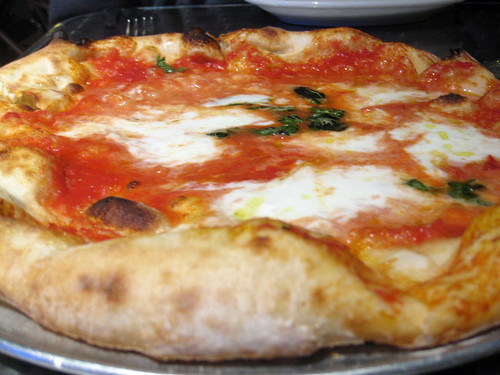
Napoletana Pizza

Served with tomatoes, anchovies, capers, hot peppers, olives and oregano, the toppings are blanketed with a very light layer of cheese. The crust was slightly charred, paper thin and crispy.

Next, I tried the Salsiccia.

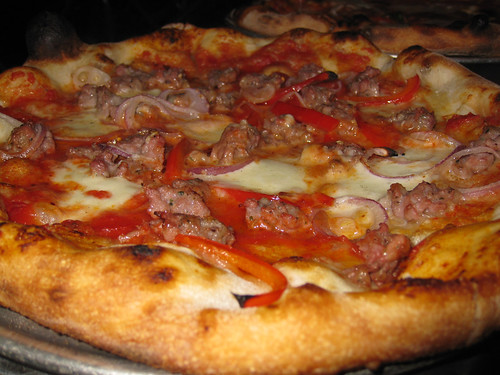
Salsiccia Pizza

I loved this pizza, which is really a feat given that I usually don’t like bell peppers and onions on my pies. The fennel sausage added a hit of indulgent meatiness to an otherwise healthy pizza.

Pizzeria Delfina adds a raw egg to the center of its pizzas in the final stage of cooking if you request it, and that’s probably what I’ll try on my next visit. That, and their appetizers, which I’ve heard are in a league of their own.

The line at Pizzeria Delfina may be off-putting, but it’s well worth the wait. I know I’m going back for seconds.

Flying Goat Coffee

Posted on

I’ve become a big coffee drinker as of late, and I’m always on the lookout for a good coffee shop that serves an exceptionally strong cup. Sorry, but that wussy, watery excuse for coffee that so many cafes serve just isn’t cutting it.

Enter Flying Goat Coffee. Located in Santa Rosa’s Railroad Square, it’s under some pretty fierce competition with neighboring coffee shops, but Flying Goat holds its own. Plus, with a name like Flying Goat, how can you go wrong?

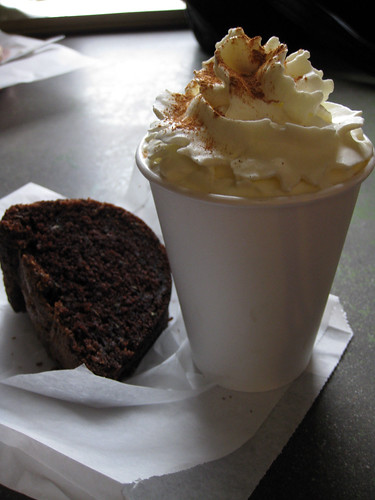
Cafe Mocha and Zucchini Chocolate Cake

I had a cafe mocha with zucchini chocolate cake during my last visit and it hit the spot. You can actually taste the espresso and chocolate (unlike some other coffee shops, where a cafe mocha tastes like weak coffee mixed with Hershey’s cocoa powder). The chocolate cake was moist, crumbly and not too sweet, which I prefer.

The people behind the bar at Flying Goat Coffee are meticulous in roasting and preparing each cup of smooth, strong coffee. The quality is consistent, the staff is well-informed and the venue is quirky and charming. In a town with a number of formidable coffee establishments, this is no small feat.

Bi-Rite Creamery

Posted on

When it comes to ice creameries in the Bay Area, I’ve always been a Mitchell’s Ice Cream type of girl. The down to earth vibe, the endless queues of eager customers waiting outside no matter how chilly the night is, and the straightforward, classic and tropical flavors have always appealed to me.

But when a new batch of ice creameries began popping up around San Francisco a few years ago, I got curious. I’d been hearing rave reviews about Bi-Rite Creamery in the Mission for months, but it wasn’t until a few months ago that I finally tried it out.

Like Mitchell’s, the line is almost always exceptionally long at Bi-Rite, and well worth the wait. The staff is super laid-back, humorous and create a fun atmosphere. But let’s get down to what we’re really interested in: the ice cream.

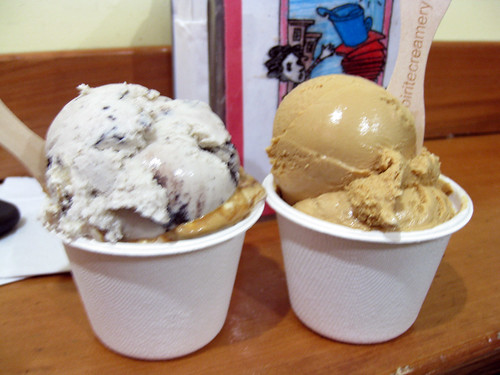
Bi-Rite Creamery

If I could sum up Bi-Rite’s flavors in one word, it’d be “intense.” They’re not playing around here, folks. I had the salted caramel ice cream, while my friend Ario opted for the brown sugar. And lo and behold, both flavors actually tasted like what they were purported to be, albeit ten times stronger in flavor.

Bi-Rite carries a changing rotation of seasonal flavors, which gives me plenty of reason to go back for more. I’m especially interested in trying out the roasted banana, Earl Grey, and coffee toffee. For those who aren’t head over heels for ice cream, not to worry. Bi-Rite also serves popsicles, cakes, brownies and cookies.

It may have taken me a while to finally sample Bi-Rite’s ice cream, but better late than never, right? And now that I know, I’ll gladly stand outside in the cold if it means there’s a scoop or two of delicious, creamy ice cream waiting at the end.

Japan, Days Five and Six

Posted on

On our last full day in Japan, Melody and I got up early and headed to Kyoto Station, where we arrived at the main bus terminal. Bound for Kinkaku-ji, we spent half an hour on a crowded bus full of what seemed like the entirety of Kyoto’s public school system on a field trip. If nothing else, the fifty or so children disembarking the bus at Kinkaku-ji served as a sign that we were headed in the right direction in a city where signs in English are at a minimum.

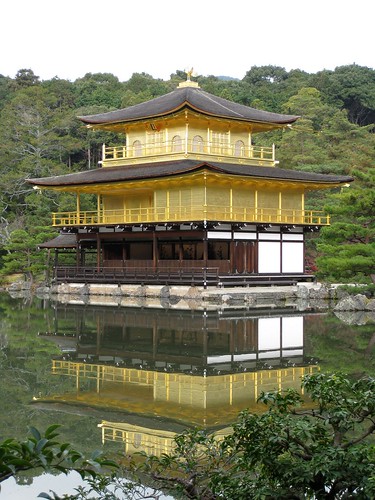
Kinkaku-ji, or the Temple of the Golden Pavillion, is easily one of Japan’s most striking sights, and it’s easy to see why.

Kinkaku-ji

A Zen Buddhist temple originally built in 1397, it was burnt down twice during the Onin War in the late 1400s and yet again by a monk in 1950. The pavilion was finally rebuilt in 1955.

Adjacent to a beautiful, mirror-like pond and a strolling garden, the pavilion is a three-story building within the grounds of the Rokuon-ji temple complex. The top two stories of the pavilion are covered with pure gold leaf and the structure houses relics of the Buddha inside.

Kinkaku-ji

Kinkaku-ji

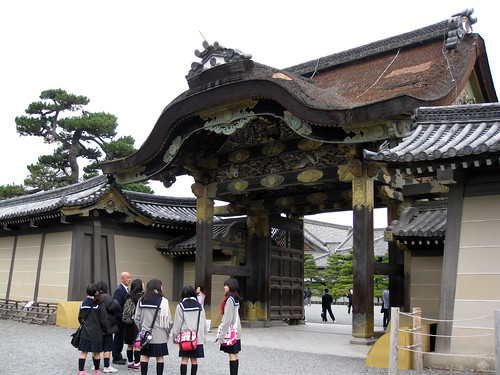
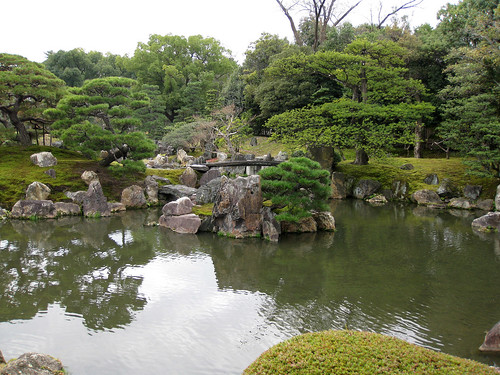
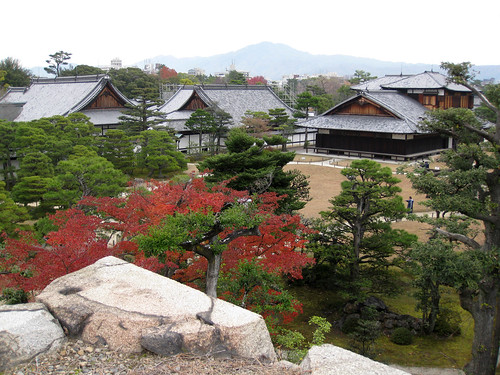
After Kinkaku-ji, it was time for Nijo Castle, which was only a fifteen minute bus ride away. Built in the 1600s, Nijo Castle is essentially two concentric rings of fortifications (each consisting of a wall and a moat), the Ninomaru Palace, the ruins of the Honmaru Palace, a number of support buildings and several gardens throughout the grounds.

Nijo Castle

Nijo Castle

Nijo Castle

Nijo Castle

It started to rain as we were finishing exploring the castle grounds, so Melody and I rushed to catch the bus to our next destination: Kiyomizu-dera. The bus dropped us off at the foot of Sannen-zaka, a long and steep street that led to our destination. The walk up the hill was dotted with shops selling crafts and treats unique to Kyoto, as well as a number of inviting restaurants. We were hungry after our long walk, so we stopped at Seihan-Tei along the way to grab lunch.

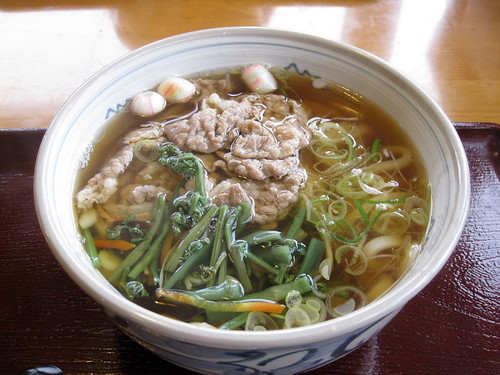
Seihan-Tei specializes in hot soba and udon soups, and offers an expansive view of the city that we admired while we waited for our food to arrive. I had the udon with beef and wild mountain greens.

Udon with Beef and Wild Mountain Greens

The beef left something to be desired but the hot broth was invigorating and the mountain greens were flavorful and crunchy. I wish I knew what they were so I could attempt to recreate this dish at home.

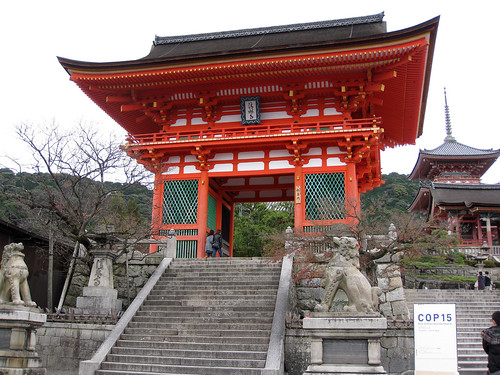
After lunch, we continued our walk up Sannen-zaka and soon arrived at Kiyomizu-dera.

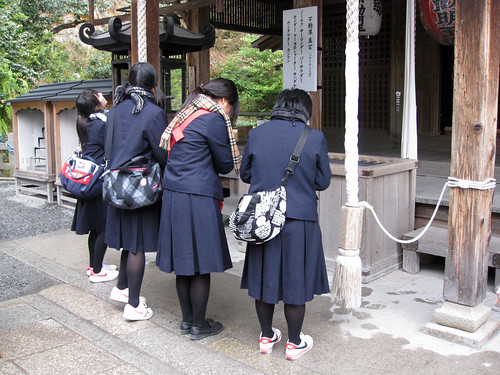
Kiyomizu-dera

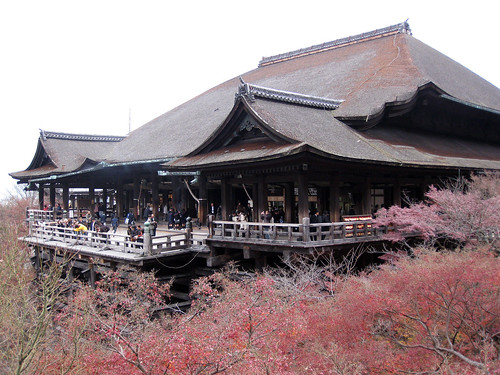
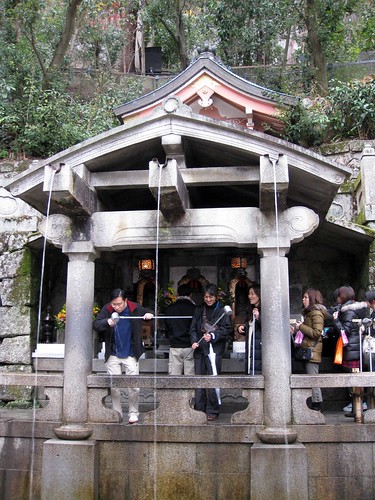
A UNESCO World Heritage site, Kiyomizu-dera is a Buddhist temple that originated in 798, though its present buildings were built in 1633. Amazingly, not one nail was used in building the temple. The main hall is supported by tall pillars, and juts out over the hillside and offers incredible views of Kyoto.

Kiyomizu-dera

During the Edo period, tradition held that if one were to survive the thirteen meter jump from the veranda, one’s wish would be granted. 234 jumps were recorded in the Edo period and, of those, over eighty-five percent survived. The practice is now prohibited.

The temple complex includes several other shrines, as well as the Otowa waterfall, where three streams of water fall into a pond. Visitors catch and drink the waters, which are believed to have therapeutic properties and provides wisdom, health, and longevity.

Kiyomizu-dera

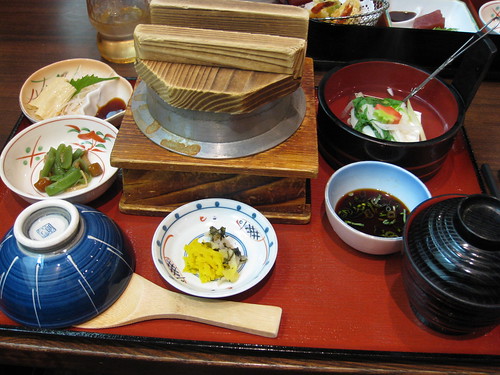
By the time we finished exploring Kiyomizu-dera, it was getting late, and we headed back to Kyoto Station. We found a restaurant serving incredible Kyoto-style cuisine at the station, though I’ve since forgotten the name of the restaurant. I had a meal set consisting of yuba (tofu skin), steamed rice with seafood and vegetables, hiyayakko (cold tofu), red miso soup and tsukemono (pickles).

Yuba (Tofu Skin), Steamed Rice with Seafood and Vegetables, Hiyayakko (Cold Tofu), Red Miso Soup, Tsukemono (Pickles)

I love meals like this because you get to try a little bit of everything. I’m a sucker for good pickles, so naturally, that was my favorite, along with the tofu skin.

Afterwards, it was time to return to our hotel and pack our bags. Our next morning would be a super early one, as we had to catch the shinkansen train back to Tokyo at five in the morning, and connect to the Narita Express train in Tokyo to take us to the airport. Bento boxes in tow, we groggily awoke the next morning and dozed for most of the three hour ride back as it poured rain outside.

We had a couple of hours to spare at Narita Airport, which we spent window shopping and picking up a few last minute wagashi, or traditional Japanese confectionery, as gifts. By the time we arrived in San Francisco the next day, we hadn’t had a proper rest for over 48 hours. I went straight to bed and caught up on sleep.

Since I’ve returned, I’ve been cooking a lot of Japanese food, eager to recreate the tastes and smells of my travels. Until I go back, my homemade agedashi tofus and onigiris and kitsune sobas will have to suffice.